

























































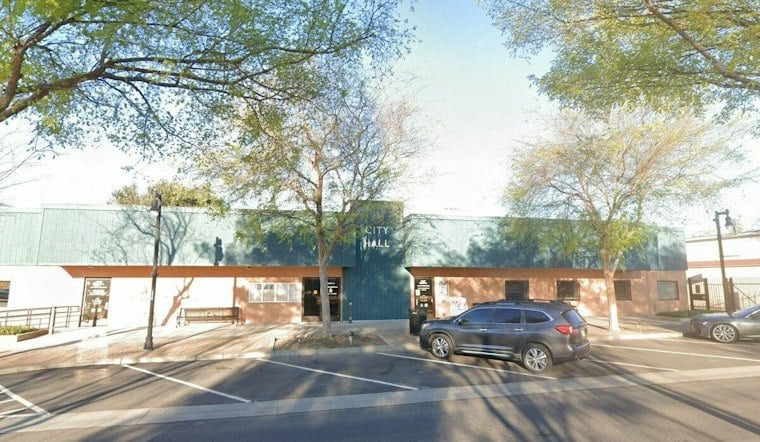
Riverbank residents have raised concerns about a proposed data center at the Riverbank Industrial Complex. The project, a partnership between Aemetis and Spartan Data Centers, would bring a 60-megawatt facility to a site just north of Modesto.
ABC10's headline on the project pegs the proposed investment at $1.35 billion, though other reporting has described the project's investment differently: the Modesto Bee has at one point put the figure at $350 million and at another point at $1 billion, and the discrepancy between those numbers has not been resolved publicly.
Residents have raised concerns about the project. Another resident, identified only as Dade, said he's skeptical of Spartan Data Centers' track record and doesn't want the project in his neighborhood.
Who's Behind the Project
Andy Foster, president of advanced fuels for Aemetis, has said the data center would rely on newer technology designed to reduce waste, moving away from what he described as the water-heavy, diesel-generator-dependent approach of early data center operators. The Modesto Bee has reported separately that Foster said the cooling system would recycle water, and that Aemetis filed an application with the San Francisco Public Utilities Commission for Hetch Hetchy electric service to power the facility.
Spartan Data Centers CEO Carl Morris, who cited his prior work with Amazon Web Services, acknowledged the company has not built any prior data centers. Morris said he began his career in AWS's data center capacity planning group, where he watched the company construct facilities of many shapes and sizes.
Company representatives said the project would be entirely privately funded. The city expected an Aemetis application in the coming months.
A City Already Wrestling With the Question
Riverbank's path toward this project hasn't been smooth for the developers. Foster told the Modesto Bee that Aemetis asked to present its plans at a Riverbank City Council meeting but could not get on the agenda. City Manager Maricela Garcia told the paper the city had held conversations with five data-center developers over the prior year but had not, at that point, received any formal land-use applications.
Riverbank's council has since moved to slow things down. A unanimous vote on Sept. 8 approved an urgency ordinance imposing a 45-day moratorium on new data-center land-use applications, the Modesto Bee reported. The Bee has also reported the council could vote to extend its moratorium for 10 1/2 months.
Riverbank Isn't Alone in Hitting Pause
The hesitation isn't unique to Riverbank. The Modesto Bee has reported that nearby Patterson extended its own 45-day data-center moratorium to a full year, running through July 2027. The Turlock Journal reported that roughly 200 people recently spent three hours urging Modesto city leaders to reject a data-center project that hadn't even been officially proposed yet.
Farther south, San José officials have proposed pausing data-center approvals entirely until the city adopts new development standards and community-benefit requirements, according to KQED. Residents there have raised concerns that projects could slip through before those standards, which would touch on carbon-neutral electricity, sewer monitoring and regular water and power-use reporting, take effect. A tracker cited by the Turlock Journal counted 379 communities across 44 states that had imposed data-center moratoriums as of Sept. 7.
The Numbers Behind the Pushback
The statewide backdrop helps explain why communities like Riverbank are moving cautiously. A Next 10 report found California data centers' electricity consumption rose from 5.54 terawatt-hours in 2019 to 10.82 terawatt-hours in 2023, nearly a 95% increase, while total water consumption climbed from 25.42 billion liters to 49.91 billion liters over the same period — a 96.4% jump.
Those trends could accelerate. The same research, reported by CalMatters, projects California data-center electricity demand could reach as high as 25 terawatt-hours by 2028 if growth isn't curbed or better managed.
For now, the Riverbank proposal remains a proposal. Foster has estimated it could generate $10 million in annual property taxes.



