

























































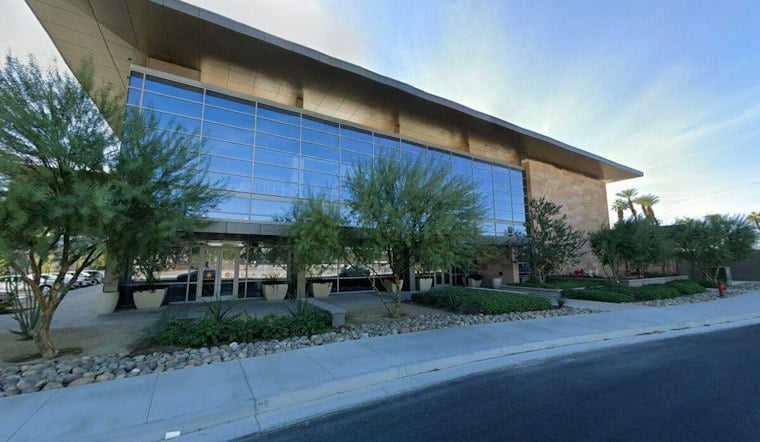
Riverside County has agreed to pay $1.8 million to settle a federal wrongful-death and civil-rights lawsuit filed by the family of John Leo Hemmer, a 48-year-old South Dakota man who was beaten to death by his cellmate inside the John Benoit Detention Center in Indio in July 2021. A deputy conducting a routine safety check found Hemmer naked and covered in blood in a flooded cell — and by the time he was discovered, he had already been dead for at least an hour.
According to The Press-Enterprise, the settlement resolved a wrongful-death and civil-rights lawsuit brought by Hemmer’s family, and the county said it agreed to the payout for economic reasons rather than continue fighting the case in court. The lawsuit, filed in July 2022 in U.S. District Court in Riverside, accused the county, Sheriff Chad Bianco and correctional supervisors of inadequate inmate classification, poor staff supervision, lax safety-check procedures and failed equipment maintenance — including an allegation that at least two surveillance cameras inside the facility were malfunctioning at the time.
Hemmer had been jailed for nearly two and a half years awaiting trial on charges stemming from a February 2019 domestic violence case, which included attempted murder, torture, assault, domestic violence and witness intimidation. His family alleged that an earlier inspection of his cell could have saved his life, arguing that deputies did not check on him for more than two hours after breakfast was delivered.
How the Attack Unfolded
The lawsuit named Bianco, Sgt. Ashley Rodriguez and Deputies Jonathan McKeithen, Cody Brand, James Parks and Laura Valdez as defendants, alleging that McKeithen, Brand and Parks failed to conduct adequate cell checks the morning Hemmer was killed. His cellmate, Luke Hanchette, was being held on a new charge of battery causing great bodily injury and had two prior battery convictions; according to the lawsuit, jail staff knew him for his history of violence and unpredictability.
On the morning of July 21, 2021, Hanchette collected two bagged breakfasts shortly after 4 a.m. and later obtained a metal crutch from another inmate. He emerged from the cell around 6:40 a.m. carrying the crutch, which investigators found had been smeared with soap or shampoo gel in an apparent attempt to remove blood and human tissue. Hanchette was subsequently charged with murder in Hemmer’s death and was ordered to stand trial in March 2022, but his case reached no jury trial — he was found dead in his own cell at the Robert Presley Detention Center in Riverside in December 2023, according to the same Press-Enterprise report. The sheriff’s department reported no signs of foul play in Hanchette’s death.
A Pattern of Deaths Behind Bars
Hemmer’s death is one entry in a larger, grim tally inside Riverside County’s jail system. Riverside County jails recorded 19 inmate deaths in 2022, the highest annual total in 15 years, per the county grand jury report covered by the Press-Enterprise. County custody recorded 29 additional inmate deaths between the launch of a state civil-rights inquiry and late April 2026, though the Los Angeles Times has separately placed a similarly sized cluster of 29 deaths between February and April 2023 — a discrepancy the available reporting does not reconcile.
California Attorney General Rob Bonta announced a civil-rights investigation into the Riverside County Sheriff’s Department on February 23, 2023, examining whether the department engaged in unconstitutional policing, including excessive force and misconduct inside county jails. Nearly four years later, the attorney general’s office has released no findings or conclusions, and a Justice Department spokesperson said, to protect the confidentiality of our ongoing investigation, we are unable to share updates.
Grand Jury Calls for Oversight, County Pushes Back
A Riverside County civil grand jury report issued in June found existing oversight of the jail system fragmented and inadequate, and recommended establishing an independent civilian oversight commission with subpoena power, independent jail-death reviews and regular public reporting. The grand jury report also called for a jail health audit, a quarterly public transparency dashboard and a five-year strategic plan for jail operations — though the grand jury’s recommendations are advisory and nonbinding.
Bianco disputed the grand jury’s findings and called the report inaccurate. Still, the Riverside County Board of Supervisors voted 4-0 on July 14 to establish an ad hoc committee, proposed by Jose Medina and Karen Spiegel, to evaluate civilian oversight options; a similar oversight proposal from Medina failed to gain support in 2025. The committee was given 180 days to report its findings and is expected to present recommendations to the full board by the end of January 2027. As NBC Palm Springs reported, the county will not implement some of the grand jury’s recommendations outright but will take others under consideration.
Riverside has been described as the least compliant among major Southern California counties with the state’s AB 1185 oversight law, having no formal independent oversight body, according to Prison Legal News. By contrast, Los Angeles, Sacramento, Sonoma and Santa Clara counties have all established civilian oversight commissions or inspector general offices with authority to review sheriff’s operations.
The Hemmer settlement is not the only costly jail-death case to hit county coffers recently. A federal jury separately found Riverside County partially responsible for the 2022 fentanyl-overdose death of Richard Matus Jr., awarding his family $13.5 million total — with the family expected to collect roughly $5.4 million based on the county’s 40 percent share of liability, according to the Los Angeles Times. The settlement in Hemmer’s case included no admission of wrongdoing by Riverside County, even as his death continues to fuel scrutiny of a sheriff’s department still facing an open state civil-rights probe.





