

























































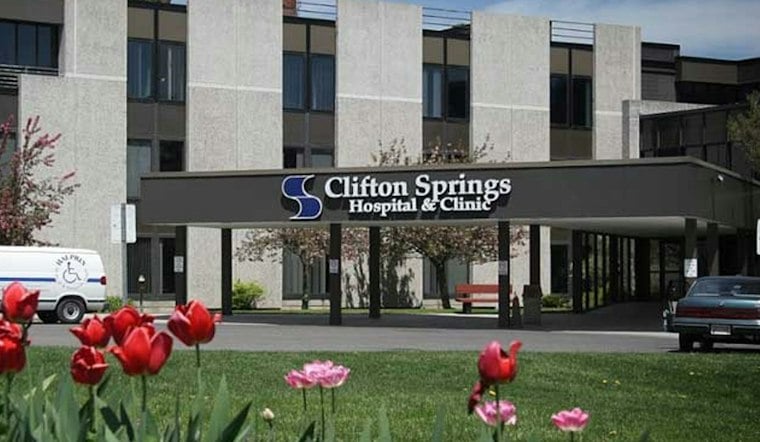
Children under 14 are being turned away from routine hospital visits at two Finger Lakes-area facilities this flu season, under a policy change that offers no timeline for when it might lift. The restriction covers Clifton Springs Hospital & Clinic and Newark-Wayne Community Hospital, both part of Rochester Regional Health, and comes as New York continues to report elevated flu activity heading into the winter holidays.
Rochester Regional Health’s own visitor guidance states plainly that “temporarily during flu season children under the age of 14 are not permitted at this time,” according to rochesterregional.org. As FingerLakes1 reported, the system updated its visitor policy on November 18, and the health system hasn’t listed an end date for the restriction. Rochester Regional Health is a Rochester-based system with hospitals and clinics across several upstate New York communities, and it’s asking visitors to check rules with the specific hospital before showing up.
At Clifton Springs and Newark-Wayne, visiting hours otherwise run 8 a.m. to 8 p.m., and both hospitals allow two visitors at the bedside at a time, per the same report. Several other Rochester Regional hospitals — including Rochester General, Unity, United Memorial in Batavia, Canton-Potsdam, Gouverneur and Massena — list visiting hours of 9 a.m. to 8 p.m., an hour later than the two Finger Lakes facilities under the age restriction.
Emergency Rooms Follow Different Rules
The under-14 limit applies to routine visits, not emergency care. Rochester Regional emergency departments allow visitors around the clock, and the FingerLakes1 report notes that patients 18 and younger can have two visitors while patients 19 and older can have one. Rochester Regional also asks people to postpone visits of any kind if they’re sick or have recently been exposed to a contagious illness.
The hospital system’s approach echoes a move made this month by Novant Health in North Carolina, which announced it would temporarily limit visits by children under 13 at its hospitals beginning November 19 at 7 a.m., according to a Novant Health newsroom statement. That system said exceptions could be made for symptom-free children under special circumstances, though it’s unclear whether Rochester Regional has adopted a similar carve-out for its own age limit.
Statewide Flu Numbers Paint a Mixed Picture
New York State Health Commissioner Dr. James McDonald declared flu prevalent statewide on October 26. In the week ending November 14, the state recorded 11,891 lab-confirmed flu cases, down 4% from the prior week, even as flu hospitalizations rose 2% to 886 over the same period, per the FingerLakes1 account. McDonald is New York’s state health commissioner, and the state health department uses weekly flu surveillance reports like these to guide its public health response.
Separate reporting from Gothamist described more than 886 New Yorkers statewide as hospitalized with flu during that same second week of November, a figure that outlet framed slightly differently than the week-over-week count reported elsewhere. Gothamist also reported that more than 43,000 New Yorkers statewide have caught the flu since early October, compared to about 7,000 cases at this point during last year’s flu season — a sharp jump from the same point last year. It remains unclear how long the current flu trend will continue.
Rochester Regional has responded to flu surges before. During last year’s season, the system was reported to be “highly encouraging” masking in all clinical spaces, according to a December 2025 FingerLakes1 report. Separately, Newark-Wayne Community Hospital closed its inpatient birthing unit in September, though that change was not tied to the flu-season visitor policy.




