

























































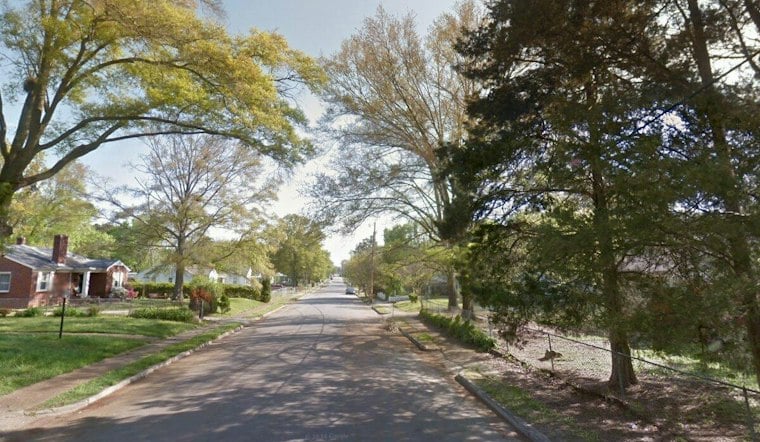
The Well Church is seeking permits for a 19-home subdivision on land near Rock Hill’s Marshall Estates and Stonewall neighborhood. The proposal received preliminary approval from the city’s Planning Commission, moving a housing project forward on property the church has held for nearly two decades.
The Planning Commission approved the preliminary subdivision plan on November 4, according to The Post and Courier. The Well Church, a member of Agape Ministries International, is located at 135 Oakland Ave.; a stream runs through its property. Under the proposal described in the report, 10 acres at the rear would be used for the homes, while the church plans to build its worship space on the front portion.
A Subdivision Takes Priority Over the Sanctuary
The church’s initial plan was to build a church on the site, but rising construction costs stalled that effort, Maurice Revell told The Post and Courier. In June 2024, the York County Zoning Board of Appeals had approved a special exception for a large religious institution on the property. The exception was lost in June 2026 because no church had been built there.
The church now plans to prioritize the subdivision and return to its building plans later. Revell told The Post and Courier that the church hopes to break ground on the worship space in 2027 or 2028, depending on funding. The 19-home project, at a site addressed as 553 Keels Ave., is expected to break ground in late spring or early summer of 2027, he said.
Housing Built for the Gap in the Middle
Revell described the intended buyers as people who earn too much to qualify for income-based housing programs but struggle to afford a home because of mortgage interest rates. The church may keep some units as rentals rather than sell them, he said. Plans call for extending Keels Avenue and building a new road, tentatively named Charity Lane, with sidewalks along both streets.
Revell told The Post and Courier that the church intends to put any profit from the development back into the church. He said the project would add housing along the Albright corridor and help Rock Hill work toward its affordable-housing targets, while noting that the city lacks a significant amount of affordable housing. The church also hopes that building affordable units could help it qualify for tax credits, according to Revell.
A Citywide Shortfall Church Land Alone Can't Fix
The scale of Rock Hill's housing gap is visible in other projects already underway. A separate development on Heckle Boulevard is slated to bring 156 affordable units to the city, with homes targeted at residents earning at or below 60% of the area median income, according to WSOC-TV. Even that project, made possible through special financing from the Rock Hill Housing Authority as builder Greenway Residential Development has noted, amounts to only a small share of the roughly 1,200 affordable units the station reported the city still needs.
Churches turning to their own land for housing is not unique to Rock Hill. In Greenville, several congregations have begun using portions of unused land to build affordable homes in partnership with nonprofits, as The State has reported, and the newspaper cited a finding that roughly 90% of South Carolina's lower-income households are believed to spend more than 30% of their monthly income on housing. That same report noted state Rep. Wendell Jones had proposed legislation to let qualifying religious institutions use their property for affordable housing without losing their property-tax-exempt status.
Mountain View Baptist Church has spent more than 20 years buying lots in Greenville's Newtown neighborhood with a vision of building affordable housing and helping former neighbors return, according to The Greenville News. Grace Church took a different approach, converting a former Greenville Technical College dormitory into housing with rent adjusted to family income, ranging from $450 for a single room to $1,000 for a three-bedroom unit, per WPDE, which also pointed to a 2020 Greenville Housing Fund study finding that almost half of Greenville County renters are cost-burdened.
Local Needs and Another Church-Land Proposal
A survey was conducted for Rock Hill’s 2025-2029 Community Development Block Grant plan.
In Columbia, Central Baptist Church bought land in 2016 and later worked with a developer on a separate, planned 300-apartment project, according to The Post and Courier. The report describes a planned development, not a completed one.
A Pattern Playing Out Beyond South Carolina
Similar efforts have taken shape outside the state. In Charlotte, Mayfield Memorial Missionary Baptist Church donated 5 acres so developer DreamKey Partners could build Sugaree Place, a 51-unit affordable housing complex, while Caldwell Presbyterian Church converted an unused building into 21 studio apartments for low-income residents, according to The Charlotte Observer.
Nationally, nine states have passed or considered legislation intended to make it easier for religious institutions to build housing on their land, CNN reported. The outlet pointed to Trinity East United Methodist Church in Houston, which broke ground on a 90-unit affordable senior housing project expected to open the following year, and to Emory United Methodist Church's process, which took 11 years and ultimately delivered 99 units of fully affordable housing that opened in 2019. Whether the Well Church's timeline will move faster than that remains to be seen as its subdivision moves through the permitting process.



