

























































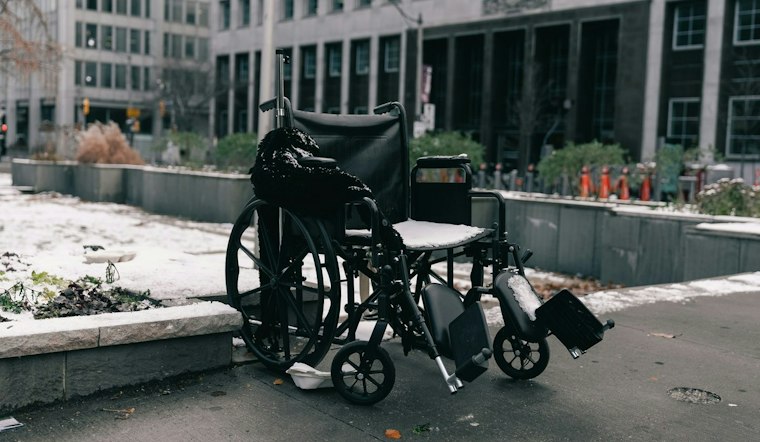
A repaired wheelchair frame gave a Western Rockingham Middle School student a way to get a properly fitting chair without waiting for a new one to move through the usual process. FOX8 WGHP reported that the student, whose family agreed to share his story without identifying him, had been using an outgrown pink chair; the replacement is red, his favorite color.
The student’s parents allowed FOX8 to share his story without identifying him, according to FOX8 WGHP. Rockingham County Schools Lead Physical Therapist Kathryn Davis told the station that he has used a wheelchair since starting in the district in preschool and cannot functionally walk because of muscle weakness. Davis, a 30-year district employee, said the replacement process for his chair had taken a little more than a year.
An Old Frame Found New Life in Storage
The school’s physical therapy team found a wheelchair frame in storage that could be reused after repairs and replacement parts. Davis told FOX8 that the frame was bright pink and had several broken components. The team contacted NuMotion, a rehabilitation-equipment company, rather than wait for another insurance process.
NuMotion technician Brandon Sisk, who has worked for the company for 16 years, repaired the frame with refurbished parts from the company’s non-inventory stash. NuMotion donated the materials needed to prepare the chair, and Davis said the company expected to return it within two weeks.
Insurance Delays Are Common, Staff Say
Davis told FOX8 that wheelchair replacements processed through insurance can take two to three months or longer; Sisk gave the station a typical estimate of 60 to 90 days. Sisk put the cost of a new wheelchair at about $6,000 and said NuMotion tries to keep loaner chairs and seating available for customers who need temporary equipment.
What Medicaid rules say about replacements
For North Carolina children whose wheelchairs are covered by Medicaid, NC Medicaid policy requires an explanation on the CMN/PA form when prior approval is requested to replace equipment before its usual life expectancy ends. The program may consider replacement when an item is out of warranty and repair is no longer cost-effective. The student’s insurer was not identified, so these Medicaid rules may not apply to his case.
Equipment shortages have affected people beyond this case. During pandemic-era supply problems, hospitals nationwide reported shortages of walkers, crutches, canes and wheelchairs, partly because of raw-material shortages such as aluminum, according to North Carolina Health News. The outlet reported that reuse programs collecting, cleaning and lending medical equipment—often at no cost to borrowers—helped address some of those gaps, including for people unable to wait for insurance timelines.
Red Chair, Full Mobility
Davis said the repaired chair fits the student and will give him the mobility he needs to take part in classes at school. The student was excited to see the red chair after more than a year using equipment he had outgrown, she told FOX8.




