

























































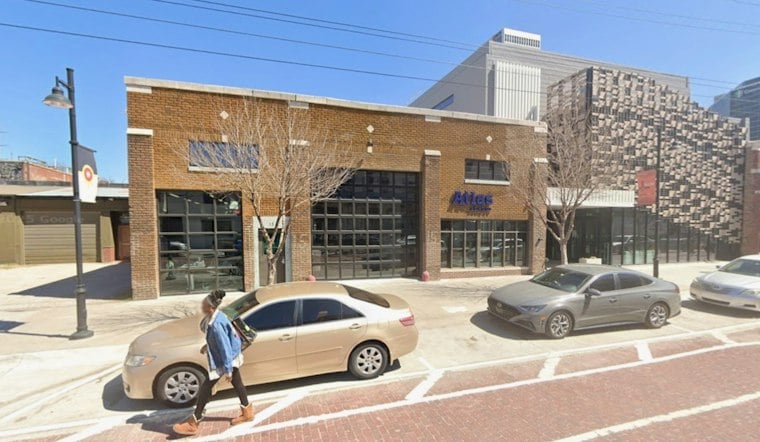
Rogers State University is moving to plant a flag in downtown Tulsa, with its president asking the school's Board of Regents to approve acquiring Atlas School, the software-engineering training program located near Archer Street and Cheyenne Avenue. Under the proposal, Rogers State would take over Atlas School's equipment, curriculum and downtown lease, folding the tech-training outfit into the university's existing academic offerings.
The plan, first reported by News On 6, would let Rogers State offer courses for college credit and professional development using Atlas School's existing resources, according to the proposal. The George Kaiser Family Foundation would provide funding to Rogers State to cover the lease and operating costs tied to the facility, per the proposal outlined in that report.
Atlas School itself describes its mission as providing workforce training for high-demand technology jobs, including software development, and its roots trace back to 2020, when it launched through a partnership between GKFF and Holberton School. GKFF's own materials note that Atlas became an independent, Tulsa-focused institution in 2024, offering what it calls inclusive, hands-on software development programs built around a curriculum blending computer science fundamentals, specialized engineering training and career readiness.
What Rogers State Would Gain
The proposed expansion would connect traditional higher education with workforce training, giving Rogers State students a chance to develop technology skills without the university needing to build a tech program from scratch. Atlas School's own student catalog lists programs including Full-Stack Development, Machine Learning, Systems Programming and Corporate Classes, suggesting the breadth of coursework Rogers State could inherit if regents sign off.
Atlas has also described working with local companies, industry leaders and workforce organizations to connect students to job opportunities, a collaborative approach that could carry over if the university absorbs the program. The school's downtown Tulsa location has positioned it near the city's growing tech employer base, and Atlas has billed itself as an innovative, nonprofit software engineering school located in downtown Tulsa.
Recent Moves at Atlas School
The potential acquisition comes amid other changes at Atlas. Tulsa World reported that the nonprofit, which runs a 20-month software engineering program, announced a tuition reduction from $37,500 to $5,005 — a dramatic cut aimed at widening access to its training.
Atlas had separately announced in August 2025 that it planned to launch corporate training courses in early 2026, inviting Tulsa-area companies and community stakeholders to one-on-one discovery meetings to share feedback on workforce development priorities, according to a statement posted on atlasschool.com. The school said those planned corporate courses could range from introductory programming-language instruction to advanced topics such as cloud infrastructure, agentic AI and data science.
Details Still Emerging
A University of Oklahoma Board of Regents agenda document dated November 10-11, 2026 references a downtown Tulsa facility currently occupied by Atlas School, describing a lease that would replace Atlas School's existing lease at a rental rate not to exceed $28.00 per square foot. The full context around that rental figure, along with the exact facility address and lease term, was not detailed in the available excerpt.
Key specifics about the broader deal remain unsettled in public records reviewed so far, including whether the Rogers State Board of Regents has formally approved the acquisition. For now, the proposal represents a bid by Rogers State to extend its footprint into downtown Tulsa's tech corridor, pairing a four-year university with a program built specifically to train workers for in-demand software jobs.





