

























































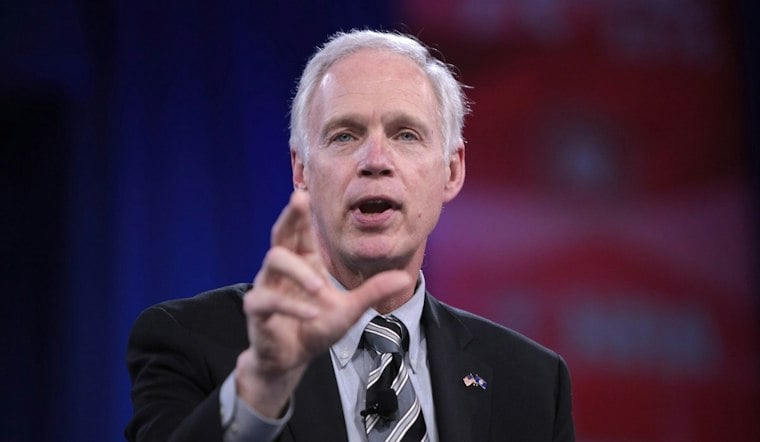
Wisconsin Sen. Ron Johnson is trying to clean up a remark that landed like a political grenade this week: that Social Security “can’t be fixed” and should simply be “shut down.” The chairman of the U.S. Senate Committee on the Budget now says he used imprecise language, insisting he never meant to propose ending the program that nearly 1.4 million Wisconsin residents rely on for benefits.
Johnson made the original comments during a Fox Business appearance, telling the network, “You can’t fix it; you just shut it down,” according to The Hill. The remarks came ahead of a Wednesday hearing on Social Security that Johnson’s committee held, and he also released a chairman’s memo titled “Social Security: The Reality… a Legal Ponzi Scheme,” as Wisconsin Public Radio reported. In walking the comments back, Johnson said, “Imprecise statement, I’ll admit, but everything I’ve written, everything I’ve said, clearly, I am not proposing shutting down Social Security.”
Johnson maintained he was talking about Ponzi schemes in general, not Social Security’s fate specifically, saying he was discussing the mechanics of such schemes and was not proposing shutting down the program. He added that the government can require new investors to keep putting money into the system and said that will probably be necessary. Johnson also said his chairman’s memo does not suggest ending Social Security, framing his point as being about Ponzi schemes rather than the program itself.
Democrats Say the Comments Reveal the Real GOP Position
The reaction from across the aisle was swift. Sen. Ron Wyden of Oregon, a member of the Senate Budget Committee, said Johnson’s remarks marked a striking shift in how Republican leadership talks about the program. “As far as I can tell, this is the first time in decades that a senior senator — the chairman of the Budget Committee — said he would rather shut down Social Security than fix it,” Wyden said, per the same outlet. Wyden went further, arguing Johnson would rather abandon the program than make billionaires pay their fair share.
Sen. Ben Ray Luján of New Mexico echoed the concern, warning that Johnson’s framing could signal a broader Republican retreat from fixing the program altogether. “If the Republican position in the United States Senate now is Social Security cannot be fixed, there’s a problem,” Luján said. Johnson, for his part, acknowledged he knew the remarks would draw fire, saying he realized he was making himself a “lightning rod” but that his goal was to draw attention to Social Security’s underlying problems — a political price he said he accepted.
Advocacy Group Calls the Comments Inflammatory
Outside the Senate, Richard Fiesta, executive director of the Alliance for Retired Americans, pushed back hard on Johnson’s television remarks, calling them inflammatory and intended to scare older Americans. Fiesta was blunt in his assessment of Johnson’s Ponzi scheme framing: Social Security, he said, is not a Ponzi scheme or scam. He argued instead that requiring the wealthiest Americans to pay their fair share into the program is a common-sense way to strengthen it.
That argument mirrors a proposal already on the table in Congress. Sens. Bernie Moreno and Elizabeth Warren have floated eliminating the Social Security payroll tax cap, a change they argue would inject about $3 trillion into the program over 10 years, according to Spectrum News. Johnson’s own chairman’s memo takes a different tack, calling for Congress to repeal the portion of law that reduces Social Security benefits and to quit scaring seniors, while also saying lawmakers should address the national debt and deficits.
The Numbers Behind the Fight
The dispute arrives as the program’s finances face a real deadline. Social Security’s trust fund is estimated to be depleted in 2032, a projection the Social Security Administration has tied specifically to its OASI Trust Fund reserves becoming depleted in the fourth quarter of that year, with 78 percent of benefits still payable at that point, according to a June 9, 2026 release from the Social Security Administration.
That looming shortfall is the backdrop against which Johnson’s comments, and the backlash to them, are playing out. Whether lawmakers settle on raising the payroll tax cap, repealing benefit-reduction provisions, or some other fix, the clock on the trust fund’s reserves keeps ticking regardless of how any one senator phrases the problem on cable news.





