

























































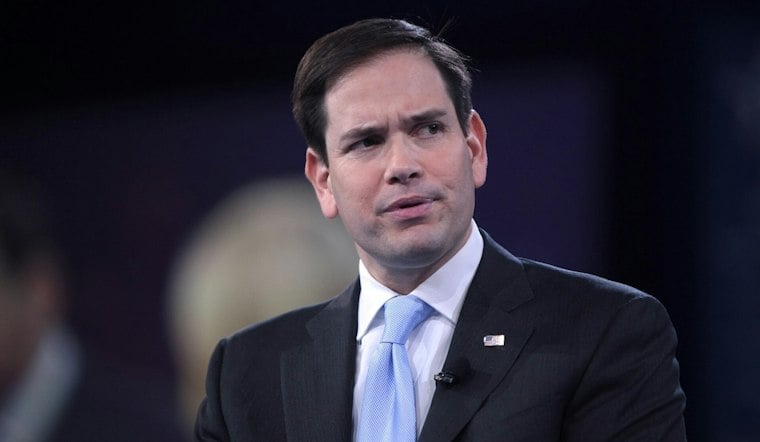
Haiti’s next election has been pushed to July 2027 amid expanding gang violence, leaving the security mission’s ability to create safer conditions for voting under renewed scrutiny. U.S. Secretary of State Marco Rubio says the U.N.-authorized Gang Suppression Force, or GSF, must succeed; he has described it as Washington’s remaining option for confronting gangs that control large areas of Port-au-Prince.
Rubio Says Washington Has No Fallback
Rubio told reporters, “There's no plan B here anymore,” according to the Miami Herald. The outlet reported that the GSF currently fields slightly more than 2,000 troops from six contributing nations. Rubio argued the effort must succeed because the United States has no other options left for stabilizing the country.
The force was authorized by the U.N. Security Council in September 2025 for an initial year with a planned strength of 5,550 troops, the outlet's earlier reporting noted. A Security Council Report summary, meanwhile, put the GSF's size as of July 8 at 1,083 military personnel and 16 civilian staff members — a count that predates the larger figure Rubio cited on Monday, November 9, 2026, and the dossier does not reconcile the two numbers into a single current total.
From Kenya-Led Mission To A Tougher Successor
The GSF followed the Kenya-led Multinational Security Support mission, deployed under the Biden administration, which left Haiti in April 2026 as GSF troops began deploying. Rubio said the earlier effort had not done enough. The Trump administration backed the GSF as a more aggressive replacement, according to the same Miami Herald report.
El Salvador's role in the mission has become a complicating factor. President Nayib Bukele recently deployed 2,500 Salvadoran soldiers to Haiti, but the vast majority are operating outside the GSF's command structure, per the Miami Herald's reporting. El Salvador had earlier sent special forces to Haiti after four aviation technicians attached to the GSF went missing following a gang ambush. Haiti's security landscape now includes its own armed forces, the Haiti National Police, private security contractors using explosive drones, the GSF, and the separate Salvadoran deployment, according to the outlet.
Logistics, Funding And New Contributors
The mission is supported by the U.N. peacekeeping budget and a United Nations Support Office in Haiti that helps with logistics, and the U.N. Security Council formally adopted that arrangement when it approved a U.S.- and Panama-drafted resolution extending the force's mandate for six months. The U.N. Mandate Registry confirms the Security Council's resolution 2829 pushed the mandate to March 31, 2027, and requests that the Secretary-General continue providing logistical and operational support through the support office.
Rubio credited Canada for stepping up and catalyzing work on the mission, saying it has contributed heavily to logistical support. The United States, he said, will continue to encourage other countries to donate money to a U.N. trust fund backing the effort. Germany has already airlifted more than 600 tons of equipment, and additional military personnel from Bangladesh are expected to arrive soon, while Rubio said another 3,000 to 4,000 troops have been pledged by contributing nations.
Violence Still Spreading As Vote Slips To 2027
The stakes behind Rubio's warning are grim. Gang violence has caused thousands of deaths in Haiti, and armed groups continue to control large areas of the capital while expanding their reach, the Miami Herald reported. A U.N. Human Rights Office report found gangs have pushed beyond Port-au-Prince into its outskirts and moved north into the Artibonite and Centre departments, and the same report counted at least 5,519 people killed and 2,608 injured between March 1, 2025, and January 15, 2026. The BBC separately reported that more than 5,700 people were killed or injured by gangs or during operations against them between January 1 and September 11, 2026.
The U.N. Human Rights Office has said the GSF is subject to a compliance mechanism meant to prevent, investigate, address and publicly report potential human-rights violations by its own personnel. The same report said no judicial investigation appeared to have been opened into killings and injuries linked to a private military company's operations, though the evidence does not establish what became of that matter afterward.
Against that backdrop, Haiti's long-delayed election — the country last voted in 2016 — has been pushed back again, from December 13 to July 2027, because of the ongoing security challenges. Rubio said elections cannot be credible if gangs prevent a significant share of the population from reaching polling places, adding that Haiti must push the gangs back so people can vote without being killed or decapitated. He did note one bright spot: the Haiti National Police, he said, is becoming more professional, with progress in its training.
What Earlier Missions Achieved—and What Comes Next
The earlier Multinational Security Support mission was authorized in October 2023. According to the United Nations, it helped Haitian police regain access to some areas and infrastructure but faced chronic underfunding, too few personnel and limited operational capacity. The details available here do not establish a comparable troop total or command structure for the two missions. The July 2027 date is not the final election milestone on the revised calendar: The Haiti Times reports that the Provisional Electoral Council has scheduled a second round—including presidential and legislative runoffs and local elections—for Oct. 4, 2027, with final results due to be published between Oct. 20 and 23.
The BBC reported that the earlier multinational police force struggled to enter neighborhoods controlled by gangs. That record underscores the challenge facing the GSF as Haiti tries to improve security ahead of a long-delayed election.





