

























































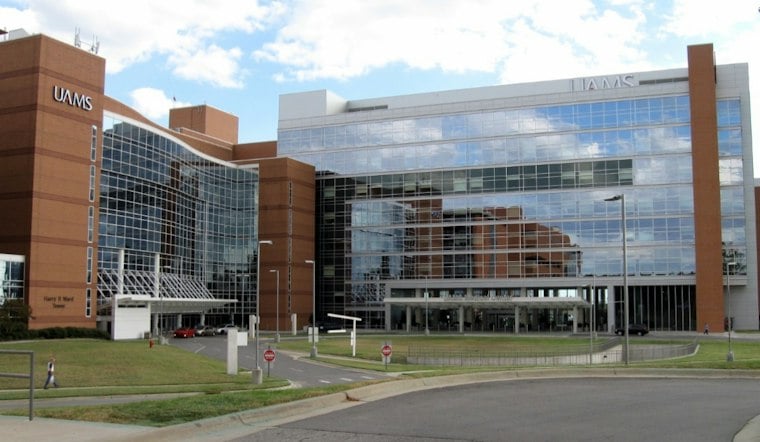
Ray Rowland, a 68-year-old man who lives near Russellville, Arkansas, started noticing changes in his peripheral vision and eventually learned an MRI had found a large tumor at the base of his brain pressing against his optic nerves. He says he had no upper vision whatsoever before surgeons operated. Today, he says his eyesight is back, and he is thankful for the outcome.
According to KATV, the MRI revealed a large pituitary adenoma, a noncancerous growth, sitting at the base of Rowland's brain and pressing on the nerves responsible for his sight. Doctors told him he could lose his vision entirely without surgery. On Sept. 10, UAMS neurosurgeon Dr. Hussam Abou-Al-Shaar and otolaryngologist Dr. Tyler Merrill operated on Rowland together, and the surgical team removed the tumor completely through his nose using a minimally invasive technique.
A Nose-Based Approach With No Facial Incisions
Dr. Merrill said the procedure relies on a minimally invasive approach through the nostrils, avoiding incisions on the face or in the mouth altogether, the station's report notes. Rowland said his vision improved almost immediately once the tumor was out, and he noticed the change himself when he woke up in the intensive care unit. He later said his eyesight was better after surgery and that it has stayed that way.
Dr. Abou-Al-Shaar said earlier diagnosis and intervention increase the likelihood of restoring a patient's vision, a consideration in Rowland's case. He also said pituitary care requires a team, since treatment involves neurosurgery, otolaryngology, nursing staff, and endocrinology specialists working together, per the same account. That team-based model mirrors how UAMS describes its neurosurgical oncology program, which says it tackles brain and spinal tumors with what it calls a true team approach.
Recovery Rules and a Return to the Water
Rowland is now recovering under restrictions on bending and lifting, a standard precaution after this kind of surgery. He said he hopes to get back to fishing, something he used to do dozens of times a year before the tumor started interfering with his sight.
Rowland's case echoes a UAMS procedure described in a 2018 post involving Carolyn Pry, a 69-year-old retired schoolteacher from Emerson whose pituitary macroadenoma was discovered after she had a minor stroke in April and sought a second opinion at UAMS, according to a UAMS College of Medicine blog post. In that case, neurosurgeon Dr. Analiz Rodriguez and otolaryngologist Dr. Alissa Kanaan worked together to remove Pry's tumor through her nose, with Kanaan opening the path through the nasal cavity before Rodriguez addressed the tumor itself. Rodriguez said pairing an otolaryngologist with a neurosurgeon in this type of operation tends to mean less pain and faster healing for the patient.
What the Research Says About Vision Recovery
Rowland's own account lines up with broader patterns researchers have documented, though doctors are careful to note those patterns describe groups of patients rather than any one person's outcome. A 2023 analysis published on Frontiers in Oncology, drawn from a study of 28 patients and 56 eyes, cites a separate meta-analysis that found visual-field defects improved in nearly 80.8% of patients following endoscopic endonasal transsphenoidal surgery for pituitary tumors.
A more recent 2026 meta-analysis, published in Acta Neurochirurgica and covering 29 studies and 2,943 patients with pituitary macroadenomas, reported a combined postoperative visual-field improvement rate of 79%. Within that figure, vision fully normalized in 41% of patients, stayed unchanged in 19%, and worsened in just 1%. The study's authors cautioned that differences in how vision was tested and how long patients were followed mean these numbers should be read as benchmark outcome rates rather than a standardized recovery pattern any individual patient should expect to follow.




