

























































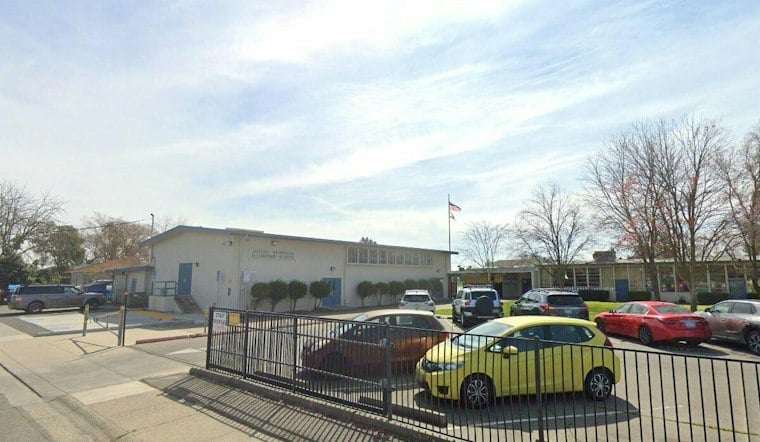
A patch of a Sacramento schoolyard is about to become the city's first urban mini-forest. Sacramento Friends Meeting, a local Quaker congregation, has set Saturday, Nov. 14, 2026, as planting day for the Sacramento Mini-Forest Project, a dense native woodland planned for New Joseph Bonnheim Elementary School.
According to the Sacramento Friends Meeting website, the planting marks “the launch of Sacramento's first—but not last—urban mini-forest.” The group describes a mini-forest as a dense, fast-growing native woodland planted in a small urban area, meant to mimic the structure and benefits of a traditional forest, according to the project's page. New Joseph Bonnheim Elementary is a charter school in Sacramento's Colonial Manor neighborhood, as reported by Abridged – PBS KVIE.
A Method Borrowed From Japan
The project's approach is based on the work of Japanese botanist Akira Miyawaki, the Sacramento Friends Meeting project page states. That method typically involves native species, soil decompaction and enrichment, dense planting, thick mulch and layered plantings, per the same account, and it's intended to reduce the amount of outside maintenance a mini-forest needs as it matures.
Cindy Fowler, a Quaker and project leader, said the idea took root after she read a book about what she called the mini-forest revolution, according to Abridged – PBS KVIE. Fowler also said the effort has grown beyond its origins, telling the outlet that the project is now a community project, not just a Quaker project. The Sacramento Mini-Forest Project has drawn in school staff, SMUD, the Sacramento Tree Foundation, the California Native Plant Society and local nurseries, per Abridged – PBS KVIE's reporting.
Not every claim about the Miyawaki method holds up to scrutiny, however. Many of its purported advantages — including rapid growth, higher carbon sequestration and increased tree density — don't have enough research behind them, NPR reported. Still, Miyawaki-style pocket forests have popped up in thousands of locations worldwide, including India, Ireland, Brazil and the United States, the network noted.
Funding, Plants and a Charter School's Classroom
The Sacramento project carries an estimated cost of $12,000, with $2,500 in seed money from Sacramento Friends Meeting and a $9,000 SMUD Shine Award grant, according to Abridged – PBS KVIE, which cited an email from Fowler. The Sacramento Tree Foundation donated some of the trees, and the school will provide ongoing care once the mini-forest is in the ground, per the outlet. Cornflower Farms, based in Elk Grove, will supply most of the native plant varieties, including oak, redbud and manzanita trees, Abridged – PBS KVIE reported.
Organizers plan to put roughly 950 native trees, shrubs and groundcover plants into a patch on the west side of the school campus, near 21st Avenue and 73rd Street, according to the outlet's reporting. The project still needs additional volunteers for planting day, per the same account.
New Joseph Bonnheim Elementary already runs an agriculture-based, hands-on curriculum, with students taking part in native plant propagation, crop growing, composting, fruit harvesting and rainwater capture for reuse on campus, Abridged – PBS KVIE reported. Students have harvested more than 100 pounds of plums from the campus's fruit trees, according to the outlet. Ben Driscoll, the school's science and gardening teacher, said hands-on experiences make learning authentic for students, per Abridged – PBS KVIE. The school plans to expand those offerings further, with student art spaces, a chicken coop and a pumpkin patch among the additions in the works, the outlet reported.
Principal Sees Benefits Beyond the Classroom
Dianne Wiley, the school's principal, said the project can benefit the wider community and create a peaceful environment for children, according to Abridged – PBS KVIE. That framing echoes a citywide push: Sacramento's adopted Urban Forest Plan sets a target of 35% citywide tree canopy by 2045, up from the current 19%, according to Sacramento City Express. The plan calls for an annual community-wide planting goal of roughly 25,000 new trees, the outlet reported, and it directs planting, outreach and funding toward priority areas, including neighborhoods with low canopy and greater climate-related health risks.
Sixty-nine Sacramento neighborhoods have 20% or less tree-canopy coverage, according to CapRadio. The gap is notable in a city that was once colloquially known as the City of Trees, per Abridged – PBS KVIE — a nickname that the Sacramento water tower displayed before it was rebranded in 2017 with the slogan America's Farm-to-Fork Capital, according to the outlet.
Other Schoolyard Forests Offer a Template
New Joseph Bonnheim won't be the only Sacramento-area campus experimenting with dense native plantings. Parkway Elementary recently completed a 15,000-square-foot schoolyard forest featuring 55 climate-adapted trees and 44 shrubs, according to Green Schoolyards America. That project also includes a pollinator garden, mulch pathways, an outdoor classroom and nature-play elements made from local redwood and eucalyptus logs, the organization reported, describing Parkway's forest as an early model for a statewide schoolyard-forest system.
Similar efforts have taken root far from Sacramento. In May, volunteers in Attleboro, Massachusetts, planted 550 native saplings in the once hard-packed soil of an old baseball field, NPR reported. The Woodland Tree Foundation is also undergoing its own mini-forest project study, according to Abridged – PBS KVIE, suggesting the dense-planting approach is drawing wider interest among regional tree advocates even as questions about its long-term performance remain open.



