

























































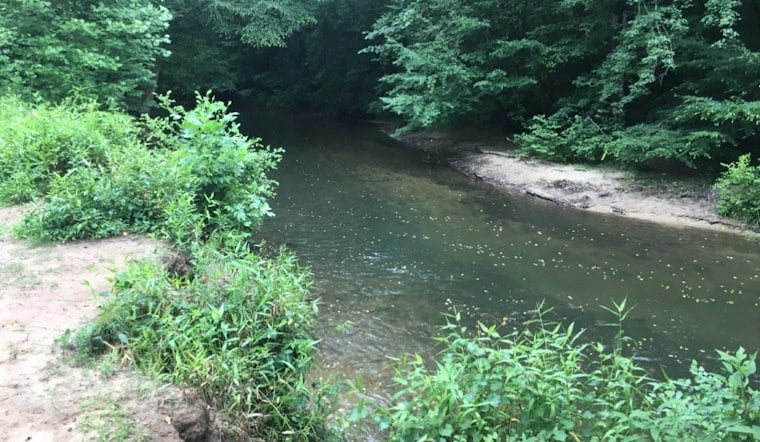
For more than three years, John Lorick ran the Town of Saluda's wastewater treatment plant while quietly diluting his own compliance samples with tap water and falsifying results submitted to regulators. The scheme unraveled only after a July 2025 discharge killed roughly 1,529 fish about a mile downstream, forcing state investigators to dig through chlorine shipment logs, daily water reports, and the memories of people who worked alongside him.
Lorick, 45, of Ninety-Six, pleaded guilty on October 29, 2026, to violating a permit issued under the federal Clean Water Act, according to the U.S. Department of Justice. As senior manager for the Saluda Commission of Public Works, he oversaw a roughly 45-year-old plant that serves about 3,000 residents and, according to reporting by SC Daily Gazette, racked up around 100 violations over three years — most of them classified by federal reports as minor to medium-level.
A Broken Chlorination System and a Cover-Up
The plant's chlorination system was not working, but Lorick never repaired it or told regulators, according to The State. Instead, he diluted compliance samples with tap water and falsified test results to mask elevated E. coli levels, the outlet reports. The South Carolina Department of Environmental Services had already been pushing plant operators to clean up discharges into the Little Saluda River, which flows into Lake Murray, before the case turned criminal.
Kirk Corley, a senior special investigator for the South Carolina Department of Environmental Services, led a three-person team assigned to pursue criminal charges after the agency's earlier advice to clean up the plant went unheeded, per SC Daily Gazette's reporting. Corley said regulators grew suspicious when the plant's self-reported figures looked implausibly clean — on one occasion, Lorick reported an E. coli reading below one even as a state regulator's own downstream sample came back showing an extremely high reading that same day.
Investigators also noticed the plant was burning through far less chlorine than a properly functioning system should, prompting a closer look at chlorine shipment records. State regulators began taking their own downstream samples and comparing them against the daily water reports plant operators are required to file. A concerned resident told investigators he had heard about unusual activity at the plant, and current and former employees ultimately confirmed what investigators already suspected.
Bypasses, Sludge Dumping, and a Fatal Spill
Prosecutors say the plant used bypasses to discharge untreated sewage into the river roughly 10 to 12 times a year beginning in or before 2023, according to FITSNews. From about 2022 through March 2025, dumping sludge directly into the water became the plant's primary method of disposal, the outlet reported, citing prosecutors. The exact amount of sewage spilled over that span remains unknown, per the agency's own account.
The consequences became impossible to ignore over two days in late July 2025. A discharge on July 27 and 28 of that year killed approximately 1,529 fish about a mile downstream of the plant, according to Water & Wastes Digest. SC Daily Gazette's reporting ties that fish kill to E. coli contamination that depleted oxygen in the river water, allowing raw, untreated sewage to flow into the Little Saluda on dozens of occasions over more than three years. The Environmental Protection Agency and the South Carolina Department of Environmental Services both investigated, and state and federal investigators ultimately found permit violations along with deliberate attempts to conceal the problem.
Admission, Motive, and What Comes Next
Lorick initially denied wrongdoing before admitting to his actions, according to SC Daily Gazette's account. Corley said Lorick was upset about the public works board's decision to close the town plant. The town had a responsibility not to pollute or cause harm while the facility remained open.
Winston Holliday, the federal prosecutor assigned to the case, said the plant's underlying problems were not at a code-red level on their own, but that falsifying records immediately pushes a case into criminal territory. Holliday, who has worked in the U.S. Attorney's office in South Carolina since December 2003, said the office has backed aggressive environmental prosecution and noted that sewage spills resulting in criminal charges remain rare.
Lorick faces up to three years in federal prison. Reports differ on how the potential fine is structured: The State reported a fine of $5,000 to $50,000 for each day of permit violations, while Water & Wastes Digest reported the range applies per violation. A judge is scheduled to sentence Lorick in early March 2027.
The Town of Saluda plans to close its wastewater treatment plant by the end of 2026 and connect to a new Saluda County Water and Sewer Authority facility built adjacent to the old site, according to Water & Wastes Digest's reporting.


