

























































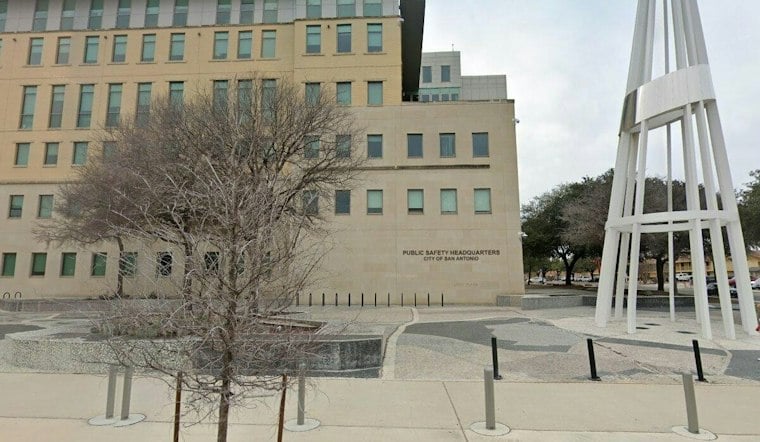
San Antonio Mayor Gina Ortiz Jones said Friday she will ask City Manager Erik Walsh to explore options for ending the police department's cooperation with U.S. Immigration and Customs Enforcement, a move that comes days after Governor Greg Abbott lost his bid for reelection. Jones framed the request around keeping San Antonio police officers focused on their core job rather than federal immigration work.
“Not taking on other responsibilities that they're not trained for and that actually make the community less safe,” Jones said of why she wants SAPD to step back from ICE cooperation, according to San Antonio Current. Abbott had required local law enforcement agencies to cooperate with federal immigration authorities and notify ICE when officers encountered undocumented immigrants, per the outlet's reporting. Abbott lost Tuesday's election, and Gina Hinojosa is now governor-elect of Texas.
The push to reconsider SAPD's posture toward ICE isn't happening in a vacuum. San Antonio police handled 111 ICE detainers in 2025, according to Deputy City Manager María Villagómez, as reported by the San Antonio Report. That figure emerged from a Jan. 22 special City Council session that Jones had called to examine how SAPD works with federal agencies, including ICE, as News 4 San Antonio reported at the time.
A Broader Legislative Reset
The ICE question is just one piece of a wider memo Jones sent to her City Council colleagues, asking for ideas to amend San Antonio's lobbying priorities ahead of the Texas Legislature's next session, which begins in January 2027. The council had already approved a list of legislative priorities on Oct. 30, including preventing the breakup of CPS Energy, along with funding for Project Marvel, flood protection projects and the South Texas Parkway transportation initiative, per San Antonio Current's reporting. Abbott had wanted to break up CPS Energy because it is a city-owned monopoly, the outlet noted. Jones supports keeping those other agenda items intact while adding new ones.
Among her additions: repealing what she calls Abbott's “Death Star” law, which she says hinders Texas cities' ability to self-govern, as well as removing barriers to reproductive health care and voting rights. Jones said she sees an opportunity to improve residents' lives now that Democrats control the Texas House and every major statewide executive office, the outlet reported.
Medicaid Expansion Tops Her List
Jones described expanding Medicaid access for San Antonio residents as her top legislative priority. “Expanding that helps about a million folks get healthcare overnight,” she said, adding that Texas has the country's most uninsured people. The urgency is tied to a ballooning backlog: Texas had 238,000 Medicaid applications pending as of September 2026, a jump from just 1,600 cases at the start of the year, according to the same San Antonio Current report.
Jones said she had not yet heard back from other council members about their proposed revisions to the legislative priorities list, and she urged residents to call their district council offices and share their own ideas. She hopes the council can act on the revised priorities at its Dec. 3 A Session, if not sooner.
Other Texas Cities Rethink ICE Ties
San Antonio isn't alone in revisiting police cooperation with ICE following the election. Houston Mayor John Whitmire signed an executive order limiting his city's police contact with ICE to cases where a person is arrested for a jailable offense and also has an administrative immigration warrant, San Antonio Current reported. That shift follows a sharp rise in contact: Houston police reached out to ICE at least 107 times in the first eight months of 2025, compared with just nine times in all of 2024, according to the Texas Tribune.
Austin Mayor Kirk Watson also asked his city's police chief and city manager Friday to revise the policy governing ICE warrants, the Tribune reported. Meanwhile, staff for Governor-elect Hinojosa said as of Nov. 5 there was no policy or statement yet on how she might address Abbott's ICE cooperation orders or Operation Lone Star. For Jones, the moment calls for action regardless of what comes next at the state level. “Elections matter,” she said, adding that the city is trying to respond to the moment.





