

























































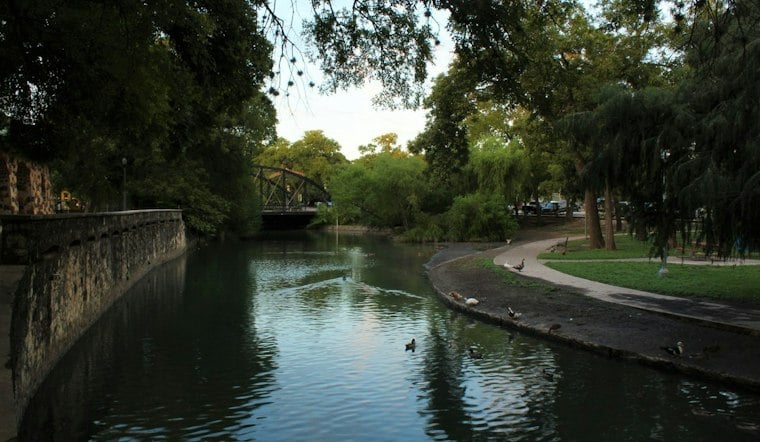
San Antonio has spent at least $2,918,191 over roughly two and a half years paying contractors and staff to drive migratory birds out of its city parks, according to records examined in a recent report. The money went toward pyrotechnics, propane cannons, lasers, drones and other tools meant to keep herons, egrets and other nesting birds away from Brackenridge Park, Woodlawn Lake Park and Elmendorf Lake Park.
The figure comes from a report originally published by Deceleration, a bioregional journal of human rights and environmental justice, and later picked up by the San Antonio Current, which characterized the city's spending as nearly $3 million. Deceleration reported that two firms, Alpha Building Corporation and Omega GC, which operate from the same office space and are led by Jonathan Rogero, received $2.3 million of that bird-deterrence spending. The city has continued deterrence operations at Woodlawn Lake Park, where contractors have harassed nesting birds with eggs present, according to the report.
Boards, Lasers and Bangers Near the Rookery
Deceleration reported that on June 24, 2024, city workers at Woodlawn Lake told the outlet that crews had been “experimenting” for weeks to see how close they could get to the rookery using clapping boards, “bangers” and “screamers.” The outlet's broader list of deterrence tools used across the city's parks included pyrotechnics, lasers, mylar balloons and chemical sprays. Separately, bird deterrence workers have used wooden boards, laser pointers and pyrotechnics to prevent nesting and rookery formation, per the same reporting.
At Elmendorf Lake Park, the city razed what was known as Bird Island in 2019, with Deceleration describing crews hacking back habitat and physically removing all nests at the decades-old rookery. That came years after Elmendorf Lake Park community members, in 2012, most requested support for habitat for birds, ducks and other aquatic life, according to the report. At Brackenridge Park, the city first saw low-level chemical-spray harassment in 2018, and deterrence efforts accelerated after voters approved a bond-funded redevelopment project there, per the same account.
Bird Deterrence at Brackenridge Park
Brackenridge Park has been among the locations targeted by the city's bird-deterrence efforts.
Rosie Torres, who organized with the Society of Native Nations, criticized the city for spending roughly $3 million displacing birds despite San Antonio's Bird City Texas recognition. In Defense of Animals, a separate advocacy group, has alleged that contractors harassed birds in violation of the Migratory Bird Treaty Act and acted recklessly by shooting explosives around people and families with children, as reported by CultureMap San Antonio. Those claims remain allegations from the advocacy group rather than findings from a legal or regulatory body.
City Cites Public Health, Critics Cite Cost
The city has justified rookery deterrence as addressing public health threats and water-quality hazards. City spokesperson Brian Chasnoff said large rookeries can harm the health of both park visitors and birds, and said bird fecal bacteria affect water quality while bird feces may carry diseases that cause human respiratory problems. CultureMap reported that the city's February 2023 messaging specifically cited concerns about diseases like E. coli spreading when bird feces enter bodies of water such as ponds and rivers, and that the city's posted list of possible strategies included pyrotechnics, clappers, spotlights, lasers, distress calls, effigies, balloons and drones. At Elmendorf Lake Park, the city has also cited bird collisions with aircraft as a concern, telling CultureMap its response there would be humane and non-lethal.
Yet the report notes that the city has not identified examples of park visitors harmed by birds or bird excrement. It also cites USDA-APHIS findings that herons and egrets are not species of significant concern for histoplasma spores, a fungal spore sometimes linked to bird droppings. San Antonio International Airport separately listed a budget goal of reducing the impact of migrating birds on airport operations and appearance.
Research Spending Dwarfed by Deterrence Costs
The city spent more than 23 times as much on bird harassment as it did on research into the issue, per the report. City staff said the deterrence research study cost $129,000, while fiscal year 2026 — which ended September 30, 2026 — saw $79,500 spent on contractors and $571,421 spent on city staff for comparable deterrence work. A city spokesperson said the effort was moved largely into the parks department to reduce costs in fiscal year 2026.
The city did not identify bird deterrence costs in annual budgets presented for city council discussion, according to the report, and provided records covering only the last few years despite a request covering costs back to 2018. Deceleration said it obtained the records through multiple state open records requests, and that city attorneys at one point asked the state attorney general for permission to withhold records before withdrawing that request.
A Six-Year Push for Transparency
Britt Coleman said the goal of securing this information had been pursued for six years, and expressed support for more transparency and for allowing controlled-size rookeries within city parks as a compromise. Wildlife Rescue and Rehabilitation took in nearly 2,000 birds between 2019 and 2022, and Lynn Cuny said calls to help injured and orphaned egrets and herons surged over that same period.
The spending also lands amid broader budget pressure: San Antonio received its first property tax increase in more than 30 years in 2026, even as the city cut public health programs amid a shrinking municipal budget, per the report. Other city planning documents point the opposite direction — the San Antonio River Improvements Project listed ecosystem restoration as a primary benefit, and a Westside Creeks project draft lists restoring habitat for migratory and native resident birds as its first objective.
A Global Pattern of Decline
The San Antonio numbers fit into a wider trend. According to BirdLife International, 45% of migratory bird species worldwide are in decline and one in nine is threatened with extinction, with invasive species, agricultural intensification, climate change and unsustainable hunting cited as the human-caused drivers. Bird populations across the United States and Canada have fallen by roughly 30 percent since 1970, per Deceleration's reporting.
By contrast, other cities have taken a different approach to urban rookeries. UT Southwestern Medical Center in Dallas has hosted an active rookery since at least 1966, while Vancouver's Stanley Park has had its heronry monitored by Stanley Park Ecology and integrated into parks operations and education since 2004. Wildlife watching and equipment purchases also carry economic weight, alongside investment in nature restoration.





