

























































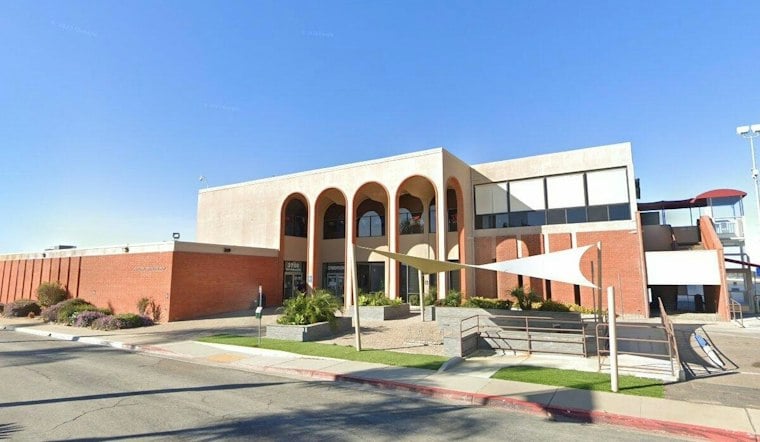
San Diego International Airport was already equipped with upgraded surface-management radar technology by June 10, 2026. The system is meant to help controllers track planes and vehicles moving across the tarmac below, even as decades-old equipment, including a leaky roof and shades that no longer work electronically, continues to shape daily life inside the cab. The upgrade marks a real, if partial, step forward for the facility.
In a report published June 10, 2026, FAA Deputy Administrator Chris Rocheleau said San Diego's tower was the second airport in the nation to receive the agency's new surface management radar system, according to FOX 5 San Diego. “San Diego tower is actually the newest recipient of our new surface management radar,” Rocheleau said. The equipment feeds data into San Diego's existing surface surveillance system and replaces aging gear dating back to the 1990s.
The timing matters. A study cited by FOX 5 San Diego found that San Diego International Airport and Montgomery-Gibbs Executive Airport had the highest number of high-risk runway incursions among U.S. airports between 2021 and 2024. Montgomery-Gibbs is also getting its own upgrades, including new digital radio equipment that lets aircraft communicate electronically with controllers, plus a tower simulation system that arrived in September.
A Tower Still Running on Old Infrastructure
Despite the new radar, much of San Diego's tower infrastructure remains unresolved. According to the San Diego Union-Tribune, the tower's electronically controlled window shades no longer work, forcing staff to rely on a makeshift string system to raise and lower them by hand. The tower has also dealt with a substantial leak significant enough that controllers have used buckets to protect sensitive equipment.
The FAA has spent nearly $2 million upgrading San Diego's tower overall, the Union-Tribune reports, including $1.2 million on the new surface movement radar and $550,000 replacing the tower's analog radio system with a digital one. An FAA database lists five other San Diego tower upgrades as pending, including replacement of copper transmission lines with fiber-optic cable, which is in progress, and new digital flight tracking and display systems. The FAA reportedly declined to give the Union-Tribune specifics on launch dates and costs for those remaining projects.
The modernization effort also includes digital flight-tracking and display systems.
Decades of Fits and Starts
The push to modernize air traffic control is not new. NBC 7 San Diego reports that the FAA's effort to overhaul its telecommunications, radio, surveillance, automation and facilities has stretched on for more than two decades.
Money, Politics and a Looming Deadline
In 2025, Congress approved $12.5 billion to kickstart a new round of modernization, according to NBC 7 San Diego. The Union-Tribune reports that funding was secured through the One Big Beautiful Bill, and the FAA must spend it by the end of 2029. Transportation Secretary Sean Duffy has since asked Congress for an additional $50 billion for the broader air travel system, a request that drew pushback from both congressional Democrats and Republicans.
Duffy is scheduled to testify before the Senate on December 2 about both the funding and a recent nationwide ground stop.
A November Network Failure Underscored the Stakes
That ground stop offered a stark illustration of what can go wrong mid-upgrade. The FAA paused new installations of Juniper routers and disabled the functionality of all existing ones after technicians linked network problems to a newly installed router in El Dorado, Arkansas, according to PBS News. The malfunction disrupted intermittent communications and radar signals at 17 of the FAA's 22 regional air traffic control centers, and a separate router installed three weeks earlier in Amarillo, Texas, also malfunctioned.
The disruption kept thousands of flights grounded for hours nationwide, NBC 7 San Diego reported. Duffy has said a router being replaced as part of the agency's shift from copper to fiber infrastructure may have flooded other routers on the network, triggering the cascading failures. At San Diego's tower, progress over roughly the past year and a half has been real but incomplete, with FAA data showing many critical projects still in progress or still awaiting a start date.




