

























































Sandoval County commissioners voted on Nov. 18 to approve up to $510 million in industrial revenue bonds for two battery storage projects proposed by Exus Renewables North America, while also moving to squash public concern that the deals were secretly tied to a data center. The vote covers the TAG II Storage and Encino Storage projects, which commissioners describe strictly as battery storage, not a data center.
Two Projects, Two Corners Of The County
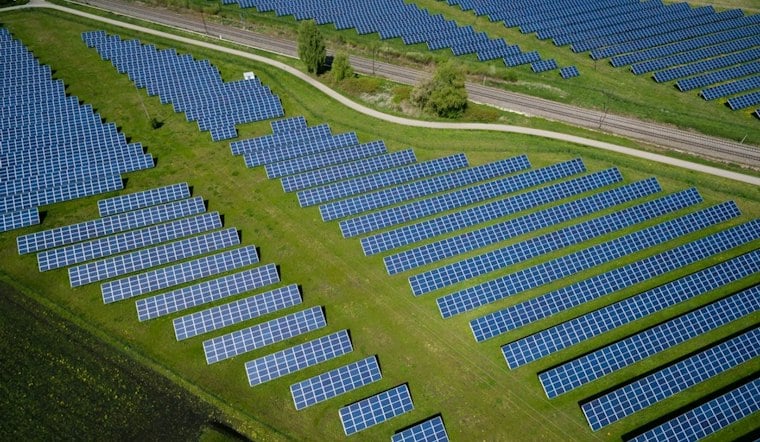
According to nm.news, Encino Storage LLC carries bond backing of up to $280 million and plans to build up to 110 megawatts of battery storage, while TAG II Storage LLC carries bond backing of up to $230 million and plans up to 90 megawatts in Rio Rancho Estates. Both battery sites sit inside the fences of solar projects the county financed back in 2019 and 2023, per the outlet's reporting. The new battery project deals run for a term of 23 years.
Commissioners also approved a separate set of resolutions moving battery project land out of older bond deals. Some leftover parcels will transfer to another Exus company, while others will return to the tax rolls, the outlet reports. Brian Reinhold, who leads the Albuquerque team for Exus Renewables North America, said the company has no immediate plans for the parcels removed from those older bond deals.
Public Pushback Over Mysterious Company Names
The resolutions named several LLCs that had drawn suspicion from residents. Katherine Bruch asked who was behind the New Mexico data center companies named in the resolutions, saying the company names had concerned members of the public. Reinhold told commissioners the data center-named LLCs are simply Exus subsidiaries that own the two solar farms, and that Exus is not building a data center. Commissioner Jordan Juarez pressed Reinhold to confirm the projects are for battery storage and solar panels, not a data center, which Reinhold affirmed.
Exus Renewables North America is a Pittsburgh-based independent power producer that runs 11 solar and solar-plus-storage projects in New Mexico, according to Reinhold. The company previously completed the TAG solar array and battery storage project in Sandoval County in 2025, which supports a Meta data center, giving some residents reason to connect the dots on the new filings even though officials say these particular projects stand apart from that arrangement.
Who Pays, And Who Doesn't
Rob Burpo said the battery sites are already within an industrial revenue bond, a structure that keeps the projects off the property tax rolls while Sandoval County holds title to projects financed this way. Instead of property taxes, the companies will make payments in lieu of taxes: draft agenda schedules show the companies will pay about $14.1 million through 2049, including roughly $5.9 million earmarked for schools.
Earlier reporting on the same deal, before the Nov. 18 votes, detailed how the arrangement is structured. The nm.news described commissioners voting Sept. 23 to begin the process of issuing up to $510 million in industrial revenue bonds for the Encino and TAG II projects, while noting that those resolutions did not themselves issue any bonds. That earlier account put the combined local benefit at about $560,000 a year for Sandoval County and its five school districts, with Exus paying $2,800 per megawatt annually for the first five years and rising 5% every five years after that. The same report put combined payments over 30 years at roughly $19 million and said Exus, not taxpayers, is responsible for repaying the bonds and covering the county's legal and advisory costs even if the deal falls through.
What Happens If There's A Fire
Fire Marshal Chris Bagley said regular firefighting methods do not work on battery cells, and that his office reviews battery projects before construction. Fire crews, he said, let battery cells burn out rather than trying to extinguish them directly, focusing instead on preventing fires from spreading to nearby vegetation. Bond deals also require companies to remove equipment and restore the sites within 12 months after a project stops operating, per the lease agreements.
Battery fire safety has become a live issue elsewhere this year. A lithium-ion battery fire at a Metropolitan Water District facility in La Verne, California forced the evacuation of hundreds of residents in September, according to the Los Angeles Times, which reported the blaze started inside one of four 250-kilowatt battery containers before an adjacent container also overheated. That same report noted the January 2025 Moss Landing fire had prompted the evacuation of about 1,500 residents and deposited heavy metals in a nearby estuary, as California continues investing heavily in battery storage to support its goal of 100% clean-energy usage by 2045.
In North Dakota, a Public Service Commission hearing on Nov. 20 saw commissioners question fire-protection arrangements for Geronimo Power's planned Harmony Storage battery project in Cass County, a $249 million site that could hold 200 megawatts of power for up to four hours, as reported by News From The States. That project would rely on the city of Casselton for fire protection despite Casselton having no say in its approval, though the developer maintained the system is designed to prevent a fire from spreading and that the risk is low; the commission had not yet decided whether to approve the application. Nationally, industry tracking cited by Bisnow counted 177 battery storage moratoriums across the country and found the number rising, even as the sector is projected to grow 50% over the next five years according to Wood Mackenzie and the American Clean Power Association. The same tracking noted battery storage fire incidents have shrunk 98% since 2018, with no reported injury or fatality from a battery system incident since 2019, per EPRI data.
For Sandoval County, the new batteries aim to improve grid reliability for PNM, officials said. The county commission's next meeting is scheduled for 6 p.m. on December 9 at commission chambers, 1500 Idalia Road, Building D, in Bernalillo.





