

























































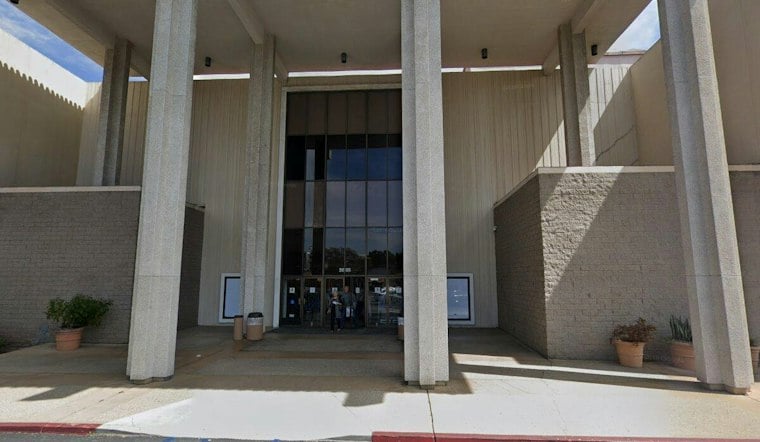
Santa Barbara's Architectural Board of Review voted 3-1 to advance a plan that would tear down the Macy's building at La Cumbre Plaza and replace it with hundreds of new apartments, following a marathon seven-hour hearing on Monday. The vote clears a major hurdle for developer Matthew Taylor, who wants to demolish the department store and build on the site and surrounding parking lots once the store's lease runs out.
According to the Santa Barbara News-Press, Taylor filed the project under the state's Housing Crisis Act, known as SB 330, and plans to begin demolition and construction after Macy's lease expires in 2028, with completion expected by 2032. Taylor called it “a transformative project for Santa Barbara,” per the same report. The City of Santa Barbara describes the proposal, dubbed The Neighborhood at State & Hope, as an 8.8-acre redevelopment at the north end of the plaza that includes demolition of the Macy's building and associated parking, according to a city project page.
Unit counts for the project have varied across public accounts. The city's own page describes it as a 680-unit mixed-use housing project, while Noozhawk has at different points reported that developers intend to build 684 units at the site and surrounding lots, and in a separate report described it as a 689-unit apartment project with retail, dining, commercial, park and public spaces. The discrepancy between those figures has not been explained in available city or developer materials.
What the Project Would Look Like
The News-Press reports the development would range in height from two to six stories, with the tallest portions reaching a maximum of 78 feet, nine inches, and would include 939 parking spaces. Noozhawk's own description of the plan likewise points to six separate buildings ranging from two to six stories, with parts of the structure reaching 70 feet — a detail that differs slightly from the News-Press's maximum-height figure.
Per the News-Press, the project would set aside 39 units for low-income residents and 15 units for moderate-income workers, with the remaining homes renting at market rate. The existing in-line mall, including Lure restaurant, would remain standing, and the stretch of the plaza occupied by Panda Express, See's and Mendocino Farms would not be touched. The report notes that project details — including the development's ultimate look and design — remain to be worked out.
The affordability question has lingered over La Cumbre Plaza redevelopment plans for more than a year. The Santa Barbara Independent reported in 2024 that an earlier version of the Taylors' proposal called for 642 total units, with 54 set aside for low- to moderate-income tenants — about 8 percent of the unit count. Two councilmembers at the time floated minimum targets of 10 percent low-income and 15 percent middle-income units, which the Independent noted would have produced roughly 160 below-market units under that earlier unit count. Noozhawk has since reported that city staff remain in discussions with the Taylors over how to improve the project's affordability component and other community benefits.
State Law Limits the City's Leverage
Much of the tension at the hearing traced back to the project's legal framework. Per the News-Press, the Housing Crisis Act prevents local governments from denying covered projects like this one unless they pose a threat to public health and safety, meaning the Santa Barbara City Council has no legal right to deny the project outright — though members of the public may still file an appeal, the report states.
California's SB 330 statute, as written in the bill text maintained by California Legislative Information, allows a local agency to require compliance with objective zoning standards consistent with its general plan, provided the agency meets specified documentation requirements — but those standards must be applied in a way that facilitates the density already allowed by the general plan and proposed by the project. Separately, the city's own appeals guidance, posted by the Community Development Department, describes an applicant's ability to appeal a Staff Hearing Officer's decision to the Planning Commission, though that document does not address whether members of the public can appeal this particular board action.
A city historic-resources report cited by Noozhawk found that 3805 State Street is not eligible for designation in the National Register of Historic Places, the California Register of Historical Resources, or as a City Landmark or Structure of Merit, concluding the site is not a unique or important example of postwar suburban retail development. That finding helped clear the way for demolition to proceed without a historic-preservation fight.
Residents Split Over Scale and Beauty
Public comment during the hearing reflected sharp disagreement. Richard Six criticized the project as too massive and out of proportion to the neighborhood, according to the News-Press, while Jerome Mercer, who said he moved to Santa Barbara 54 years earlier and started a flower stand at La Cumbre Road and State Street, opposed the project over concerns about its effect on the city's beauty.
Others pushed for design quality rather than outright opposition. Adrienne Schuele raised concerns about the project's design and the impact of 680 new homes or apartments, urging that it be beautiful and look like Santa Barbara, the report states. Tess Harris called the number of units coming into the city remarkable but said the community needs space for residents, workers, families and individuals who want to remain or join it. Project planner Gelare Macon said the city sometimes faces transformational projects built for the next generation, per the same account.
Attorney Brad Lundgren told the board his clients do not oppose the project but said conditions need to be addressed, raising concerns about the loss of parking and a bike lane that could disrupt customers.
A Second Mall Project Moves on a Separate Track
The Macy's site isn't the only major redevelopment in motion at La Cumbre Plaza. A separate 443-unit project proposed by Riviera Dairy at the former Sears building and parking lot is still moving through the city process, according to the News-Press, which notes the developers behind the two projects are not working together. A broader specific plan meant to guide development across the area unraveled in 2022, leaving the two proposals to advance independently.
Once built, the combined scale of redevelopment at the aging shopping center — built in the 1960s — would reshape a retail corridor that has anchored the area for decades. Noozhawk has reported that interior businesses at La Cumbre Plaza are expected to continue operating through at least 2077, even as the Macy's anchor and the former Sears site are rebuilt around them. The process for the Macy's-site project, which Noozhawk previously reported would include environmental, land-use and design review, was expected to take about four years before construction could even begin.
For now, the Monday vote marks a procedural win for Taylor's team, but the project's final design, affordability mix and construction timeline remain unresolved as city staff continue working with the developers.





