

























































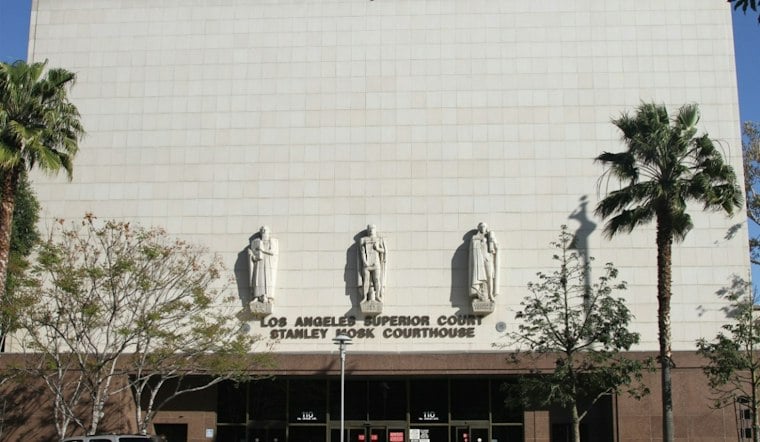
A Los Angeles County Superior Court judge has dismissed the decade-long lawsuit challenging how Santa Monica elects its City Council, siding with the city over the Pico Neighborhood Association and resident Maria Loya in a case that first landed in court back in 2016. Judge Daniel M. Crowley granted the city's motion for judgment on the pleadings, effectively ending litigation that had already survived a full trial, an appellate reversal, and a trip to the California Supreme Court.
Crowley's ruling, reported by the Santa Monica Daily Press, directed the city's defense counsel to prepare a formal written order reflecting the dismissal and circulate it to plaintiffs' counsel for review. The lawsuit had argued that Santa Monica's at-large, citywide plurality system for electing all seven City Council members unlawfully diluted the voting power of minority residents, particularly Latino voters, who make up about 14% of the city's voting population and are geographically concentrated in the Pico neighborhood, according to the same report.
A Decade of Legal Back-and-Forth
The case has been through more twists than most civil suits see in a lifetime. After a six-week bench trial in 2018, a Superior Court judge ruled in the plaintiffs' favor in early 2019 and ordered Santa Monica to divide the city into seven voting districts, per the Santa Monica Daily Press's account of the litigation's history. An appellate panel reversed that decision in 2020, concluding that Latino residents did not form an outright majority in any proposed district and finding that plaintiffs had failed to prove the city adopted or maintained its at-large system for a discriminatory purpose.
The California Supreme Court denied review of that equal-protection finding in 2023, which made the absence of intentional discrimination the binding law of the case going forward, the Daily Press reported. At the same time, the state's high court partially revived the broader lawsuit, rejecting the appellate court's rigid majority-minority rule and setting new standards for evaluating vote dilution and whether remedies would benefit the protected class citywide or within a specific district. In its opinion, the court wrote plainly that it concluded the Court of Appeal misconstrued the CVRA, sending the case back for further proceedings.
Callais Becomes the Deciding Factor
Callais Becomes the Deciding Factor What finally tipped the case toward dismissal was a U.S. Supreme Court decision issued hundreds of miles away. The nation's highest court decided Louisiana v. Callais in April, interpreting Section 2 of the federal Voting Rights Act, including when Section 2 liability arises and when race-based districting may be justified. Santa Monica filed its motion citing that decision in August, arguing that plaintiffs could never meet the Callais threshold because the earlier appellate finding had already rejected any discriminatory purpose behind the city's election system.
In its motion, the city called this the most straightforward possible California Voting Rights Act case to resolve after Callais, according to the city's own motion. Santa Monica's attorneys argued that federal equal-protection guarantees override state voting statutes and apply directly to the CVRA, which was enacted in 2001. The city's reply brief contended that election-law statutes cannot constitutionally impose race-based liability absent circumstances giving rise to a strong inference of intentional discrimination, and the city sought to vacate an October trial date.
Plaintiffs Pushed Back on Callais's Reach
Attorneys for the plaintiffs, including Kevin I. Shenkman and Laura L. Ho of Goldstein, Borgen, Dardarian & Ho, had argued that Callais was limited to Section 2 of the federal Voting Rights Act and did not control a state-law claim like California's. They maintained the CVRA was enacted under California's police powers and does not require proof of discriminatory intent, a core dispute that shaped much of the case's final stretch. The retrial had been repeatedly paused as the parties and the court worked through what Callais's constitutional impact might mean for the case, according to the Daily Press.
Under California Elections Code section 14027, an at-large election method may not be imposed or applied in a way that impairs a protected class's ability to elect candidates of its choice, or to influence an election outcome, because of dilution or abridgment of its members' voting rights. That statute formed the legal backbone of the plaintiffs' case throughout its decade in the courts.
What Happens Next
Crowley's ruling came in the form of a minute order, which records bench proceedings, attorney appearances, and a judge's immediate verbal ruling. When a judge directs the prevailing party to prepare an order, that minute order serves only as an interim administrative record. Santa Monica's defense counsel must still draft a formal order, circulate it to plaintiffs for objection or approval as to form, and submit it for the judge's signature.
That formal order will become the binding, appealable legal instrument only once it is signed and entered as a final judgment, a step that starts the statutory clock for any postjudgment motions or appeals. It remains unclear whether that order has been signed and entered, or whether the plaintiffs intend to challenge the dismissal further.





