

























































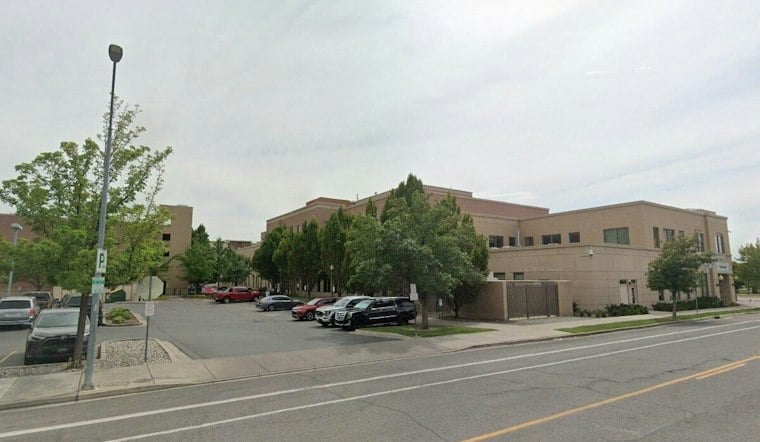
Three men were arrested Friday evening after Utah County deputies raided a Saratoga Springs townhome where investigators believe someone was cooking bath salts inside a hidden crawlspace. The arrests cap what authorities describe as a long-running investigation into a suspected clandestine drug lab tucked into a quiet residential neighborhood.
According to KSL, officials with the Utah County Sheriff’s Office raided the house after obtaining a residential search warrant following a long-term investigation into a potential drug lab. When deputies searched the crawlspace, they reportedly found beakers, laboratory-grade glassware, heating elements, chemicals and other equipment necessary to run a lab.
Police affidavits cited by the outlet state that the equipment was intended to produce synthetic cathinones, more commonly known as bath salts. Three men were at the townhome during the raid: 48-year-old Isom Clinton Kennedy, 52-year-old Brett James Frost and 51-year-old Kenneth Scott Dunn. Each was arrested for investigation of a clandestine drug-lab offense involving aggravating conduct, per arrest reports.
What Investigators Say the Evidence Shows
Arrest reports state that people present at an active “cook” undeniably know what is occurring, a detail investigators used to tie all three men to the alleged operation inside the home.
It's also not established by the evidence gathered so far whether any finished bath salts were recovered from the townhome, only that the equipment and chemicals found were consistent with what police affidavits describe as intended production.
How Utah Law Treats Clandestine Drug Labs
Under an excerpt of Utah Code § 76-18-506, a person commits an unlawful clandestine drug offense by knowingly or intentionally possessing a controlled substance or precursor with intent to engage in a clandestine laboratory operation, or by possessing lab equipment or supplies with that same intent. The statute includes the complete equipment-and-supplies provision in subsection (2)(b), followed by additional offense provisions and penalties on page 2.
Other Utah and Wyoming Cases Show a Pattern
The Saratoga Springs raid follows a similar case earlier this year involving Bronson Gary Dean, a Duchesne man, during which police said officers seized roughly 351.8 grams of Alpha-PVP, a schedule I controlled substance, in a February traffic stop in North Salt Lake. A drug enforcement team told KSL.com that the chemicals and glassware found in Dean's truck are commonly used to manufacture synthetic cathinones. Dean was charged on Feb. 24 in 2nd District Court with operating a clandestine laboratory, a first-degree felony, after two previous investigations into similar allegations against him had been dismissed.
Across state lines, Utah DEA agents also assisted in executing a federal search warrant at an Evanston, Wyoming, home as part of a separate alleged bath-salts lab investigation, according to Cowboy State Daily. That overlap in regional enforcement suggests synthetic cathinone production hasn't stayed contained within one jurisdiction.
National Numbers Point to a Decline
Even as these local cases surface, broader federal data suggests synthetic cathinone activity has been trending downward. DEA forensic laboratories received nearly 13,200 synthetic-cathinone submissions in 2023, a number that fell to about 7,300 in 2024, continuing a downward trend dating back to 2020, per the same Cowboy State Daily report. A research abstract published by PubMed Central notes that synthetic cathinones continue to emerge in the U.S. and globally, though it adds that trends in their overall availability remain poorly characterized by existing data.
For now, the Saratoga Springs case remains in its early stages, with no public confirmation of formal charges against Kennedy, Frost or Dunn. The Utah County Sheriff's Office has not released additional details beyond what was included in the arrest reports tied to Friday's raid.





