

























































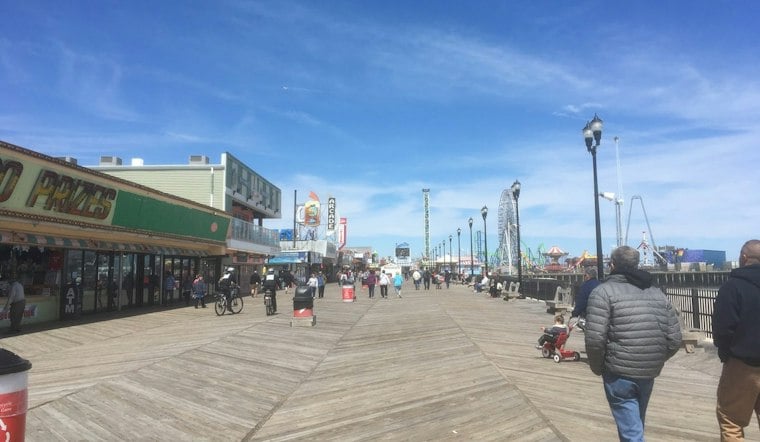
Seaside Heights has settled a lawsuit over swinging boardwalk light fixtures, bringing a legal dispute involving the borough's boardwalk lighting to a close.
The project traces back to a contract the borough awarded to replace its boardwalk lights, a job that officials said was fully covered by a $4,795,362 state boardwalk preservation grant, according to earlier reporting from Shorebeat. The planned work called for replacing the existing lights with stainless-steel fixtures and LEDs. The old-style lighting required more frequent bulb changes and drew more energy, the outlet had reported.
Jewel Electric LLC, the Jersey City-based company that supplied materials for the lightpole replacement project starting in May 2025 and continuing through August 14, 2026, according to the complaint, ended up at odds with the borough over payment. Per the complaint, the company valued the materials it supplied at more than $1 million, and Seaside Heights paid all but $387,880.25 of that bill.
Why the Borough Withheld Payment
According to Vaz, the borough withheld payment after problems emerged with the company's work — specifically, officials said the lightpoles themselves were defective. Vaz described some of the fixtures swaying left and right on windy days, a problem officials said needed to be fixed before the borough would release full payment.
Seaside Heights officials said Jewel Electric would not send crews back out to repair the lightpoles. Vaz said the borough ultimately stopped paying and demanded the company return to finish the work, while Jewel Electric claimed it was unwilling to return and instead blamed other companies in the manufacturing chain for the problems, according to Vaz.
The Lawsuit
The lawsuit concerned swinging boardwalk light fixtures.
Under P.L. 2006, c.96, an owner generally must pay a compliant, approved, and certified billing within 30 calendar days after the billing date. A billing is deemed approved and certified 20 days after an owner receives it unless the owner provides a written statement, before that period ends, identifying the amount withheld and the reason for withholding payment. The same statute says a delinquent party is liable for the amount owed under the contract plus interest at the prime rate plus 1 percent.
The settlement resolves the lawsuit.
A Town That Runs Its Own Power Grid
Seaside Heights operates its own electric utility, a setup that is unusual among New Jersey municipalities. The borough is one of just nine municipalities in the state that own and operate their own electric distribution systems, and those nine towns are not subject to the jurisdiction and regulations of the state Board of Public Utilities, according to the Borough of Seaside Heights. Both the boardwalk lights and the town's streetlights are owned outright by the municipality, per the earlier Shorebeat report on the lighting upgrade.
The settlement brings a close to a lawsuit over swinging boardwalk light fixtures.





