

























































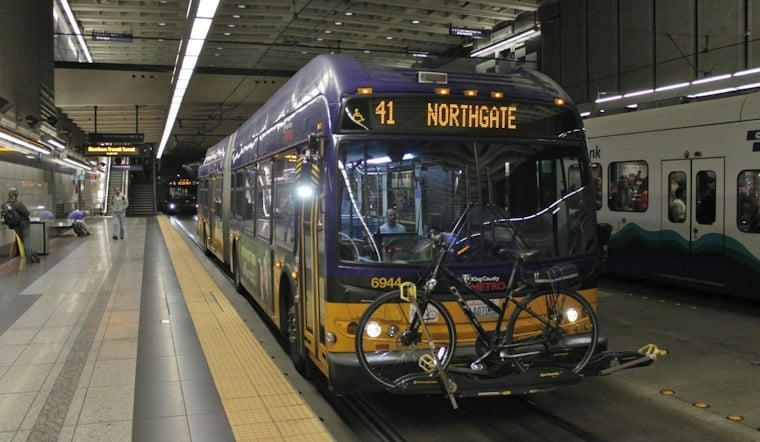
Seattle bus riders counting on King County Metro to restore 114,000 annual service hours next year will have to wait longer. The agency has pushed its timeline for bringing back suspended and reduced routes from 2027 to 2028, even as it insists the full restoration is still coming.
According to The Urbanist, Metro does intend to restore the full 114,000 hours of service in Seattle, but that service will not hit the streets until 2028. The Seattle Service Recovery Project was initially budgeted for 2027, but the timeline has since shifted. Katie Chalmers of Metro said the project timeline shifted later after the budget was developed, per the same report.
The recovery project is intended to restore service in Seattle. Routes 15 and 37 are among those tied to the effort; Route 15 is not running and would need a King County Council vote to return.
Other Parts of the County Already Saw Restorations
Metro has already implemented service restorations in South King County, North King County, and on the Eastside, and is now planning adjustments in Renton. Seattle, however, remains behind: the agency currently provides around 92% of the service hours it offered seven years ago, according to The Urbanist's reporting.
Metro's public engagement on the Seattle recovery hours is expected to run through the first half of 2027, with an ordinance planned for the King County Council in early 2028.
Transit Measure Funding Complicates the Picture
The delay comes even as Seattle voters approved a renewed Seattle Transit Measure in a beefed-up form this month by a landslide 73%. Metro expects that measure to ramp up to an additional 95,000 service hours across the city, and implementing it is expected to be the agency's primary task in 2027.
Ballard's Fight Over Routes 15 and 17
The gap between transit measure priorities and suspended routes fueled a fight at Seattle City Council over funding for two specific Ballard bus lines. Councilmember Dan Strauss proposed setting aside $2.5 million for Routes 15 and 17, arguing that Ballard lacks the frequency of other parts of the city and that travel times there are comparable to Seattle-Tacoma trips, according to Seattle Politics. Route 17 is a Ballard route, while Sound Transit's Route 594 takes around an hour from downtown Seattle to the Tacoma Dome during peak hours. Seattle Politics also reported Strauss's travel-time argument and a roughly 35-minute trip to Ballard.
Strauss's amendment failed 3-6 in the Select Budget Committee, with Councilmembers Joy Hollingsworth, Robert Kettle, and Dan Strauss voting in favor, Seattle Politics reported. Councilmember Dionne Foster opposed the measure, citing SDOT's potential transit measure investments as a reason — even though SDOT's investment list did not include Ballard routes. Seattle Politics also reported that SDOT said the proposed service increase would require King County Council approval and was unlikely to be implemented until 2028.
County Council Holds Back Millions in Funding
At the county level, Councilmember Jorge Barón secured approval of a King County Council budget amendment on Tuesday that places a hold on $4.16 million intended for service changes next fall.
The scale of the broader rebuilding effort is notable given how far service fell during and after the pandemic. In 2025, King County Executive Shannon Braddock proposed a 2026-27 budget that adds more than 400,000 hours of Metro bus service and totals $4 billion, according to the King County Metro blog. For Seattle riders still waiting on suspended routes like the 15 and 37, that countywide investment has yet to translate into a faster timeline for their own neighborhoods.





