

























































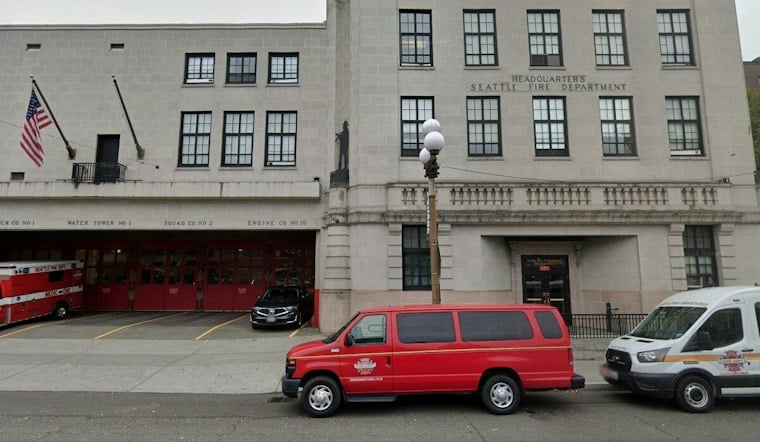
Seattle Fire Department dispatchers have been getting live prompts from an artificial intelligence system on 911 medical calls since December 2023, nudging them toward routing certain patients to a nurse line rather than sending an ambulance right away. The tool, built by a Danish company called Corti, listens to calls and flags the ones it thinks don't need rapid response. For years, the department ran it without public disclosure or a formal public review.
That is the core finding detailed by The Seattle Times, which reported that Seattle's technology officer warned years ago that using AI on 911 medical calls could pose equity risks. Ginger Armbruster, who served as the city's chief privacy officer in 2019, says she flagged those risks early and recommended equity-risk mitigation strategies for the Fire Department's AI project, but says she never heard back about her concerns. She also says she believes she should have been consulted again once live-call AI prompts actually began in 2023, and that the department deployed the tool with good intentions to improve 911 effectiveness and efficiency even as her questions went unanswered.
How the AI Prompts Work on Live 911 Calls
The AI prompts guide dispatchers to route certain 911 patients to a Texas-based nurse line instead of dispatching immediate aid, according to the Seattle Times reporting. Corti's system listens to all Seattle 911 medical calls, as EMS1 reported, and GeekWire confirmed that SFD started using the live prompts in December 2023. Seattle Fire Assistant Chief Chris Lombard told GeekWire that dispatchers retain final authority over every call, and the department says those who ignore the AI's advisory prompts aren't penalized.
Fire officials maintain that human dispatchers control calls and are trained to handle them equitably. Department dispatchers are firefighters who remain decision-makers on 911 medical calls, receive special training including state certification, and follow state 911 coordination office policies meant to support callers with disabilities and non-English speakers. The department says it has also increased efforts to reduce implicit bias and remove barriers to services, and that dispatchers use call-taking protocols developed with oversight from the department's medical director.
The Nurse Line's Roots and a Contract Change
Seattle started transferring some 911 patients to American Medical Response's nurse line back in 2022, a move intended to divert callers with less urgent issues to other options, according to The Spokesman-Review. That same year, the city changed its AMR contract to exempt nurse-ordered ambulances from response-time standards and tracking — meaning those calls don't show up in the usual performance metrics. The nurse line is intended for callers with low-level problems.
A Seattle woman waited more than 10 hours for a nurse-line-related ambulance response before she was found dead, according to the Times. The Fire Department has not shared research addressing how Corti's AI, the nurse-line triage process, or outcomes vary by equity, ethnicity, or accent.
A 2019 Pilot That Skipped Standard Review
Corti is building Seattle Fire a new 911 call-taking platform, and the department originally wanted to use Corti's AI to review completed calls for quality assurance as a pilot project. According to the city's Information Technology Department, that 2019 pilot did not go through Seattle's normal purchasing process or receive a comprehensive technology review. Armbruster says she identified data ownership, data sharing, data breach, and equity concerns in a 2019 privacy risk analysis memo, warning that AI decisions could be affected by language, accents, and disabilities. She also recommended a race and social justice assessment of the Corti project, working with public leaders to validate and socialize the technology, and preparing documentation and case studies ahead of media and public inquiries. The department says it partly addressed her concerns through a 2019 data-sharing agreement with Corti, which described training the AI by listening to actual calls. Armbruster left the city after a restructuring.
Conflicting Numbers on the Nurse-Line Increase
Just how much the AI has changed call volume to the nurse line is itself disputed. EMS1 reported that a Fire Department spokesperson said in late May the AI-associated increase in nurse-line calls was actually 32%, a figure offered to clarify the 50% increase cited in a 2024 Corti news release. The two figures have not been reconciled publicly.
The department has said the University of Washington is evaluating the AI program's effectiveness, though officials didn't immediately share details, per the Spokesman-Review's reporting. UW Medicine is separately conducting an evaluation of the Fire Department's AI and the nurse line, but the department and UW Medicine have not shared evaluation specifics or an estimated completion date. In May, the Fire Department had no public metrics to show whether the AI was actually improving outcomes for 911 callers. The department has since asked the city's Information Technology Department to conduct retroactive privacy reviews of its Corti platform. Corti did not comment when contacted for the Seattle Times story.
Experts Question Speech Technology's Limits
University of Washington computational linguistics professor Emily Bender said automated prompts influence dispatcher choices and that speech technology does not work equally well across all language varieties. She worries Corti's language model may perform less well for callers with disabilities, accents, or stress-related speech differences, and said real-time AI use raises accountability questions when something goes wrong.
University of Michigan professor Shobita Parthasarathy, who directs that school's science, technology and public policy program, also weighed in on AI regulation. Bender and Parthasarathy both said public evaluation should have happened before the AI was fully deployed.
Not all the research cuts against the technology. A 2023 Danish study, coauthored by the Seattle Fire Department's medical director, found that Corti's AI detected strokes in emergency calls better than human dispatchers across age and gender. Corti has said its models are superior because they're trained specifically on medical conversations, and the company's technology has also been used by Boston's Emergency Medical Services department for quality assurance on 911 medical calls, according to EMS1.
City Council and Advocates Push for Answers
Seattle City Councilmember Bob Kettle convened a public safety committee hearing to question Fire Department officials about the nurse line and the AI system, the Spokesman-Review reported. Tee Sannon, technology program policy director at the American Civil Liberties Union of Washington, has weighed in on surveillance. Armbruster and independent experts have called for suspending Corti's live prompts pending evaluation.
Mayor Katie Wilson declined an interview for the Times story but said through a spokesperson that her administration is developing a framework for assessing how city agencies use AI. In an email statement, Wilson's office wrote that the mayor is highly concerned about potential disparate impacts of AI and is working with the Fire Department, and promised a public update on all Seattle government AI uses in January. Wilson has said she believes thoughtful, moderated AI adoption that serves residents while protecting privacy is the best path forward. Seattle also has surveillance-reporting rules.



