

























































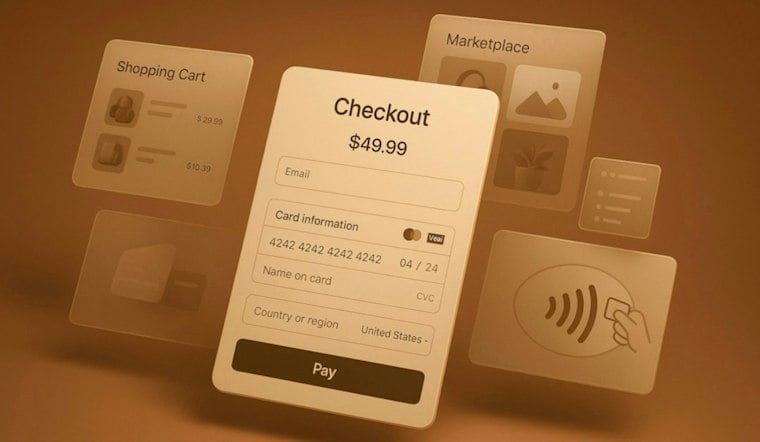
A Seattle-area startup just convinced some of the biggest names in finance and payments to bet on a future where AI bots do the shopping for you. Firmly announced a $15 million Series A round led by Squarepoint Capital, with heavyweight participation from J.P. Morgan Payments, Mastercard and Samsung Next, bringing the company's total funding to about $20 million.
Founded in 2019, Firmly connects retailers' existing online stores to AI assistants, marketplaces and other shopping channels, according to GeekWire. The pitch is straightforward: shoppers can complete purchases inside third-party apps and AI tools without ever visiting a retailer's website, while those retailers still keep their own payment providers and customer relationships intact. Mastercard, notably, isn't just writing a check — the company is also a commercial partner working directly with Firmly on infrastructure.
A Direct Line Into Mastercard's Agent Network
That partnership runs deep. Firmly handles the merchant side of Mastercard Agent Connect, a service that launched in September 2026 to link merchants, AI agents and payment providers through a single integration, per the same GeekWire report. Rather than building software that clicks through a retailer's web pages the way some AI agents do, Firmly connects directly to a retailer's backend systems with its permission — a distinction the company and its backers are eager to highlight as rivals experiment with less consensual approaches.
Firmly's co-founder and CEO, Kumar Senthil, has described the core problem the company is trying to solve: each new AI assistant, marketplace or shopping platform represents another potential sales channel, but wiring each one into a retailer's existing systems takes real engineering work. Senthil spent eight years at Microsoft before leading e-commerce products at Samsung, and he co-founded Firmly alongside Damien Balsan and Murali Krishnamurthy. Krishnamurthy now serves as Firmly's CTO after previously working as chief technical architect for Samsung's U.S. and global e-commerce business.
Ask Agent Debuts With Big Conversion Claims
Alongside the funding news, Firmly this week also launched Ask Agent, an AI shopping assistant designed to live directly on retailers' own websites. Shoppers can describe what they're looking for, get product recommendations, and check out — all without leaving the chat window, the company said. In a press release distributed via GlobeNewswire, Firmly said early deployments of Ask Agent drove conversion-rate improvements of up to 18% and increases in average order value of up to 23%.
On the pricing side, Senthil told Axios that Firmly charges merchants between $2,000 and $15,000 a month, depending on the total value of merchandise they sell. The company's customer list includes Best Buy, Furniture.com and Backcountry, with RetailMeNot and the AI shopping app Wizard also using its technology, the GeekWire report notes. Best Buy and Backcountry were also flagged as early users of a related Firmly feature in a separate report from Digital Commerce 360 earlier this year.
Retailers Are Watching the Agentic Shift Closely
Firmly's raise lands amid broader industry momentum toward what's being called agentic commerce — AI systems that can browse, compare and buy on a shopper's behalf. Research firm BCG reports that 68% of retailers surveyed expect agentic commerce to have a significant or transformational effect within two years, and the firm estimates more than half of e-commerce spending could be agent-assisted by 2030. BCG also found that 81% of U.S. consumers and 53% of European consumers expect to use AI agents when shopping, and the firm projects AI-driven traffic could overtake organic search traffic as early as 2028.
Not every retailer is rushing to open the door, however. More than one-third of retailers surveyed by BCG are running agentic-commerce pilots, while 18% are deploying them at scale — meaning most are still testing the waters. Consumer trust remains a real hurdle too: a Retail Dive report on a survey of more than 1,800 consumers found that 35% of respondents across generations said they'd prefer a human to review transactions before an AI agent buys something on their behalf.
Performance questions linger as well. A Visa-backed study cited by Fortune found that shopping agents tasked with buying items like TVs and laptops succeeded only about 57% of the time overall, though the top-performing agents in the study each completed a purchase successfully 82% of the time.
Not Every Platform Is Welcoming Bots
The push toward agentic shopping has already triggered friction elsewhere. Amazon said it has blocked Meta's new Muse personal AI assistant from shopping on Amazon.com on customers' behalf, according to a separate GeekWire report. Muse is designed to browse retail sites and buy items with a user's approval, but Amazon's move signals that not every major retailer is ready to hand over the keys to outside AI agents — even as companies like Firmly position themselves as the permission-based alternative.





