

























































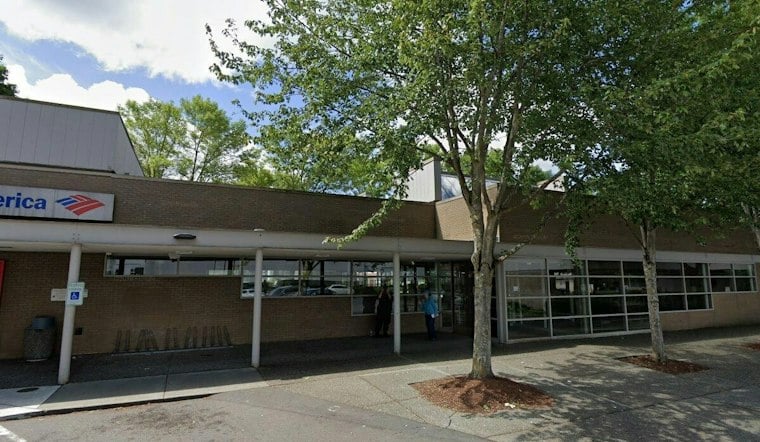
On November 27, 1996, a bank robbery at a Lake City Seafirst Bank branch in Seattle ended in a police chase and shootout that left two men wounded and sent investigators scrambling to find the elusive mastermind behind one of the region's most notorious crime sprees. One of those wounded men, getaway driver Steven Meyers, would spend more than 15 years in federal prison for his role in the robberies. Decades later, he's on friendly terms with the FBI agent who helped bring him down.
Meyers was part of a crew led by Scott Scurlock, a bank robber known as “Hollywood” for his elaborate disguises, according to KOMO. Scurlock relied on wigs, makeup and prosthetics to change his appearance before walking into banks, the outlet reports. Investigators later found a makeup studio stocked with fake moustaches, latex chins and pancake makeup in a barn on Scurlock's Olympia property, according to a contemporaneous account from The Seattle Times.
A Treehouse Hideout and a Growing Case File
Scurlock maintained a multistory treehouse hideaway in the woods outside Olympia, according to KOMO's reporting on the case. Former FBI agent Shawn Johnson, who worked the investigation, recalled a crew that was far more disciplined than the typical bank robbery outfit. “They planned meticulously — far beyond typical bank robberies. Over time, they became extremely skilled, leaving little evidence behind,” Johnson told She Rises Studios.
Accounts differ on exactly how large the operation became. KOMO's report describes 19 bank robberies that netted more than $2 million over four years, while a SOFREP Radio interview put the same span at four and a half years and more than $2.3 million stolen. HistoryLink, meanwhile, described the November 27, 1996, Lake City attempt as Scurlock's 15th Seattle-area robbery in four and a half years — a discrepancy that underscores how murky the full scope of the spree remains even decades later.
The Robbery That Ended in Gunfire
During the November 27 heist, Meyers told investigators he stayed outside the bank and monitored a police scanner rather than going inside, according to the Seattle Times archive from that period. An accomplice identified Scurlock as one of the robbers involved, the FBI said at the time, per the same Seattle Times account. The robbers stole $1.08 million, and investigators recovered the bank’s money.
What followed was a chase through the city. The van stopped at least twice so a gunman could fire at pursuing police and federal agents, Johnson told the Times in its original reporting; no agents were struck. Meyers was seriously wounded in the exchange, along with a second suspect, Mark Biggins, while Scurlock managed to escape the scene. Police found Scurlock the next day, November 28, 1996, as officers closed in on him; he died by suicide, according to KOMO's account of the case's final chapter.
From Interrogation Room to Mutual Respect
Meyers went on to serve more than 15 years in federal prison for his part in the crimes, KOMO reports. It was Johnson, the agent who had once investigated him, who eventually reached back out. “When the Netflix documentary came out, I reached out to Steven to discuss it,” Johnson said, according to She Rises Studios. The two talked more after reconnecting, and Johnson found new information in Meyers’s book.
Meyers, for his part, described the relationship's evolution in similar terms. “Over time, that evolved into mutual respect and eventually a friendship decades later,” he told She Rises Studios. He has also written about the case, saying his book lays out the gap between what he told investigators at the time and what he says actually happened. “Readers see both what I told the FBI and what really happened, which are often very different,” Meyers said.
Nearly thirty years after the Lake City shootout, the story of Seattle's “Hollywood” bandit continues to draw new threads together — an accomplice who served his time and an agent who once hunted him.



