

























































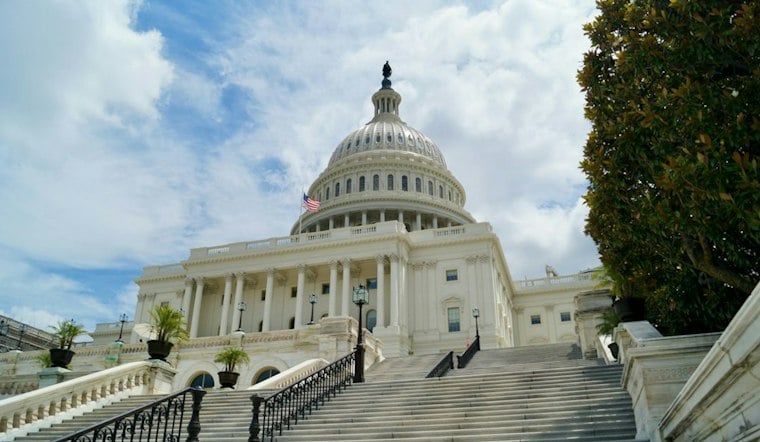
The U.S. Senate is expected to vote on a final version of a sweeping permitting bill before the Thanksgiving recess, and tribal nations and historic preservation organizations across the country are asking lawmakers to reject it. Senators who worked on the measure say it would create jobs and lower energy costs by speeding up approval of power plants, mines and natural gas infrastructure. Tribal officials argue it would instead weaken their ability to protect sacred and historic sites.
The Bipartisan American Affordability and Jobs Act, introduced as S. 5653 on Sept. 30 by Sens. Shelley Moore Capito, Sheldon Whitehouse, Mike Lee and Martin Heinrich, has moved through a series of procedural votes in recent weeks, according to KOSU. The Senate voted 73-25 on Nov. 9 to advance the bill, though the Native American Rights Fund was careful to note that vote was procedural and not a vote to pass the legislation. On Nov. 16, senators voted 70-27 to end debate on a managers’ amendment to the bill, a tally that included yes votes from Sen. James Lankford.
Sen. Martin Heinrich, one of the bill’s co-sponsors, said he worked to incorporate tribal feedback into a substitute amendment announced Nov. 7. That amendment would drop a proposed federal takeover requirement for tribal historic preservation programs and revise consultation procedures, according to Tribal Business News. The outlet reports the proposed changes would also provide technical assistance to tribal preservation programs and give tribes more time to raise objections during project reviews. Heinrich said the legislation would lower energy costs, strengthen tribal consultation and create more good-paying jobs.
Tribal Leaders Say the Fixes Fall Short
Despite those revisions, eleven tribal organizations — including the National Congress of American Indians, the Native American Rights Fund and the National Association of Tribal Historic Preservation Officers — urged Congress to hold the bill until the next Congress can conduct what they called meaningful tribal consultation, per the same Tribal Business News report. Mark Macarro, president of the National Congress of American Indians, the oldest and largest American Indian and Alaska Native organization, said the amendment does not fix the bill and that meaningful consultation requires regular order and deliberation. As reported by Native News Online, Macarro said the changes do not adequately address Tribal Nations’ concerns.
The National Congress of American Indians has said the bill was crafted without a legislative hearing, committee markup or timely meaningful consultation with tribal nations, and the organization has called the consultation process box-checking. It also expressed concern over potential penalties for tribal historic preservation officers and limited judicial remedies to prevent destruction of historic sites. Critics of the measure argue it narrows the scope of projects on which tribal officials can consult in the first place.
Muscogee Nation Principal Chief David Hill sent a letter to senators working on the bill, pointing to the role of Section 106 of the National Historic Preservation Act, which allows tribes, states and local governments to consult with federal agencies on development proposals and redesign projects to mitigate harm to sites. Hill said that process helped protect the viewshed of sacred sites, including Kolomoki Mounds in Georgia, after a proposed cellular tower threatened to impact the view of the mounds; the agency involved ultimately agreed to move the tower outside the mounds’ viewshed, resulting in a finding of no adverse effect. The Muscogee Nation Historic and Cultural Preservation Department also shared concerns about the legislation in a Facebook post, saying bill sponsors failed to properly consider tribal nations’ concerns about sacred-site protections and federal trust responsibilities.
Not All Tribal Voices Agree
The opposition is not universal. The Crow Tribe in Montana has expressed support for the bill, and the National Tribal Energy Association has advocated for streamlined federal permitting to expand energy development and economic opportunities on tribal lands, according to Boise State Public Radio. That split reflects a broader pattern seen elsewhere: at the Roca Honda uranium mine near Mount Taylor, a site of cultural significance to at least 30 Native nations, Acoma Pueblo does not oppose the project while the Navajo Nation and Isleta Pueblo do, High Country News has reported.
High Country News also notes that state and tribal staff go through hundreds of thousands of Section 106 reviews every year, underscoring how central that consultation process is to current practice. The outlet points to the SunZia Southwest Transmission Project as another flashpoint: tribal nations sued in 2024 over a lack of tribal consultation, and courts later ordered the Bureau of Land Management to redo that consultation.
What the Bill Would Actually Require
As written, the legislation would require consultation with state and tribal historic preservation officers, along with local and tribal governments, on historic property identification and potential adverse-effects reports. Congress.gov describes the Bipartisan American Affordability and Jobs Act of 2026 as a bill that modifies federal permitting processes, including environmental reviews, to expedite a wide range of projects, according to the bill’s listing on Congress.gov. If the Senate passes the bill, it would proceed to the House.
Many tribal officials say their core worry is less about any single provision and more about what gets lost when consultation requirements are narrowed: the ability to weigh in on development projects on lands important to them before damage is done. With a Senate vote expected before the Thanksgiving recess, that debate between energy-cost arguments and sovereignty concerns remains unresolved on the floor.





