

























































Portsmouth heard a blunt budget update this week. Less than half of the state money set aside for Downtown and Midtown tunnel toll relief has been used, and one senator put the drawdown under 30%.
That unused share is now the argument against asking Richmond for more. Sens. Louise Lucas and Emily Jordan brought the figures to Portsmouth City Council on Tuesday while the city lined up legislative priorities for the coming General Assembly session, WAVY reported.
What Council Heard
Lucas, who represents Portsmouth and helped secure the allocation, said the next request met hesitation because the $101 million had not been fully drawn down. She also said future expansion of the relief may be limited. Jordan, who represents Suffolk, was more specific: less than 30% of the allocation had been used.
The slower spend is not a brand-new discovery. A May report had already said only a fraction of the $101 million had been used, even as enrollment increased. What changed this week is the political use of that fact. Lawmakers are treating an underdrawn account as a reason to pause, not as a prompt to widen the offer.
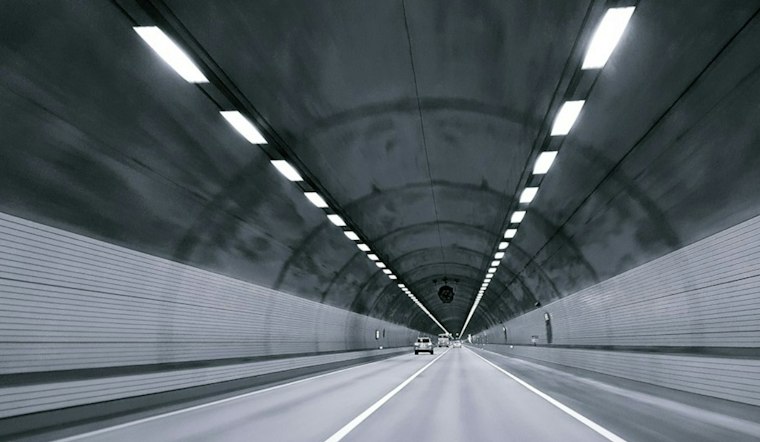
The tunnels in question run between Norfolk and Portsmouth beneath the Elizabeth River. For drivers who use them as a commute rather than an occasional crossing, a relief program that exists on paper and a relief program that actually clears a toll are different things.
How The $101 Million Was Built
Virginia's two-year budget included $101 million for toll relief at the Downtown and Midtown tunnels, WAVY reported when the money was on the way. The Virginian-Pilot later broke that sum into a $77 million earmark in the first fiscal year and $24 million in the second.
The descriptions of who gets what do not collapse into a single rule. The state program was intended to provide free trips for drivers earning under $50,000 a year and living in Norfolk or Portsmouth, and it is scheduled to continue through 2036. A separate account of the expanded program said residents of Portsmouth, Norfolk, Newport News, Hampton and Franklin could get up to 14 free tunnel trips a week. The Pilot described the expansion as covering 100% of up to 14 trips for eligible two-axle passenger vehicles.
The newer relief was also described as including forgiveness of individual toll debt and a no-cost E-ZPass transponder. Those pieces matter as much as the weekly trip cap. A free crossing does not help a driver who is still carrying old fees, or who never got the transponder the signup requires.
A Separate Discount, And A Debt Payment
The state allocation is not the only relief on these tunnels, and mixing the two programs is an easy way to misread the books. Elizabeth River Crossings provides $3.3 million to $3.5 million a year for a separate discount: 50% off tolls for up to 14 trips a week for eligible Hampton Roads residents earning $65,000 or less, with an E-ZPass. That geography is wide. It includes Chesapeake, Gloucester County, Hampton, Isle of Wight County, James City County, Newport News, Norfolk, Poquoson, Portsmouth, Suffolk, Virginia Beach, Williamsburg, York County, Franklin, Surry County and Southampton County.
VDOT says it and Elizabeth River Crossings developed the Elizabeth River Tunnels Toll Relief Program to administer money from ERC and the Commonwealth for residents most affected by the tunnels' tolls. The annual ERC discount and the newer state-funded relief sit inside that larger effort. They are not the same pot of money.
Debt is its own line item. WAVY's account said toll-relief funds had forgiven $36 million in drivers' toll debt. A separate report said VDOT will pay ERC $36.2 million to cover outstanding balances and fees for Portsmouth and Norfolk drivers, for tolls incurred from 2014 through Dec. 31, 2023, in three installments through January 2027. Those figures were not reconciled in the reporting. Either way, paying down old balances is not the same as funding the weekly free trips still ahead.
Tolls That Outlast The Relief
ERC, a privately owned company, has set tolls on the Downtown and Midtown tunnels since 2014. The tolls were set to fund a new Midtown tunnel tube and the Martin Luther King Jr. Expressway. Improvements included the new westbound Midtown tunnel. ERC has said revenues help repay $2.1 billion of debt for structural improvements and rehabilitation completed in 2017. The contract with Virginia lets ERC collect tolls until 2070, and the company can raise rates every year.
Lucas put the political appetite next to that structure. She said people preferred that the tolls disappear rather than pursue a relief plan, and that she did not know how the tolls could be completely eliminated. The state relief is scheduled through 2036. The concession runs more than three decades past that. A discount that has to be reauthorized, and that lawmakers now say may be hard to expand, is not a substitute for a toll that the contract still allows.
That is the local bind. Drivers can be offered free trips, a half-price discount, or a payment against old debt, while the company that collects the toll keeps the right to charge it, and to raise it, for decades. Unused relief money does not shorten that contract.
Signing Up, And The Next Ask
Applicants have to have an E-ZPass and sign up in person at one of three E-ZPass service centers. The Portsmouth center is off Victory Boulevard. The Norfolk center is off Church Street. DriveERT's customer care center is also in Portsmouth. The reporting does not say why so much of the $101 million remains unused, and it does not say whether leftover money will be extended, moved or taken back.
What it does say is that enrollment had been rising while spending lagged, and that Lucas now expects hesitation on the next request because the allocation was not fully drawn down. Portsmouth's Tuesday session was about priorities for the General Assembly, not a vote to close the program. The practical path for a driver who already qualifies is still the in-person signup. The political path for a wider discount runs through a budget that, by the senators' own account, Richmond has not finished spending.




