

























































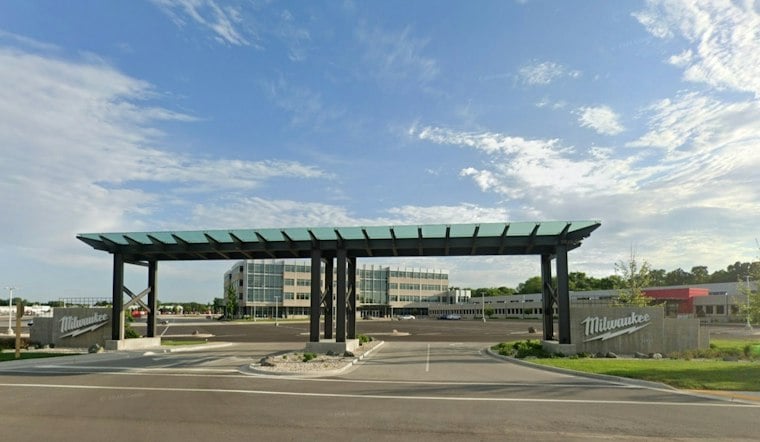
A federal appeals court has let a forced-labor lawsuit against Milwaukee Tool go forward, keeping open whether a Wisconsin company can be sued for benefiting from prison labor in China.
The Seventh Circuit allowed the case against Milwaukee Electric Tool to proceed and dismissed the appeal against parent company Techtronic Industries, Wisconsin Watch reported. Natalie Yahr wrote the account, with reporting contributed by Zhen Wang and Julius Shieh. The plaintiff, identified as Xu Lun, wants compensation. The company says it found no forced-labor link.
Gloves, A Pseudonym, And A Prison Shift
Xu Lun alleges that Chinese prison officials forced him and other prisoners to make gloves bearing the Milwaukee Tool logo. His lawyers say he and others manufactured Milwaukee Tool-branded work gloves for Shanghai Select Safety Products and were paid between $1.41 and $42.50 a month. He is using a pseudonym because he feared for his safety.
In 2023, Xu Lun said the gloves were headed for America and that the labels carried a Brookfield address. On Feb. 5, 2023, Milwaukee Tool gloves were seen at a Home Depot in Madison. A December 2025 order from the Eastern District of Wisconsin described Techtronic Trading as having exported the gloves, made with forced labor, to Milwaukee Tool for sale to U.S. consumers. That description comes from the court's account of the allegations, not from a finding that the company knew.
Lee Ming-che, a Taiwanese human rights activist and college administrator, gave Wisconsin Watch a separate picture of prison work in Hunan. Imprisoned at Chishan Prison in 2017 after a conviction for subverting state power, and released in 2022, he said he and hundreds of other prisoners were forced to work about 13 hours a day, seven days a week, for about 48 cents a day.
A Port Detention And A Marketplace Pull
Selling goods made with foreign forced labor is already barred at the border. Section 307, a 1930 tariff law, prohibits the sale of such goods. In April 2024, U.S. Customs and Border Protection said it would detain, at U.S. ports, gloves made by Shanghai Select Safety Products or two subsidiaries, citing information that reasonably indicated the use of convict labor. The agency's withhold-release announcement said personnel at all ports of entry would detain work gloves from Shanghai Select Safety Products Company, Limited, and two Chinese subsidiaries, including Select (Nantong) Safety Products.
Milwaukee Tool denied the allegations tying it to forced labor and said it found no evidence supporting a forced-labor link. Export Compliance Daily reported in July 2024 that the company had found no evidence of forced labor in its supply chains and had ended its relationship with the accused supplier. Walmart pulled the gloves from its marketplace.
Nicholas Bequelin, a senior fellow at Yale Law School's Paul Tsai China Center and former Asia-Pacific regional director at Amnesty International, wrote that forced labor is endemic to prison labor in China and that some of the resulting products reach the U.S. market. He also wrote that American consumers are largely unaware that some imported goods are made that way, even though those imports are illegal under U.S. law, and that litigation here can raise awareness and help curb the practice.
Why Judge Ludwig Dismissed The Case
U.S. District Judge Brett H. Ludwig dismissed the initial lawsuit in December 2025. He threw out the claims against Wisconsin-based Milwaukee Tool because, he concluded, Congress had not clearly indicated that the civil remedy applied abroad. The order says those claims were dismissed with prejudice for failure to state a claim, on the ground that the Trafficking Victims Protection Act's civil remedy does not apply extraterritorially.
Ludwig also found the court lacked jurisdiction over Milwaukee Tool's parent. He wrote that Techtronic Industries was a foreign corporation not subject to general personal jurisdiction and that the case did not relate to its U.S. contacts. Those claims were dismissed without prejudice, which left open the possibility of filing them somewhere the company could be sued. Xu Lun appealed.
The statute his lawyers invoke, the Trafficking Victims Protection Reauthorization Act, lets victims sue people who knowingly benefit from their forced labor. A related criminal provision subjects to a fine or imprisonment anyone who knowingly benefits from a venture's violation while knowing of that violation or recklessly disregarding it. Knowing benefit is the legal hook. It is also the fact Milwaukee Tool disputes.
Two Readings Of The Same Statute
At arguments on Nov. 4, the lawyers were not really fighting about whether prison labor is ugly. They were fighting about who the statute reaches.
Jennifer Bennett, for Xu Lun, argued that the law applies because Milwaukee Tool is an American company that benefited from forced labor, and that Congress meant to undermine the market for goods made that way. She argued that possible involvement by a foreign government is a reason to enforce the law, not a reason to step back. Congress, she said, wrote it partly because foreign governments might fail to stop trafficking or might take part in it.
David Horniak, for Milwaukee Tool, argued the opposite: the company did not participate in a forced-labor venture, so the statute does not apply. He said liability could have sweeping consequences for consumers, who might unwittingly benefit from forced labor by buying goods on Amazon or Temu. He also argued that the Chinese government, not a private company, forced the prisoners to work, and noted that U.S. prisons sometimes force people to work too.
What The Seventh Circuit Left Standing
The Seventh Circuit dismissed the appeal against Techtronic Industries and allowed the case against Milwaukee Tool to proceed. The parent company is out of this appeal. The Wisconsin toolmaker is not.
That split matters because trial courts have not been speaking with one voice. OnLabor describes disagreement over whether the TVPRA's extraterritorial-jurisdiction provision covers the civil remedy or only the criminal provisions, even as several recent district courts have followed Roe v. Howard and applied the statute abroad. Wisconsin Watch reported a longer-running view that the civil provisions do meet the standard for extraterritorial application. Charity Ryerson, a human rights lawyer and executive director of the Chicago-based Corporate Accountability Lab, said a minority of courts have ruled that they do not.
Other supply-chain cases have cleared the pleading stage on different records. A district court allowed Indonesian fishers' TVPRA and California negligence claims against tuna company Bumble Bee to proceed, Jones Day wrote, over allegations that the company imported and sold tuna harvested with forced labor. In 2016, seven Cambodian villagers sued Rubicon Resources, affiliate Wales & Co. Universe, and Thai companies Phatthana Seafood and S.S. Frozen Food, alleging the companies knowingly benefited from their trafficked labor. SeafoodSource reported that a Ninth Circuit panel revived that case in 2026 and sent it back for another look.
Ryerson hopes the plaintiffs prevail, both to preserve a route to court for people forced to make U.S.-branded goods and because a win would make forced labor riskier for American businesses. She said the outcome could affect workers well beyond this glove line. A loss, she said, could block similar claims in Wisconsin, Illinois and Indiana, the three states in the Seventh Circuit. Bloomberg Law has separately described workers overseas as ready to press other legal theories against American companies over alleged forced labor in supply chains.
For Xu Lun, the immediate consequence is narrower and more concrete: his damages claim against Milwaukee Tool is back in play, and the appeal against Techtronic Industries is over.





