

























































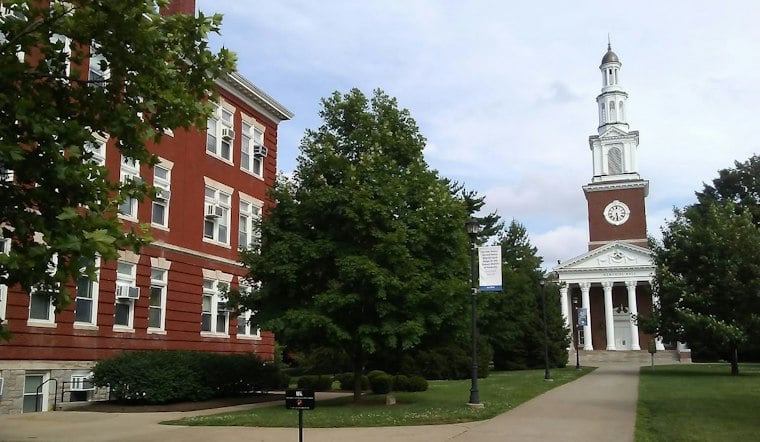
A closely watched free speech lawsuit was filed by a University of Kentucky law professor who was pulled from the classroom over his public criticism of Israel. In a separate Franklin Circuit Court case, Woodcock's attempt to obtain an injunction related to the law dean's appointment failed.
The case has already made one round trip through the appellate system. As reported by Reuters, Beaton described the case's path as circuitous, a nod to the fact that the dispute had already been paused once by a federal judge, only to be revived by a higher court months later.
Woodcock, who works at the University of Kentucky in Lexington, was removed from teaching and banned from campus in July 2025 after the university launched an investigation into his criticism of Israel at academic conferences and in online forums. According to the Lexington Herald Leader, the university barred him from teaching on July 18, 2025, at least until the investigation was complete, and university officials have said his statements created a hostile environment for Jewish members of the university community.
A Lawsuit Alleging Political Pressure
Court records reviewed by Reuters show the university temporarily reassigned Woodcock's duties to what it called 100% professional development while the investigation proceeded, a detail confirmed in a district court order reproduced by Justia. Woodcock sued the university in November 2025, claiming it violated his free speech and due process rights. His lawsuit alleged the investigation was baseless and was instead prompted by political pressure from state lawmakers pushing for a crackdown on antisemitism on college campuses.
That same January 2026 order denied Woodcock's motion for a preliminary injunction and stayed the case entirely, pending the completion of the investigation and any subsequent proceedings, according to the court filing. A Kentucky federal judge put the case on hold while the university's internal process continued, a pause that lasted until the Sixth Circuit stepped in.
Sixth Circuit Sends the Case Back
The U.S. Court of Appeals for the Sixth Circuit reversed the decision to freeze Woodcock's lawsuit, finding that the university's investigation was too preliminary to satisfy the federal court's abstention requirements. As Inside Higher Ed reported, the appeals court noted that the university had not even made a threshold determination that Woodcock violated one of its policies, and pointed out there was no ongoing formal proceeding against him, nor had the university filed a formal complaint. The Sixth Circuit did not rule on whether the university actually violated Woodcock's First Amendment rights, leaving that question for further proceedings.
University Declines to Comment
University spokesperson Jay Blanton declined to comment on Beaton's ruling.
A Similar Fight Played Out at CUNY
Woodcock's case isn't the only recent dispute over how long a university can keep an investigation into pro-Palestinian or anti-Israel speech open. In a separate case out of the City University of New York, a federal judge rejected a harassment lawsuit involving a university investigation. According to Reason's Volokh Conspiracy, the court found that the investigation did not result in cognizable harm, and separately held that discrimination claims tied to CUNY's Palestinian Solidarity Series were not actionable because the events amounted to protected political speech.
That CUNY ruling does not resolve Woodcock's Kentucky case, and the two disputes involve different universities, different plaintiffs and different legal theories. But both cases now sit at the center of a broader legal question that federal courts are being asked to answer: how much latitude a public university has to investigate a professor's speech before that investigation itself becomes the constitutional problem.



