

























































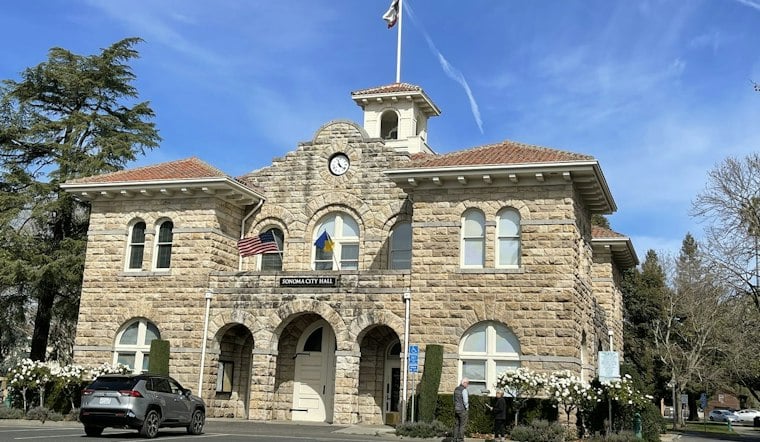
The Sonoma City Council is set to review a new policy this week spelling out exactly how city employees should handle encounters with federal immigration authorities, from a code enforcement officer at the counter to a clerk fielding a records request. City staff are recommending the council adopt the California Attorney General's model policy by resolution and direct the city manager to put it into practice.
The item is scheduled for the council's meeting on Wednesday, November 18, according to the Sonoma Valley Sun. The policy stems from Senate Bill 580, which the Sun reports applies to the city as a whole, covering every city department, and requires state and local agencies to implement the Attorney General's model policies, or an equivalent, by January 1, 2027.
What the Policy Would Require of City Staff
Under the framework described in the Sun's reporting, the city would have to define which areas of its buildings are public and which are nonpublic, and adopt written procedures for encounters with immigration agents both with and without a warrant. Public areas remain open to everyone, but staff would not be allowed to voluntarily consent to let agents into nonpublic areas without a judicial warrant or other legally sufficient authority.
The policy also calls for designating trained personnel to evaluate requests and legal documents, specifically so frontline employees are not put in the position of making legal determinations on the spot. Per the Sun's account, staff would be required to route all such requests to those designated personnel immediately, and the city would need written procedures tailored to different types of requests, including informal inquiries, administrative subpoenas, judicial subpoenas and court orders, Public Records Act requests, and federal program requests.
Data Rules and Recordkeeping
The city would also be barred from asking about anyone's citizenship or immigration status unless required by law or a specific program, and could collect only the personal information it actually needs for a given purpose. The same report notes the city must maintain retention schedules and secure deletion procedures, apply role-based access controls, and safeguard personal information that might otherwise be visible in public areas.
City staff would also need to attach the policy to relevant contracts, memoranda of understanding, and other agreements, and keep a centralized record of all interactions with immigration authorities and information requests, according to the same account. Designated personnel and any staff handling sensitive information would receive training under the policy.
How This Fits Into State Law
The Attorney General's model policy is designed to be consistent with 8 U.S.C. § 1373, a federal statute that, per the Office of the Law Revision Counsel, bars state and local governments from prohibiting the sharing of citizenship and immigration status information with federal immigration authorities. The model policy directs employees to comply with valid judicial warrants and court orders and to act lawfully and professionally with federal officers, while not authorizing obstruction, according to the Sun's reporting.
Under SB 580's text, the Attorney General was required to publish model policies for state and local agencies on interactions with immigration authorities, consistent with both federal and state law, according to California Legislative Information. Lawmakers framed the measure around the idea that trust between California's immigrant community and state and local agencies is central to public safety, health, welfare, and constitutional rights, as described in the Sun's coverage.
Neighboring Cities Have Already Moved
Sonoma would not be the first North Bay city to act. Petaluma adopted its own SB 580 policy on September 28, according to a City of Petaluma page. That resolution bans federal immigration agencies from setting up staging areas on city property and limits both voluntary assistance to immigration agencies and the disclosure of city information except when required by law, the Petaluma Argus-Courier reported.
Petaluma's version also provides new training for staff who come into contact with ICE agents and bans ICE from entering non-public areas of city property without a judicial warrant or court order, the paper noted. The city planned to install signs marking public and non-public areas within 30 to 60 days of the September 28 meeting. Still, staff there cautioned, according to Citizen Portal, that adopting the policy does not guarantee immunity from litigation or federal funding disputes.
Contra Costa County is weighing a similar move at the county level. Its Board of Supervisors was scheduled to consider a countywide policy establishing how county employees and departments respond to federal immigration authorities, according to Contra Costa News. That proposal reportedly goes beyond the state's minimum requirements, with added provisions meant to protect personal information, preserve county services, and restrict use of county property for immigration enforcement, and would direct departments to designate specific employees to handle interactions and requests from immigration authorities. County staff reported the policy would carry no fiscal impact.
Whether Sonoma's council ultimately adopts the policy as presented, amends it, or takes some other action at Wednesday's meeting was not addressed in the available reporting.



