

























































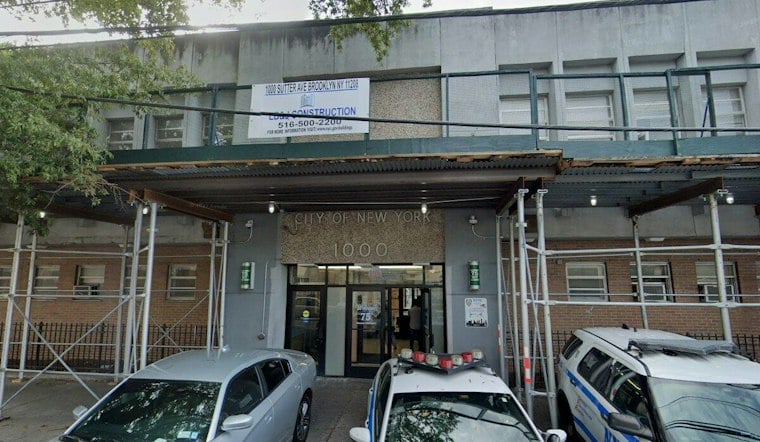
More than 60% of every criminal summons the NYPD wrote for loitering between 2025 and the first half of 2026 came out of a single police precinct — the 40th, which covers Port Morris, Mott Haven and Melrose in the South Bronx. The same precinct accounted for more than a third of the city's panhandling complaints over that period, according to a new analysis of NYPD data. Across the East River in East New York, the 75th Precinct led the city in a different category entirely: public drinking.
The findings come from an analysis described by Gothamist, which reports that officers in East New York issued 855 criminal summonses for alcohol in public from 2025 through the summer of 2026 — the most of any precinct citywide and 8% of all such tickets issued in New York. Taken together, the numbers show NYPD officers issuing criminal tickets for low-level offenses at higher rates in the South Bronx and East New York than anywhere else in the city, per the analysis.
NYPD spokesperson Bradley Weekes attributed the enforcement pattern partly to a surge in resident complaints. He said officers in both precincts are responding to a rising tide of 311 calls, noting that in the 40th Precinct, 311 calls have increased 215% since 2015, while in the 75th Precinct they've jumped 556% over the same stretch. Weekes did not immediately say whether those precincts actually receive disproportionately more 311 complaints about low-level offenses than other parts of the city.
Tickets Are Down, But Still Concentrated
Despite the outsized share of enforcement in these two neighborhoods, the NYPD says the overall volume is shrinking. Weekes said officers in the 40th Precinct have written 20% fewer criminal summonses this year compared with the same period last year, while officers in the 75th Precinct issued 15% fewer. He also said citywide criminal summons levels have not grown over time and are now similar to where they stood during the de Blasio administration, excluding the pandemic years.
Citywide, the analysis projects officers are on pace to issue 101,192 criminal summonses in 2026. That would mark a slight decline for the year. According to the Data Collaborative for Justice, criminal summonses plunged 90% from 375,707 in 2013 to just 36,621 in 2022, before climbing 62% between 2021 and 2022 alone.
The Data Collaborative for Justice's research also shows that the Bronx and Brooklyn accounted for over 60% of all summonses issued citywide between 2020 and 2022, with the Bronx alone responsible for 30% despite making up only 17% of New York City's population. Separate research from John Jay College of Criminal Justice found that between 2003 and 2019, the Bronx and Manhattan had the highest rates of summons issuance in the city, with the Bronx's 44th and 40th Precincts alone accounting for 11% of all criminal summonses issued in 2019.
Racial Disparities Persist in Who Gets Ticketed
Nearly 82% of criminal summonses issued in the first half of 2026 went to Black and Hispanic New Yorkers, according to the analysis. That echoes earlier findings from the Data Collaborative for Justice, which reported that from 2020 to 2022, over 85% of criminal summonses were issued to Black or Hispanic residents, who together make up 52% of the city's population.
Audrey Martin, a spokesperson for the Legal Aid Society, said the data shows police unfairly target neighborhoods where many low-income people of color live. Martin added that summons-heavy policing doesn't change anything except how much time residents spend fighting tickets and how much money they end up paying.
That critique is backed by court outcomes. The courts threw out 65% of summonses issued in 2024 for paperwork or legal insufficiency errors, according to the Data Collaborative for Justice, while Gothamist's reporting on the same year put the dismissal rate at 65% due to paperwork issues or legal insufficiency. Only 9% of summonses arraigned in court in 2024 ended in a conviction, the Data Collaborative for Justice found. Researchers note that people can still lose time and wages fighting tickets even when the cases are ultimately thrown out.
Researcher Calls Enforcement Volume a Choice
Michael Rempel, a researcher with the Data Collaborative for Justice, said open-container and loitering violations give officers more discretion than almost any other offense category, and that officers often aren't responding to a specific 311 complaint when they write those tickets. Rempel said issuing large numbers of those summonses is, in the end, a choice made by police leadership rather than a fixed response to complaints.
The NYPD's patrol guide allows officers to issue a criminal summons instead of a lesser civil ticket in cases involving recidivism, an outstanding warrant, or another legitimate law enforcement reason. Under the city's Criminal Justice Reform Act, officers have the option to issue civil rather than criminal summonses for several specified low-level offenses, including public alcohol consumption, public urination, littering, unreasonable noise and park-rules violations, according to John Jay College research. In the year after that law took effect in 2017, combined criminal and civil summons issuance for those covered offenses fell 48%, and 87% of the tickets that were issued came as civil rather than criminal summonses, the same research found.
Residents Split on What the Tickets Accomplish
On the ground, opinions about the enforcement are mixed. Antigone Raynaud, who visits the Hub shopping district in the South Bronx regularly to sell blood plasma for extra cash, said drug use and homelessness seemed like understandable reasons for police to patrol the area. But she also said a loitering summons can snowball into an arrest warrant if it goes unpaid, calling it excessive for someone to be ticketed for simply standing somewhere and then arrested later for failing to show up in court.
Malaika Holder, who lives in Mott Haven within the 40th Precinct, said she wasn't surprised by the high rate of loitering tickets in her neighborhood, but found the numbers sad. Holder said the Bronx has a tense relationship with police, and that many of the neighborhood's informal community gathering spots are simply stoops. She argued that drug use should be addressed with resources other than the police department, and that people seeking relief from hard times through vices shouldn't be criminalized for it.
In East New York, Das Angshu offered a different view, saying police presence makes him feel safer and that officers in the neighborhood have been fair. Kenneth Willis said he supports police focusing on stopping serious crimes, but cautioned that heavy low-level enforcement could create tension between police and residents while imposing real court and payment burdens on people who get ticketed.
Political Backdrop and a Quality-of-Life Pilot
The enforcement data lands as Mayor Zohran Mamdani faces intense criticism over his handling of policing issues. As a mayoral candidate, Mamdani had said police should focus on solving more serious crimes rather than low-level offenses. Quality-of-life enforcement under his administration has continued at a rate similar to the final year of the Eric Adams administration, and the NYPD has kept up its broader crackdown on quality-of-life crimes and violations.
Both the 40th and 75th Precincts were also the launch sites for an NYPD Quality of Life pilot program, according to CBS New York. Officials said at the time that complaints about low-level offenses had doubled over the previous six years, with panhandling complaints alone rising 200%, and said the program would be evaluated over two months before any decision on expanding it further.



