

























































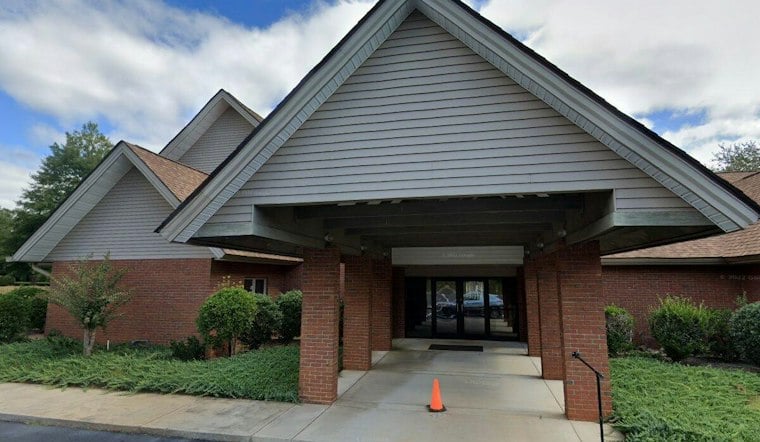
A South Carolina circuit judge has dismissed lawsuits the United Methodist Church’s South Carolina Conference filed against 70 churches that split from the denomination and tried to hold onto their buildings, ruling that the fight over who owns the property belongs to the church, not the courts. Circuit Judge Brian Gibbons issued the dismissal on Nov. 13, ending — for now — a legal battle that has simmered in Greenwood County state court since the churches began breaking away three years ago.
Gibbons found that deciding the Conference’s claims would force the court to interpret and enforce the denomination’s Book of Discipline, something he said the court has no authority to do, according to Baptist News Global. “The court concludes that it lacks subject-matter jurisdiction to adjudicate claims that require it to interpret and enforce the Discipline,” Gibbons wrote, per that outlet’s report. As described by Baptist News Global, the judge applied a doctrine known as ecclesial abstention, which holds that secular courts cannot intervene in internal church workings because doing so would violate the First Amendment’s provisions on separation of church and state.
As the Post and Courier reports, Gibbons wrote that he could not determine which party was the real church or who counted as loyal members — a question he said fell outside the court’s reach. The Post and Courier also reports that Gibbons found the Conference had no trust under secular law that the individual churches had actually signed, undercutting the denomination’s reliance on its so-called trust clause, which otherwise establishes that property of affiliated churches belongs to the Conference.
A Legal Fight With Roots Going Back Three Years
The dispute traces back to 2023, when the South Carolina Annual Conference used a temporary provision passed in 2019 to allow churches to vote on leaving the denomination, according to the Post and Courier. That window led 113 member congregations to receive approval to disaffiliate, and in June 2023, those 113 churches formally left the denomination during the annual state conference. Among them was Mt. Horeb United Methodist Church in Lexington, which had roughly 5,000 members and was the state’s largest affiliated church at the time, per the Post and Courier.
That provision expired at the end of 2023. The Post and Courier reports that the 70 churches named in the dismissed lawsuits moved to disaffiliate only after that deadline had passed, and the Conference deemed those later departures illegal — setting up the legal showdown that just ended in Gibbons’ dismissal.
Aldersgate United Methodist Church in Greenwood was included as a plaintiff, according to the Post and Courier. Court filings tied to a related case, Simpsonville Methodist, show the scope of what the Conference was seeking: a declaration that the church’s separation was invalid, the transfer of its property and assets, and the eviction of its pastor, Michael Smith, from the parsonage, according to Dalton & Tomich.
Money, Name Changes And Paperwork Fights
Departing congregations changed their names and incorporation papers as part of leaving the denomination, the Post and Courier reports. Dalton & Tomich’s account of the related Simpsonville case describes that church’s council taking corporate action in 2024 — amending its Articles of Incorporation and changing its name — and notes the court found most of Simpsonville’s deeds contained no trust language at all, with trust language in a handful of 2016 quitclaim deeds having been revoked.
The split has carried a real financial cost on both sides. The Post and Courier reports that disaffiliating churches had to pay apportionments and a percentage of liquid assets to leave, and that older churches without mortgages had to buy back their buildings outright; Covenant UMC in Greer paid the Conference $800,000 as part of that process. Departing churches collectively took $2.4 million in apportionment funds with them in 2023, according to the Post and Courier, a loss that contributed to the Conference cutting its own budget by 14 percent that year.
The theological rift behind the split centers on the denomination’s stance on sexuality. The South Carolina Conference has said departing congregations believed the denomination had not consistently upheld its stated doctrine on issues of human sexuality, according to South Carolina UMC. In 2024, the United Methodist denomination moved to endorse same-sex weddings and openly gay clergy, and the South Carolina Conference itself voted to affirm gay marriage and ordination that year, per the Post and Courier. The Conference maintains that its closure provision cannot be used by churches simply disaffiliating over theological differences, the Post and Courier reports, even though the Book of Discipline — the governing document cited by departing congregations — allowed churches to close if they no longer served their original purpose.
Conference Signals It Will Keep Fighting
The South Carolina Conference said it intends to appeal the dismissals, telling Baptist News Global it plans to pursue its legal options “in accordance with South Carolina law.” An appeal could land before the South Carolina Supreme Court, which had previously declined to hear the Conference’s request directly and instead assigned the matter to a lower court, according to the Post and Courier.
South Carolina is far from the only state wrestling with these disputes. Baptist News Global notes that U.S. Supreme Court precedent allows individual states to decide how they handle church-property cases, and the results have been inconsistent: courts in Alabama, Florida, Illinois, Maryland, North Carolina, Oklahoma and Pennsylvania have ruled in favor of the UMC or dismissed suits brought by departing congregations, the outlet reports. Just weeks earlier, the West Virginia Supreme Court reached a similar conclusion to Gibbons’, ruling that secular courts lack subject matter jurisdiction under the First Amendment and the state constitution to interfere in internal church governance and ecclesiastical matters, according to WV MetroNews. That case involved 33 West Virginia congregations seeking to disaffiliate while retaining their property, the station reported.
The churn is part of a much larger national wave. More than 7,600 United Methodist congregations — about a quarter of the denomination’s churches — moved to split while the disaffiliation process was open nationwide, per WV MetroNews, part of a broader exodus in which thousands of congregations nationwide departed the United Methodist Church over LGBTQ+ disagreements. Similar battles remain unresolved elsewhere: in Maryland, 37 churches including Calvary UMC have appealed the dismissal of their lawsuit seeking to leave the Baltimore-Washington Conference with their property, with the case still pending before the Appellate Court of Maryland, according to The Christian Century. In Texas, Highland Park United Methodist Church in Dallas has filed its answer to the Horizon Texas Conference’s lawsuit, seeking the case’s dismissal, the same outlet reports.
For now, the lawsuits against the 70 South Carolina churches have been dismissed. With an appeal expected and the state’s high court yet to weigh in directly, the question of who ultimately controls these sanctuaries, parsonages and bank accounts remains unsettled.





