

























































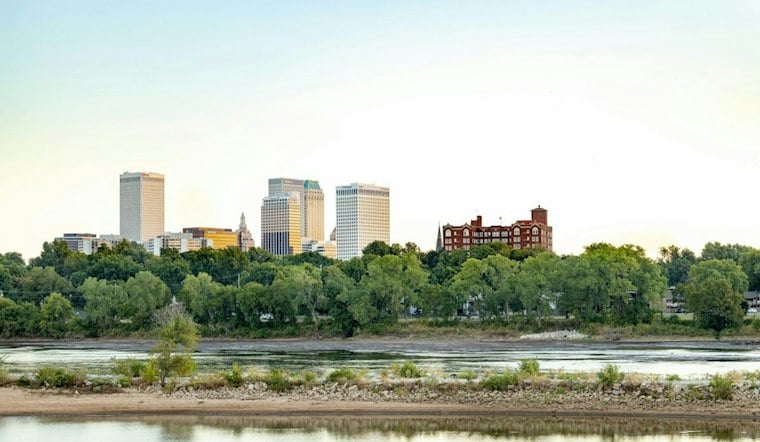
Tulsa and Jenks are still tens of millions of dollars short of what they need to build the long-promised South Tulsa low-water dam, with the funding gap ranging anywhere from $40 million to $90 million depending on which version of the project gets built. City leaders, county commissioners and Muscogee Nation representatives laid out the numbers at a public meeting Monday night, nearly a decade after voters first signed off on the idea.
The shortfall breaks down by scope. According to News On 6, the full version of the project — complete with a pedestrian bridge and amenities like river parks on both banks — would run about $194 million and is $90 million short of the funding voters approved in 2016. A stripped-down version without the bridge or the extra amenities would cost $144 million and leaves a $40 million gap instead.
Jenks Mayor Cory Box presented four separate options at the meeting, ranging from that full bridge-and-amenities build down to a bare-bones version that includes just the dam itself, per the same report. None of the four options currently has a clear path to full funding.
A Decade of Rising Costs
The dam isn't a new idea. Tulsa and Jenks have been working together on the project since before 2016, when voters in both cities approved it as part of the Vision Tulsa tax package. At the time, the estimated price tag was just $80 million — a fraction of where the numbers stand today. The City of Tulsa's own Vision Tulsa project list still shows $54,714,000 earmarked for the low-water dam and pedestrian bridge, while News On 6 reports that Tulsa voters separately approved up to $64.2 million for the project that year.
Leaders say the ballooning cost isn't a mystery so much as a byproduct of the times. COVID-era supply-chain shortages and inflation pushed project costs well past those original estimates, the station reported. Anthony Archie put it bluntly in comments to News On 6: “you have inflation, you have COVID and get prices that are just going up and up and up.”
Those escalating estimates aren't unique to this latest round of figures. Tulsa World reported a cost estimate of $180 million for the dam and pedestrian bridge, which a City of Tulsa report described as a 10% design estimate covering the base bid, amenities and a 15% allowance — but not an operational endowment. Tulsa Flyer likewise pegged the project at $180 million, not counting an estimated $20 million maintenance endowment, and noted that even the cheapest scaled-down option — essentially funding the low-water dam alone — still faced a funding gap of at least $40 million.
Who Pays, and How
The bill is expected to be split between Jenks, Tulsa and the Muscogee Nation, the station's report states. Jenks has already committed $10 million in excess Vision tax money toward its share, and Box said the city is looking into state and federal money as well as private partnerships to help close the remaining gap. Box also said he hopes Tulsa will commit additional money toward the project, according to the same account.
Design work is far from finished. The project is currently at just 10% design, and officials say it needs to advance to 30% design before more precise cost estimates can be produced. Further design work will be required before construction can even begin, meaning Tulsa and Jenks cannot start building until they figure out how to cover the shortfall.
What the Finished Dam Would Look Like
If built, the low-water dam would create a new lake in the Arkansas River stretching from 71st to 101st streets in south Tulsa. Phil Lakin said the riverfront land along that stretch is suitable for development, and that potential uses could include retail, restaurants, residential projects of all densities, and parks — pointing to the built-out parks at 31st and Riverside as a point of comparison for what has already taken shape elsewhere along the river.
South Tulsa's District 8 accounted for 18% of the citywide votes cast in favor of the dam back in 2016, underscoring how much local interest in the project has centered on that part of the city. Despite that support, the basic math hasn't changed: Jenks, Tulsa and the Muscogee Nation still do not have enough money to build the dam as currently envisioned, and Monday's meeting offered no resolution on which of the four options will ultimately move forward.





