

























































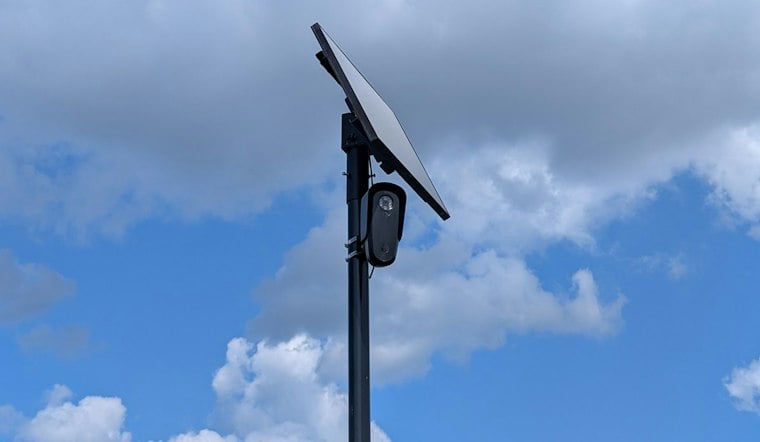
The immediate question before Southold officials is whether the town should keep its own Flock Safety contract. Councilwoman Alexa Suess urged her colleagues to reconsider the deal, arguing that the cameras’ privacy risks outweigh their crime-fighting benefits. The board took no action at a work session earlier this month; officials are scheduled to meet with county law enforcement later this month.
“We should reconsider our relationship with Flock, or at least commit to not renewing a contract,” Suess said, according to Newsday. Southold has 11 Flock cameras: eight operated by the Suffolk County Sheriff’s Office and three run by the town’s police department, the paper reports. Town records cited by Newsday show the town approved a four-year, $37,152 contract in January 2025 for its three cameras.
Privacy Concerns Clash With Crime-Fighting Claims
Suess has raised concerns about what license-plate-reader data may reveal beyond a vehicle’s movements. She told The Suffolk Times that it could show where people live and work, worship, seek medical care and associate with organizations.
Southold Police Chief Steve Grattan sees it differently. He supports keeping the cameras, telling Newsday they have helped find missing people and stolen cars and solved other crimes. The cameras have logged more than 500 “hits” for suspended registrations alone, the outlet reported, and have helped locate stolen vehicles and missing people.
Southold has changed how it handles outside access to its camera data. After seeing numerous out-of-state agencies pull the data, the department disabled nationwide sharing and now requires approval for new outside requests, The Suffolk Times reports. The department continues to share data with a handful of agencies, mostly in New York and Connecticut, according to the paper.
Flock Pushes Back on Data-Sale Fears
Flock Safety public relations manager Paris Lewbel told Newsday the company does not sell data, and that customers own 100 percent of the data generated by their own cameras and control their own sharing settings. That assurance hasn’t quieted critics elsewhere on Long Island. A report by Hempstead attorney Richard Hochhauser found that three Long Island law enforcement agencies searched the Flock network more than 2,700 times in a single month in June 2026, according to silive.com.
The board is scheduled to meet with the Suffolk County Sheriff’s Office during a public work session on November 17, Newsday reported. The meeting will bring the county agency, which operates eight of Southold’s 11 Flock cameras, into the discussion.
Part of a Broader Backlash Against Flock
Southold isn’t alone in reconsidering its relationship with the Atlanta-based camera company. At least 10 local governments and police departments have moved since summer to curb, restrict or end their use of Flock Safety technology, according to TechCrunch. Florida barred license plate readers from state highways and Texas paused state funding for Flock over the summer, the outlet reported, while Monroe, Ohio; Newburgh, New York; Richmond, Virginia; Hopkinton and New Bedford, Massachusetts; and Lansing, Michigan have all moved to end their Flock contracts in the past three months.
Closer to home, Auburn’s City Council voted 5-0 on Aug. 20 to terminate its own Flock contract, directing city departments to stop using the company’s cameras and databases once the required notice period passed, per FingerLakes1.com. Ithaca’s Common Council had already voted in March to end its contract, citing privacy, civil liberties and governance concerns, the outlet noted. In Texas, residents of League City voted against their police department’s continued use of Flock readers this week, and the cameras are now set to be removed, according to TechCrunch.
What the Research Shows About Flock’s Reach
The scale of Flock’s footprint — and the uncertainty around it — is itself part of the debate. The Pew Research Center analyzed 109,577 Flock license-plate-reader locations mapped on OpenStreetMap as of September 17, 2026, cautioning that the crowdsourced count should be read as a lower bound rather than a complete tally. Roughly 80 percent of the cameras identified fell in urban areas, Pew found.
Among agencies that reported sharing practices, Pew found the median shared camera data with 217 other organizations, mostly law enforcement entities. For agencies with public transparency portals, the median reported retention period was 30 days. Pew also noted that Flock announced a seven-day default retention period for new customers in August 2026.
Flock Safety’s published LPR policy says data is deleted on a rolling seven-day basis by default, but the schedule can be changed case by case to meet a customer’s law or policy. The policy does not identify Southold’s actual retention setting.
Flock’s own terms and conditions describe permitted uses of what it calls “Customer Data” — information captured by its hardware on a customer’s behalf — as including crime awareness, prevention, prosecution and investigations where allowed by law, per the company’s published terms and conditions. With the Suffolk County Sheriff’s Office set to appear before Southold’s town board on November 17, the question of whether that legal language is enough to satisfy skeptical local officials remains open.




