

























































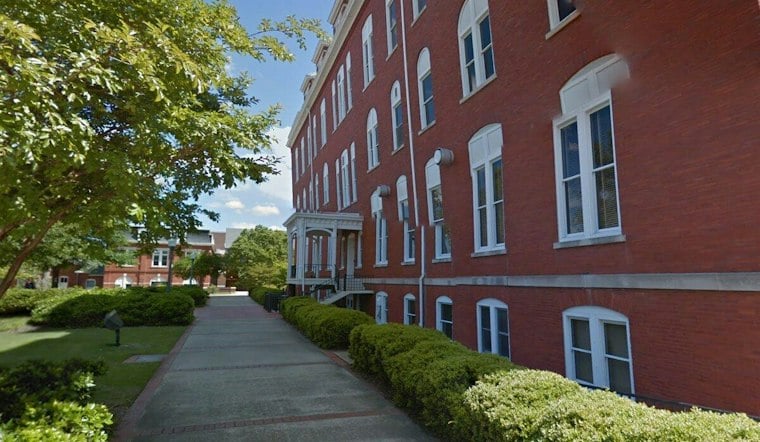
The outgoing head of U.S. Space Command walked through Auburn University's main campus and its Applied Research Institute in Huntsville, telling university leaders that Auburn's research aligns closely with the command's mission and that he sees incredible collaboration opportunities ahead. Gen. Stephen Whiting's visit comes as Space Command races to build out its presence at nearby Redstone Arsenal, a buildup that could eventually bring roughly 1,800 jobs to north Alabama.
Whiting, who is leading the transition of Space Command's headquarters to Redstone Arsenal, is preparing to relinquish command in late 2026 or early 2027 as he heads toward retirement, according to AL.com. During the campus stop, Auburn briefed him on engineering programs and research spanning advanced and additive manufacturing, small satellite systems, space operator development, GPS and vehicle dynamics. Auburn senior vice president for research and economic development Steve Taylor said it was an honor to share the university's research impact and educational programs with senior military leadership, per the same report.
A New Huntsville Lab Built for Testing
The Huntsville stop on Whiting's tour included Auburn's newly opened 50,000-square-foot laboratory in Cummings Research Park, a facility Auburn and its partners say represents an investment of more than $30 million, according to Auburn University. A separate account from 1819 News described it simply as a $30 million facility, with hundreds of attendees, including elected officials and school leaders, packing in for the grand opening. Testing operations at the lab are scheduled to begin in early 2027, the university says.
The institute is also developing what it describes as the nation's first university-led radiation effects testing facility for space electronics, along with a classified space operations training center, according to the seed facts behind AL.com's reporting. Axios has reported separately that researchers at the institute are studying everything from space radiation's effects on electronics to 3D printing with carbon fiber, underscoring the breadth of work happening inside the new building.
Partners at the facility include the Missile Defense Agency, NASA, the Space Development Agency, the U.S. Air Force, U.S. Army Aviation and Missile Command, the U.S. Army Research Laboratory, U.S. Army Space and Missile Defense Command, and U.S. Space Command itself, Auburn says. The Missile Defense Agency has already backed Auburn's work with an $11.4 million contract awarded in November 2024, followed by an additional $7.5 million added in July 2026.
Redstone Arsenal's Staffing Climb
Space Command's footprint at Redstone Arsenal is growing fast. More than 200 personnel are now permanently working in Huntsville, a staffing goal the command reached six weeks ahead of schedule, according to WAFF. The command expects that number to climb to about 900 personnel by 2028, with a planned headquarters designed to accommodate 1,800 people once fully built out.
That buildup follows months of groundwork between Auburn and Space Command leadership. Maj. Gen. Samuel Keener toured Auburn's Applied Research Institute in Huntsville in May 2026 and met with university President Christopher B. Roberts and other senior leaders and faculty on Auburn's main campus, Auburn's own account of the visit notes. Keener said the institute's facilities, staff and work create exciting opportunities for collaboration, especially given its proximity to where Space Command's headquarters will be. Auburn's graduate programs also include space systems.
Family Ties and a Broader Mission
Whiting has described family ties to Auburn across generations; his mother was born at the university's infirmary, graduated from Auburn, and several other family members graduated from the school as well, according to AL.com. His Huntsville and campus visit coincided with Auburn's military appreciation football game against Arkansas, where Whiting administered the oath of enlistment to 69 Auburn Army and Air Force ROTC cadets, formally beginning their military service commitments. He also discussed Space Command's national security mission with Auburn's Army, Air Force and Navy ROTC detachments, telling cadets that much of everyday life is connected to space and that they will serve in consequential times.
Whiting has attributed the 2019 reestablishment of U.S. Space Command and the creation of the U.S. Space Force to growing threats from China and Russia, both of which have invested in capabilities designed to disrupt or degrade U.S. space-based systems. China in particular has built an expanding arsenal of counterspace capabilities, including GPS jammers, lasers and cyber weapons, designed to put U.S. space capabilities at risk. Space Command, one of the U.S. military's 11 combatant commands, exercises authority over soldiers, Marines, sailors, airmen and Guardians operating ground- and space-based systems around the world, working to ensure the United States can maintain access to space and protect the assets that enable it.
The Space Force itself plans to double in size over the next three to five years, reflecting how space capabilities are expected to play an increasingly important role across every military service. Auburn's director of space innovation Derek Tournear has said Auburn develops an educated workforce to address national challenges, many of which are in space, and that Auburn's research advances manufacturing both for space and in space. Industry increasingly sees Auburn as a place to solve space challenges and find workers, as the university continues investing in space research, national security and workforce development alongside its military and government partners.




