

























































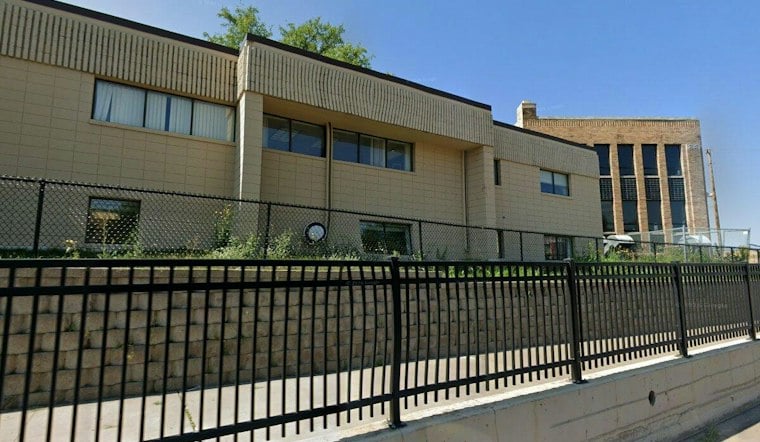
The St. Paul school board voted unanimously Tuesday to call on state and city leaders to pause new charter-school authorizations in the city, a move that lands as the district grapples with a $14.35 million projected budget shortfall and years of shrinking enrollment. The resolution passed 5-0, with board members Chauntyll Allen and Carlo Franco absent for the vote.
According to the Pioneer Press, the resolution calls on the Minnesota Legislature to enact an indefinite pause on authorizing new charter schools within St. Paul. It also directs the district's lobbyist to push that pause as a legislative priority, and asks the Minnesota School Boards Association and the Association of Metropolitan School Districts to back the effort in their own legislative agendas.
The board isn't only looking to the state Capitol. Per the same report, it asked city leaders — including the mayor and the City Council — to stop issuing conduit bonds to charter schools, and requested that the city pursue whatever legally permissible measures it can, potentially including zoning tools, to slow charter expansion.
Funding Fight Extends to the State Capitol
Beyond the authorization pause, the resolution calls on the state to eliminate laws that require districts to shoulder financial obligations tied to charter-school enrollment, transportation and student services — and asks that the state instead reimburse districts for those costs, the article notes.
The financial pressure behind the push is steep. St. Paul Public Schools is facing roughly $814.5 million in revenue against $828.8 million in expenses for the 2026-27 school year, a gap the district projected back in April. Preliminary data reported in October showed the district also had 542 fewer English-learning students than anticipated this year, translating to about $4.9 million in lost revenue.
Enrollment overall has kept sliding. Preliminary figures put St. Paul Public Schools at 32,562 students for 2026-27, with the state funding only 32,034 of them — a drop of 698 students from the prior year. District officials had already expected 400 fewer students this year on top of 500 fewer than projected the year before, the earlier report notes.
A Financial Analysis Years in the Making
Much of the board's case rests on a financial analysis from North Star Policy Action, commissioned by the district and published earlier this year. That analysis found St. Paul Public Schools' charter-school service costs climbed from $3.4 million in 2007-08 to $13.6 million in 2023-24, and it estimated annual indirect district costs ranging from $7.2 million to $17.7 million depending on enrollment swings, per the same account.
The analysis also found district enrollment declined by more than 12,000 students over that period, even as charter-school enrollment in St. Paul grew from roughly one in 13 public-school students in 2001-02 to more than one in three by 2022-23 — an average gain of 655 students per year since 2001-02, the North Star findings show. The analysis further concluded that school districts cannot shed fixed costs at the same pace they lose students and funding.
Board Members Make Their Case
Board member Yusef Carrillo told fellow members during the meeting that the state allocates funds to the same number of schools for a shrinking number of students, and said the community needs to act. He acknowledged the resolution has limits. “This doesn’t resolve everything, but it does get us to the right track…” Carrillo said, according to the Pioneer Press.
Not everyone agrees the pause is the district's most urgent lever. Joe Nathan, a researcher and former St. Paul Public Schools educator who has worked on charter-school policy, said the district has more immediate ways to address its enrollment losses. Those could include keeping early childhood education programming in neighborhood schools, focusing on individualized student attention such as expeditionary learning at Open World Learning Community, and addressing concerns Hmong parents raised at the Txuj Ci campuses last winter, per the report.
Charter Schools' Minnesota Roots
Minnesota passed the nation's first charter-school legislation in 1991, and City Academy opened as St. Paul's first charter school the following year. The state now has more than 170 charter schools in operation, according to the Minnesota Department of Education. A comparable fight has played out elsewhere: in San Antonio, superintendents at Northside and North East ISDs raised similar alarms after the City Council approved tax-exempt status for bonds issued by charter networks, according to expressnews.com.
For now, St. Paul's resolution is a statement of intent rather than a change in law — its practical effect depends on whether state lawmakers and city officials choose to act on the board's requests.


