

























































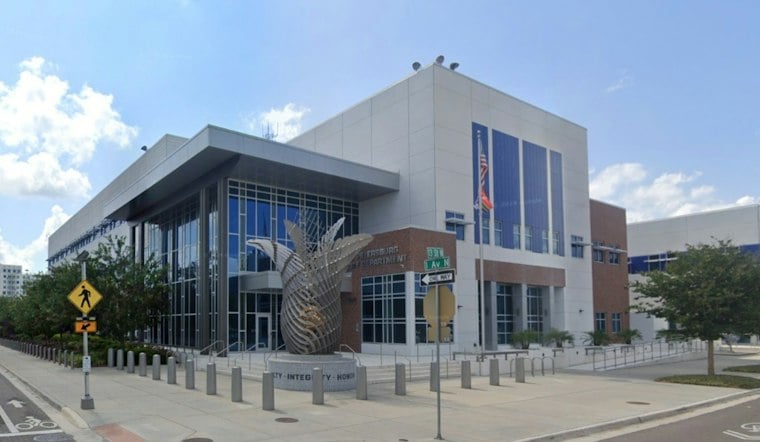
St. Petersburg Police Chief Anthony Holloway presented nearly $289,000 in asset forfeiture funds to 54 community programs, money seized from people involved in criminal activity over the past year and redirected toward neighborhood groups across the city.
The figure comes from WFLA, which reported the chief personally handed out the checks. A separate report from 10 Tampa Bay described the same program as investing nearly $300 million into local youth initiatives — a figure that differs from WFLA's account by a massive margin and has not been independently confirmed. Readers should treat the $300 million figure with caution until the discrepancy is resolved.
How the Forfeiture Grant Program Works
Under the department's Forfeiture Grant Program, neighborhood organizations can apply for funding tied to neighborhood safety, crime prevention, drug prevention, drug education, or drug treatment. The program's rules state there are no matching-fund requirements and no formal cap on how much a group can request or how large its project can be, though every award ultimately depends on the chief's discretion and how much money is actually available that year.
That available pool comes from the department's State Forfeiture Trust Account, which pulls in proceeds from property and cash seized during criminal investigations. According to the department's 2025 annual report, the Legal Division deposited $1,381,098.91 into that account for the year. The same report notes that Chief Holloway donated more than 404.9 percent of that year's forfeiture revenue through the grant program, far exceeding whatever baseline requirement the department measures itself against.
A Program With Decades of History
The grant ceremonies aren't new. One round covered by FOX 13 was described as the 30th annual forfeiture grant ceremony, underscoring just how long the department has been funneling seized assets back into community groups. In that same round, the department awarded 13 local programs a combined $58,000, with New Frontiers of St. Petersburg receiving a $1,000 grant it planned to use for operational costs and office supplies.
Other years show a similar pattern of modest, program-by-program awards rather than anything approaching a nine-figure sum. Per the department's own annual report, the chief presented roughly $82,235 in asset forfeiture funds to 22 community-based programs on January 22, 2025. In a round reported by the Tampa Bay Times, the agency awarded $43,400 in grants and earmarked another $14,600 for community groups.
What State Law Requires
Florida law places real guardrails on how departments can spend this kind of money. Under Florida Statutes section 932.7055, proceeds and interest from a municipal special law enforcement trust fund may go toward school resource officers, crime prevention, safe-neighborhood initiatives, drug abuse education and prevention programs, or other law enforcement purposes. The same statute says those proceeds can only be appropriated to a police department through action by the municipality's governing body.
The statute also sets a floor: a local law enforcement agency that acquires at least $15,000 in forfeiture proceeds during a fiscal year must expend or donate at least 25 percent of that money on the specified prevention, treatment, or school-resource-officer programs. Based on the department's own reported 404.9 percent donation rate in 2025, St. Petersburg police appear to be distributing well beyond that statutory minimum, according to the department's annual report.





