

























































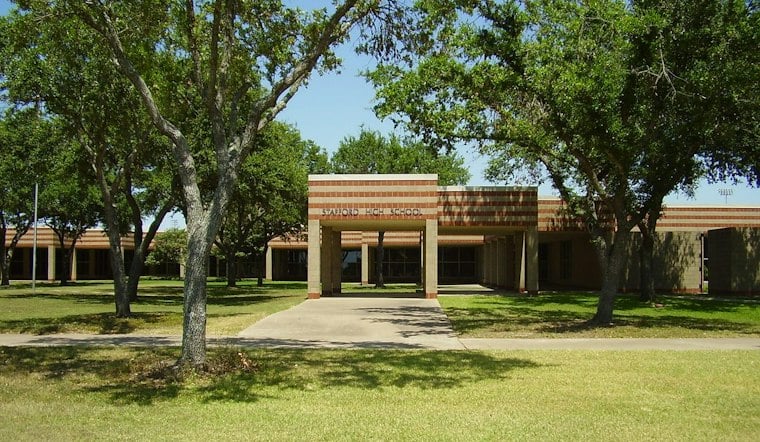
Stafford County teachers are telling school board members that a push to standardize high school grading is piling on extra work and raising new questions about cheating, even as officials insist no final decision has been made. At a work session last Tuesday, board members pressed staff for details on two pilot programs testing new approaches to grades, with one capping the lowest possible score on practice assignments at 50 points.
The pilot at Stafford High School applies a 50-point floor only to formative assessments — the practice work, quizzes and other assignments meant to build toward mastery — while summative assessments like tests and final projects can still receive a zero, according to Potomac Local News. The idea, per that report, is to support student engagement and feedback on practice work without softening consequences on the assessments that carry the most weight. Meanwhile, Brooke Point High School is exploring a separate approach that organizes summative assessments around specific academic standards.
Teachers Flag Workload and Fairness Worries
Teacher feedback shared with the board centered on three recurring themes: added workload tied to retakes and remediation, a sense that the changes were being handed down from above rather than built with input from classroom staff, and unresolved questions about academic integrity. Those concerns echo broader tension in the multi-year process, which has already produced one contested outcome — a prior superintendent directive setting a 60/40 summative-to-formative grading weight before the division's full review was even finished, per the same report.
Staff told the board that cheating is still treated strictly as a disciplinary matter, handled separately from a student's academic grade, with students retaining the chance to reassess for mastery under existing professional learning community guidelines even when discipline is applied. Staff also clarified that teachers are not required to chase down non-compliant students without a defined process in place, and that individual teachers keep autonomy over their classrooms even as the division works toward more consistency across its high schools.
How We Got Here
Stafford's push for more uniform secondary grading dates back to spring 2024, when a core grading committee began its work, followed later by a larger group of stakeholders. This school year marks a new phase: the division is collecting data through surveys and focus groups, including sessions that started with principals the week of the Nov. 10 meeting. Officials described the current year as a period for gathering information and evaluating the pilots before any broader consistency decision gets made.
Both pilot programs are scheduled to wrap up at the end of the school year, and staff expect to evaluate the results and communicate a decision on consistency before the next school year begins in August. For now, Stafford County Public Schools continues to use a traditional percent-based grading scale in its secondary schools, distinct from the Standards-Based Grading model used in elementary schools, according to the division's own grading guidance.
Board Members Dig Into the Details
The Nov. 10 session included a follow-up question-and-answer period where board members probed the ongoing work further. Vice Chair Dr. Sarah Chase asked staff about unobtrusive ways to measure teacher response to the changes, such as looking at transfer rates, and she also raised comparisons to grading practices in Fairfax County. George Washington District representative Susan Randall also took part in the discussion. One staff member involved in the grading work was absent from the meeting because of a state athletic semifinal, per Potomac Local News.
Chase's comparison to Fairfax County points to a system already well down this road. Fairfax County Public Schools' Policy 2418.7 sets 50 as the lowest grade for completed work when a student has made a reasonable attempt, while still permitting a zero when no reasonable attempt is made, according to Fairfax County Public Schools BoardDocs. The policy also addresses grading for completed work and assignments without a reasonable attempt.
Fairfax has also built out more specific structural guardrails. High school teachers there are required to use a rolling gradebook by the 2026–27 school year, graded homework is capped at no more than 10 percent of a course grade, and teachers must enter at least seven grades per quarter with no single assignment counting for more than 35 percent of the quarter grade, per Fairfax County Public Schools. The district frames the rules as a way to keep grades an accurate reflection of student learning while promoting consistency across teams, departments and schools.
A Cautionary Tale From Manassas
Stafford isn't the only Northern Virginia district wrestling with this issue, and nearby Manassas City Public Schools offers a glimpse of how contentious it can get. Manassas has faced sustained opposition from parents and teachers over a broader 50-floor grading system that sets a minimum score of 50 percent even for missing work, not just completed assignments. Critics there argue the floor lets students skip assignments while still passing, reduces accountability, inflates grades and weakens preparation for college and the workforce.
Sara Brescia, one of the policy's critics, called awarding 50 percent for missing work an unacceptable tradeoff. The backlash proved significant enough that in late September 2025, the Manassas City School Board voted to send its grading policy back to the policy committee for revisions after public pushback, the same reporting notes.
Stafford's draft regulation, still labeled as proposed, outlines some of the guardrails the division is weighing. Under the proposed Regulation 3601, grades 6 through 12 would be based on multiple assessments that may include assignments, participation, tests and quizzes, and principals or their designees would be directed to ensure consistent grading practices within their buildings at the start of each school year, according to Stafford County Public Schools BoardDocs. The proposal would also cap final exams at no more than 10 percent of semester grades for grades 6-8 and no more than 20 percent for grades 9-12. None of these provisions have been adopted as final policy.
For now, Stafford families and educators are left waiting. The school board has not adopted division-wide secondary grading rules, and no final policy change came out of the Nov. 10 session — just a continued collection of data, feedback and pilot results that officials say will shape a decision before students return to class next August.



