

























































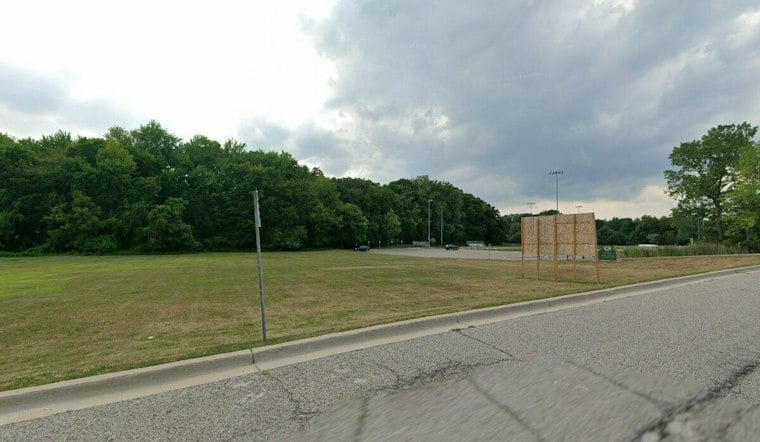
A tree older than the city itself just won a reprieve from the bulldozer. Sterling Heights City Council voted this month to hold onto the small circle of land beneath a centuries-old chinkapin oak, even as the city moves ahead with selling the surrounding acreage for a scaled-down workforce-housing development.
The decision caps months of public debate over the fate of the oak, known locally as the Sterling Oak, which is estimated to be more than 250 years old. As reported by Bridge Michigan, the city council's vote this month means the tree itself stays put even as development proceeds around it. An online petition drew around 4,000 signatures as residents pushed city leaders to reconsider the original plan.
Sterling Heights, Michigan's fourth-largest city and home to roughly 134,000 residents, is nearly fully developed, leaving little open land for new construction. The city originally bought the oak property using federal American Rescue Plan Act stimulus funding, and the Chaldean Community Foundation won the initial bid to develop the land with affordable housing and ground-floor retail. Facing resident pushback, the foundation changed its plan to a smaller building without retail and with fewer, pricier workforce-housing units, a redesign officials said would spare the old oak tree.
A Tree That Predates the City
Chinkapin oaks like this one can live 300 to 400 years, and resident Mark Graf has pointed to the tree's distinctive serrated leaves as a hallmark of the species, according to the same Bridge Michigan report. The property itself spans 10 acres adjacent to the Clinton River and is subject to flooding, a hydrology detail that factored into the redesign. C & G Newspapers describes the Sterling Oak as a rare chinquapin oak measuring 88 feet tall and 14 feet around, and reports that the revised plan features a 5,890-square-foot outdoor parklet surrounding the historic tree and complementing a three-story, 29-unit multifamily building — down from an initial 80-unit, four-story proposal.
Even with the smaller footprint, the project still requires site-plan and engineering reviews, and it may need approval from the Michigan Department of Environment, Great Lakes, and Energy because the property contains small wetland pockets, per the same account. C & G Newspapers notes the 10-acre site sits in a floodplain, which limits how much of the property the Chaldean Community Foundation can develop at all.
Despite the redesign, some Sterling Heights residents remain concerned that nearby construction could still damage or kill the oak through flooding, root compaction, or toppling. Resident Lisa Graf warned the council that development could cause the tree to die within five or 10 years even if it is not directly cut down. An initial review cited by the city planner found that 114 of the property's 284 trees will need to be removed for the development, and of those, 21 meet the city's definition of landmark trees — a threshold that would require developers to plant 331 replacement trees.
The Bigger Canopy Fight
The dispute over one oak sits inside a much larger question about how fast Michigan's greenery is disappearing as housing demand grows. Sterling Heights may need to add up to 2,100 housing units over the next decade to accommodate projected growth, even as the city tries to protect what tree cover remains. Michigan as a whole remains about 55% forested, but Bridge Michigan reports that canopy coverage drops to an average of about 30% in urban communities and is declining.
Estimates of Sterling Heights' own canopy diverge depending on the source. The city's development director estimated in spring 2026 that between 18% and 23% of Sterling Heights was covered by tree canopy, well short of the city's 40% goal, according to Bridge Michigan's reporting. A separate C & G Newspapers report put the figure at 19%, compared with 22.5% in Detroit. The area immediately around the oak property fares somewhat better, with canopy coverage estimated at 32%, while some parts of the city have tree cover below 10%.
The city has already put money behind reversing that decline. Sterling Heights spent $1 million of its $20 million in COVID-19 recovery funds to create “micro-forests” around town, part of a broader tax-funded initiative to preserve green space and reforest its canopy. Separately, the city has floated a five-year goal of adding 15,000 new trees in residential rights of way, a program estimated to cost $7.5 million, of which roughly $1.8 million has been raised through grants and other funding, according to C & G Newspapers. Research cited in Bridge Michigan's report estimates that up to 41 new trees may be needed to compensate for cutting down a single large, mature tree — underscoring why landmark specimens like the Sterling Oak draw outsized attention.
Officials Weigh Growth Against Green Space
Not everyone frames the loss of individual trees as catastrophic. Sterling Heights Mayor Michael Taylor has said trees are renewable and can be replanted, a view that contrasts with residents' attachment to specific, irreplaceable specimens like the centuries-old oak. University of Michigan professor Richard Norton has said cities need to balance protecting older trees with directing development away from ecologically important rural areas altogether.
Sterling Heights has been recognized dozens of times by the Arbor Day Foundation as a Tree City USA participant, a distinction the city points to even as it grapples with development pressure on one of its last large open parcels — a site that was once home to an amusement park. The fight in Sterling Heights is not an isolated one. Earlier in 2026, Kalamazoo residents blocked a wooded area from being converted to commercial development, while in 2023, Huron Township residents alerted local news after a housing developer began cutting down forest near their homes without a final permit. In 2025, Gaylord residents objected when trees appeared at risk of removal for solar panels, a controversy that preceded Michigan's Department of Natural Resources deciding, according to MLive, not to lease 420 acres of public trust land near Gaylord for solar energy development following a four-month public comment period.
For now, the Sterling Oak stands. But as the reimagined housing project moves through further site-plan, engineering, and possible state wetland reviews, the tree's long-term survival amid nearby construction remains an open question for the residents who fought to save it.




