

























































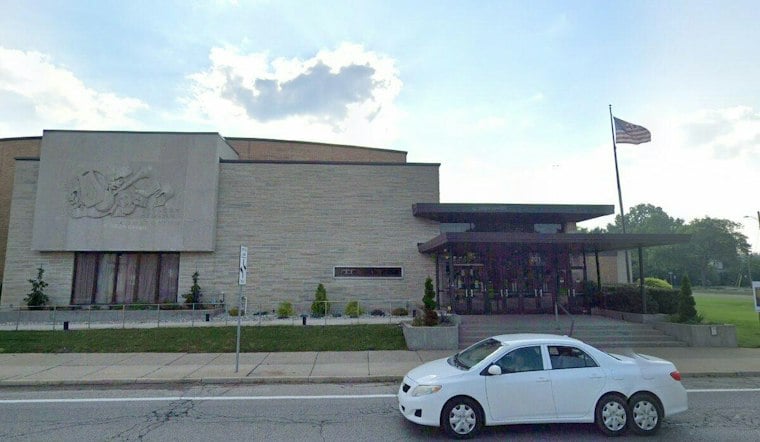
Sturgis city commissioners voted unanimously to reject a petition that sought to ban the construction of any Islamic mosque within city limits, condemning the measure as unconstitutional, hateful and contrary to American values. The roll-call vote came after resident Don Merkle gathered 316 valid signatures, well above the 301 required to force the proposal before the commission.
According to MLive, the petition claimed Islam is founded and sustained by violence and the destruction of all other religions, and Merkle described Islam as a terrorist organization disguised as a religion intent on killing Christians and Jews. Merkle also called for Islam to be eradicated from the United States with all haste, the outlet reported. The Sturgis City Charter allows residents to bring a proposed ordinance before commissioners by collecting enough valid petition signatures, which is how the measure landed on the agenda in the first place.
Mayor Frank Perez did not mince words in response, condemning the petition as pure hate that does not belong in Sturgis, per the same MLive report. Commissioner Justin Wickey said the proposal runs counter to America's founding principles, while Vice Mayor Jeff Mullins said he was troubled that 316 people shared the belief expressed in the petition. Commissioner Aaron Miller said he would fight any effort to amend the Constitution to support the petition's aims.
No One Spoke in Favor of the Ban
Public comment at the meeting ran entirely against the petition — no residents spoke in support of it, according to MLive's reporting. One resident invoked Christianity's teaching to love one's neighbors in opposing the measure. The commission's roll-call vote itself was unanimous among the members present, though Wilcox Newspapers reported that commissioners Richard Bir and Daniel Boring were absent from the meeting.
City Attorney TJ Reed told commissioners he believed the proposed ordinance would violate the U.S. Constitution, the Michigan Constitution and other provisions of state and federal law, and would not be upheld if challenged. Reed also said blanket bans and exclusionary zoning are strongly disfavored under the law, including in cases where religious freedom is implicated, Wilcox Newspapers reported. Wilcox Newspapers additionally noted there was no evidence of any recent proposal by a person or group to construct a mosque within Sturgis city limits.
Whether the Measure Could Still Reach Voters Remains Unsettled
What happens next to the rejected petition is not entirely clear, and local outlets have offered differing accounts. Watershed Voice reported that under the city charter, commissioners are ordinarily required to either adopt a proposed ordinance that receives enough valid petition signatures or submit it to voters, and the outlet identified May 4, 2027 as the next available election date for such a vote. But city clerk and treasurer Ken Rhodes told Wilcox Newspapers a public vote on the measure is unlikely unless a court orders the city to hold one.
Sturgis, a city of about 10,900 residents located near the Indiana border roughly 34 miles south of Kalamazoo, is a small community for a dispute that touches on questions playing out statewide. The petition surfaces amid a broader wave of anti-Muslim demonstrations in Michigan, MLive reported, in a state that recently elected the nation's first Muslim U.S. senator and that is home to Dearborn, which has the country's largest Muslim population.
Part of a Broader Pattern in Michigan
The Sturgis vote lands against a backdrop of rising bias complaints from Muslim Michiganders. The Council on American-Islamic Relations' Michigan chapter recorded 495 total complaint intakes in 2025, a 25% increase from the year before, and 153 active legal cases, an 82% jump, according to Michigan Advance. Nearly 80% of those complaints stemmed from some kind of taxpayer-funded institution at the local, state or federal level, the outlet reported.
CAIR's latest civil-rights report documented more than 8,600 anti-Muslim bias complaints nationally in the prior year, the highest number recorded since the organization began tracking them in 1996, Michigan Advance separately reported. CAIR-Michigan Executive Director Dawud Walid said fearmongering and vitriol against the state's Muslim population has increased amid advertising aimed at defeating Senator-elect Abdul El-Sayed during the 2026 midterm election, the outlet noted.
A similar controversy has unfolded recently in Cheboygan County, where at least two complaints were filed over a Nov. 5 Facebook post from county Planning Commissioner John Studer that called people who voted for a Muslim candidate a treasonous traitor. A county resident filed a complaint alleging unconstitutional religious discrimination, and the Michigan Department of Civil Rights confirmed it was evaluating the allegation, Michigan Advance reported. County Administrator Jeff Lawson said the comments were made on personal social media pages rather than as part of official county activities.
Federal law also shapes how municipalities can treat religious institutions. The Religious Land Use and Institutionalized Persons Act, enforced by the U.S. Department of Justice, prohibits zoning and landmarking laws that substantially burden the religious exercise of churches or other religious assemblies — a backdrop that informed Reed's warning to Sturgis commissioners about the legal exposure a mosque ban would have created.





