

























































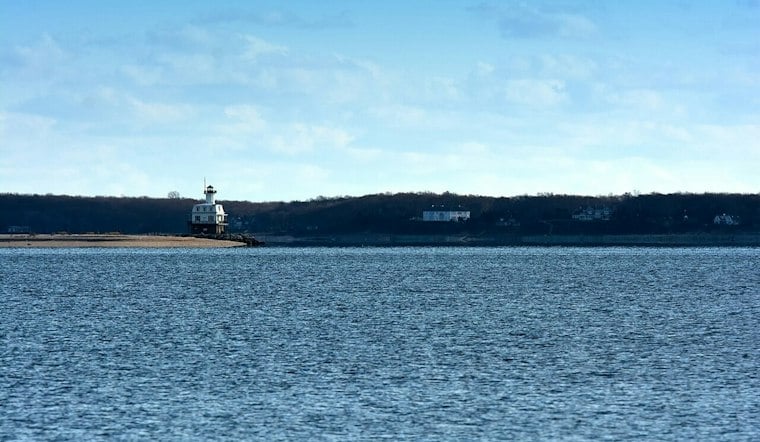
Suffolk County is opening up Peconic and Gardiner's Bays to commercial seaweed farming, after the county legislature passed a law creating a licensing system that pairs seaweed cultivation with the shellfish leases that already dot those waters. The measure caps combined leased acreage in the bays at 1,200 acres and limits new seaweed leases to six per year.
How the Vote Came Together
According to The South Shore Press, the Suffolk Legislature's Environment Committee approved the measure by a 9-0 vote before it went to the full legislature, which passed the law. The bill was requested by Suffolk County Executive Ed Romaine, along with legislators Leslie Kennedy, Ann Welker and Steven Englebright, per the same report. It now heads to Romaine for his signature and will take effect once filed with the New York Secretary of State.
The law replaces separate shellfish and seaweed leasing rules with a single set of lease terms, fees and application steps, the South Shore Press reports. Suffolk County already controls underwater land in Peconic and Gardiner's Bays for shellfish farming, and the state expanded that underwater-land grant to include seaweed after the county completed a seaweed pilot program, according to the outlet's account.
Fees, Acreage Limits and Rent Scales
Each lease site may cover up to 10 acres, and leases run for up to 10 years, with Suffolk County able to renew them for another decade at its discretion, per the South Shore Press. Growers risk losing a site if they cannot show substantial farming activity there for two years. Historic private oyster grants and noncommercial leases are excluded from the 1,200-acre cap, the outlet notes.
A new lease application costs $150, and adding seaweed to an existing shellfish lease costs the same, according to the report. Moving or renewing a lease each costs $200. Annual rent on a commercial 10-acre lease starts at $100 for Suffolk veterans, $250 for other Suffolk residents, and $500 for growers from outside the county, with nonresident rent potentially climbing to as much as $1,500 a year over the life of the lease, the South Shore Press reports.
Who Can Apply, and Where Seaweed Can Grow
Applicants must be adults who can demonstrate relevant work knowledge, which can be shown through aquaculture or marine science coursework, technical training, two years working on an aquaculture farm, or three years in commercial fishing, according to the outlet. Every leaseholder must post a bond or escrow covering unpaid rent or abandoned gear, and the county may remove abandoned gear and fine leaseholders up to $500 for breaking lease rules, per the same report.
Seaweed growers may grow only native species, and seaweed can be cultivated only on lease sites screened to avoid sensitive habitat and located at least 1,000 feet offshore, the South Shore Press reports. Each seaweed site must obtain state and federal agency permits and mark its corners with Coast Guard buoys. A grower must apply for a new lease covering both shellfish and seaweed, or add seaweed to an existing shellfish lease, and existing leaseholders must show their site is already in use before adding seaweed, according to the outlet.
A Slow Rollout, by Design
Suffolk County will approve no more than six seaweed leases per year, with at least two of those six slots reserved for new applicants, the South Shore Press reports, and seaweed lease allocation is set to match the pace of shellfish leases. Unauthorized bay farming carries a $1,000 fine for a first violation and $5,000 for each violation after that, per the same account.
At a July 6, 2026, meeting of the Environment, Parks & Agriculture Committee, Suffolk County Soil & Water Conservation District manager Corey Humphrey was among the participants, according to committee meeting minutes.
The new law anticipates a broader purpose: it finds that shellfish and seaweed farms are a cost-effective way to clean water while supporting small businesses in the county's marine economy, and it expects seaweed farms to improve bay water quality by removing nitrogen and carbon dioxide, according to the South Shore Press.
That water-quality rationale lines up with how the New York State Department of Environmental Conservation describes the broader practice, noting that nutrient bioextraction combines growing and harvesting shellfish and seaweed to remove nitrogen and other nutrients from coastal waters. State law has separately allowed Suffolk County to lease underwater lands ceded to it by the state for seaweed cultivation, according to an excerpt of New York's environmental conservation statute, though that excerpt does not spell out the full conditions attached to that authority.





