

























































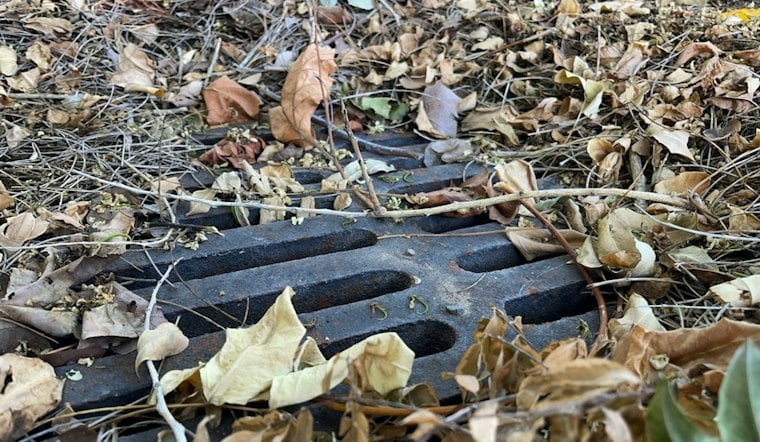
Summit property owners who let a dry well or drainage system fail could soon face daily fines under a proposal advanced by the city's Common Council. The measure would also require owners to maintain those systems at their own expense, with escalating deadlines depending on how serious the problem is, and it's scheduled for a public hearing on December 1.
The ordinance was introduced at the council meeting by Dan Crisafulli, according to TAPinto. Under the proposal, the city could require property owners to install runoff-collecting or runoff-absorbing systems, but currently lacks a mechanism to ensure those systems keep working once they're in the ground, per the same account. Crisafulli said stormwater impacts are increasing across town and argued the measure could reduce those effects over time, the outlet reported.
The city's own stormwater page notes just how much water Summit is dealing with: a one-inch rainfall generates more than 100 million gallons across the city, according to cityofsummit.org. That scale helps explain why officials are focused on whether individual drainage systems, once installed, actually stay functional.
What the Proposed Rules Would Require
Under the draft ordinance, owners would have 30 days to correct routine deficiencies and 15 days for more significant ones, while hazards would require immediate action, per the TAPinto report. The proposal also defines natural features as drainage facilities and would require owners to maintain their systems at their own expense, retaining inspection and maintenance records for at least five years. Each day a violation goes uncorrected would count as a separate offense, and the city could recover the costs of corrective work through a lien where permitted by law, the outlet reported.
The proposal would also require an investigation to determine responsibility whenever a drainage facility causes pooling, damage, or runoff on a neighboring property, according to the same account. That provision became a focus of pushback during the council discussion, with questions raised about how liability would actually be sorted out between neighbors.
Council Members Push Back on Drafting Concerns
Dan Tyrrell urged the council to delay advancing the ordinance in its current form, per TAPinto's reporting. He asked the council to clarify that naturally occurring runoff alone would not count as a violation, and argued that rainwater flowing downhill onto a neighboring property does not by itself establish wrongdoing by the uphill neighbor. Tyrrell said the proposed correction timelines and enforcement uncertainty warranted closer review, adding that drafting issues raised questions about how the ordinance's substantial enforcement authority was being handled, the outlet reported.
Claire Toth raised her own concerns, calling for clarification that owners would not be required to redesign or upgrade their existing systems, according to the same report. She also called for replacing a reference to the borough engineer with the city engineer, a fix that points to the kind of drafting cleanup still underway as the measure heads toward a public hearing.
Cost Questions Remain Unresolved
Jaclyn Lasaracina voted to introduce the ordinance but requested an estimate of average resident costs before the council takes final action, per TAPinto. She said stormwater management is an urgent issue but that affordability is also a real concern, adding that the council should better understand the potential financial burden before imposing the obligation on residents, the outlet reported.
The push for clearer rules around property-level drainage comes as Summit's broader stormwater framework has already been reworked in recent years. The city's Chapter 26 stormwater regulations, which set minimum requirements for major development including projects undertaken by the city itself, were repealed and replaced in 2024, according to ecode360.com. That same code already bars obstructing or interfering with a drainageway, stormwater, or watercourse in a way that causes runoff damage.
Separately, the city's grading rules require a permit before land disturbance or construction, with mitigation required for impervious-area increases over 300 square feet, per ecode360.com's publication of the city code. Summit's stormwater office also updates a Citywide Drainage Assessment Report every November to track new and completed projects, according to the city's stormwater page.
The December 1 hearing, confirmed in the city's November 16 meeting highlights, will give residents a formal chance to weigh in before the council decides whether to finalize the ordinance. For now, questions about correction deadlines, enforcement authority, and what the rules will ultimately cost homeowners remain open heading into that session.





