

























































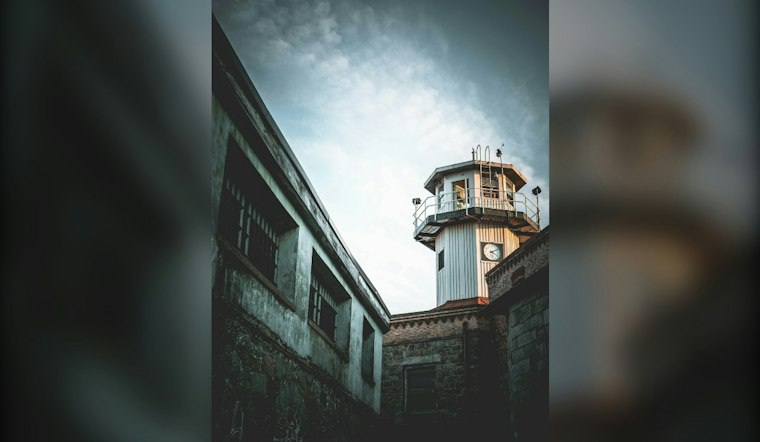
A Sumter man will serve one year and one day in federal prison after investigators tied him to a drone flight near Lieber Correctional Institution in Ridgeville.
U.S. District Judge Richard Gergel imposed the sentence, and Assistant U.S. Attorney Winston Holliday prosecuted the case, WLTX reported, citing the U.S. Attorney's Office. The federal count is narrow on paper. The morning that produced it was not.
A Predawn Drop at Lieber
On March 14, 2025, law enforcement responded to reports of a drone flying near the Ridgeville prison. Investigators found Quinzell Robinson leaving woods near the institution with a drone and a bag, according to the release.
Surveillance video showed a package dropped onto prison grounds shortly after 5 a.m. and picked up by inmates. Prosecutors said flight data put the drone at the spot where prison cameras recorded inmates recovering that package.
The same day, Robinson was charged with operating a drone near a prison, attempting to furnish contraband to prisoners, criminal conspiracy, and resisting arrest, WYFF reported. Those were the state charges from the morning of the flight. The year-and-a-day term is the later federal sentence.
Photos, Searches, and an Inmate's Texts
A forensic search of Robinson's cellphone found aerial photos of the prison, web searches about buying drones, and GPS data showing where the drone was launched that morning. Investigators also found a video that appeared to show a flight over a correctional facility.
Texts between Robinson and a Lieber inmate discussed using drones to deliver contraband and the prison's anti-drone measures. The conversation, as described in the release, was not a vague complaint about fences. It was planning around the equipment meant to stop the flight.
Federal prosecutors said Robinson knowingly and willfully operated an unregistered aircraft in violation of Federal Aviation Administration laws. The investigation ran through the U.S. Department of Transportation's Office of Inspector General, the corrections department's Office of Inspector General, and the Dorchester County Sheriff's Office.
What State Law Already Bars
South Carolina's published code makes it unlawful to intentionally or knowingly operate, take off, land, or possess a drone with intent to transport or attempt to deliver contraband into listed federal, state, county, or municipal settings, according to the statute. The posted excerpt does not set out every exception or penalty.
Bryan Stirling said correctional facilities cannot safely operate when outsiders coordinate with inmates to send contraband over prison fences by drone. Corrections Director Joel Anderson appreciated the courts and law enforcement partners for holding Robinson accountable.
A Trade That Outgrew a Phone Drop
Anderson has described "nightly attacks by drones dropping deadly drugs and other contraband," The State reported. The paper traced the problem to at least 2017, when an inmate escaped using wire cutters flown in by drone. Officials told The State that smugglers had moved from small drones carrying a few phones to aircraft capable of hauling 20 to 30 pounds.
The state's counters, as The State described them, include drone-detection technology and 50-foot netting around major prisons. The Post and Courier reported that the Corrections Department was acquiring a system meant to pinpoint a drone's location and where it took off.
The tallies are not one clean series, and the labels differ. Corrections officials recorded more than 262 drone incidents in 2022, compared with 161 in 2021, 40 in 2020, and 69 in 2019, the Post and Courier reported. CNN later reported that South Carolina's 21 state prisons recorded 273 drone-smuggling incidents in 2025 and 75 by April 24, 2026.
One delivery shows why the loads matter inside the fence. South Carolina officials estimated that a drone drop at Turbeville Correctional Institution, carrying tobacco, marijuana, ecstasy, and four phones, was worth $165,700 in the prison economy, CNN reported. That estimate belongs to Turbeville, not to the package recovered at Lieber in Robinson's case.
Lieber Already Had a Longer Sentence
Robinson's federal term is not the longest punishment tied to a drone at this prison. A Dorchester County jury convicted Joshua Bryan Jordan of Summerville on June 25 of second-degree arson, attempting to furnish contraband, and criminal conspiracy, The Post and Courier reported. Ninth Circuit Judge Deadra Jefferson sentenced him to 17 years.
Jordan was arrested in February 2022 after a drone he was operating crashed into the yard at Lieber. Coverage of that case also described a Jan. 31, 2022 drone package at the prison: about half a kilogram of marijuana, tobacco, four hacksaw blades, and three lighters.
Robinson's sentence is one year and one day. By late April 2026, the state's prisons had already logged 75 drone-smuggling incidents for the year.




