

























































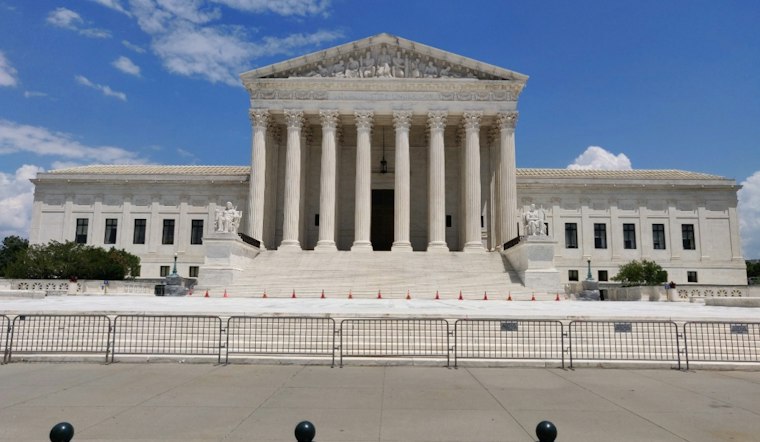
The U.S. Supreme Court on Monday asked the federal government to weigh in on a lawsuit accusing GE HealthCare and several other major drug and medical-device makers of helping fund a Hezbollah-linked militia's terrorist activities in Iraq. The justices invited the U.S. solicitor general to offer the government's view before deciding whether to take up the case, a move that typically signals the court is seriously considering the dispute.
According to law360.com, the invitation came as the court weighs whether to review a lawsuit alleging that pharmaceutical companies aided the militia's operations. The case centers on claims that drug and medical-device companies made corrupt payments to Jaysh al-Mahdi, a militia sponsored by Hezbollah, in order to secure lucrative medical-supply contracts from Iraq's Health Ministry between 2005 and 2011, as reported by Reuters. Those allegations have not been proven, and the evidence reviewed does not establish whether the alleged payments actually occurred or whether any company has been found liable.
D.C. Circuit Revived Claims in January
The legal fight reached this point only after a lengthy back-and-forth in the lower courts. A federal judge dismissed the case in 2020, Reuters notes, but the D.C. Circuit revived it in 2022. The Supreme Court then sent the matter back for reconsideration after a separate ruling shielding Twitter from liability under the Anti-Terrorism Act, according to the same Reuters account.
That reconsideration produced a fresh result. On Jan. 23, a three-judge D.C. Circuit panel reinstated terrorism-related claims against AstraZeneca, Pfizer, GE Healthcare USA, Johnson & Johnson and F. Hoffmann-La Roche, per Reuters' report. The appeals panel held that the plaintiffs adequately alleged the companies' participation in the scheme was conscious and voluntary, as law360.com reported.
What the Lawsuit Seeks
The underlying lawsuit was filed in Washington federal court in 2017 and seeks unspecified damages under the Anti-Terrorism Act, Reuters reports. The law lets American victims of terrorism and their families sue parties accused of supporting designated terrorist groups, though the evidence reviewed does not spell out the statute's specific requirements. The defendants have not publicly responded to the allegations in the material reviewed for this report.
It's not the only recent Supreme Court action touching on terrorism-liability law, though the circumstances differ substantially. In June 2025, the justices unanimously allowed lawsuits by U.S. victims of terrorist attacks in Israel to proceed against the Palestinian Authority and the PLO, rejecting arguments from both groups, according to SCOTUSblog. That case involved different defendants and different legal questions than the pharmaceutical dispute now before the court, but it shows the justices have been actively grappling with how far terrorism-liability claims can reach in U.S. courts.
Next Steps Remain Unclear
For now, the solicitor general's input will likely shape whether the Supreme Court agrees to hear the case at all. The companies named in the reinstated claims include some of the biggest names in global healthcare, and a decision to take up the dispute could have consequences for how corporations are held accountable under the Anti-Terrorism Act when operating in conflict zones.



