

























































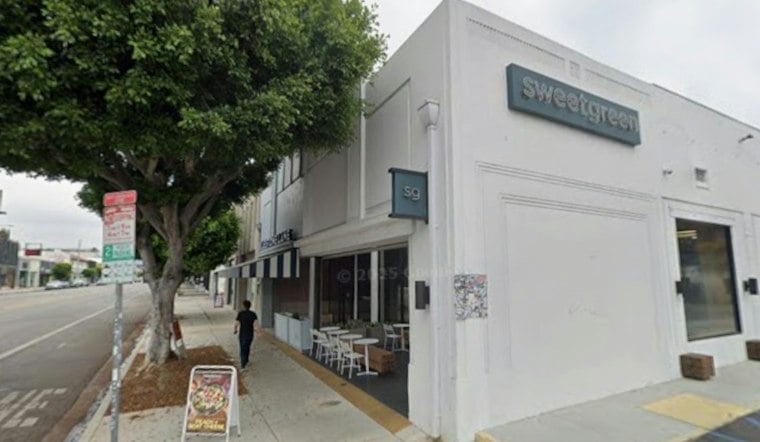
Sweetgreen customers can now ask ChatGPT or Claude to build their lunch order, with the fast-casual salad chain rolling out a new feature it calls agentic ordering that lets diners request meal recommendations, assemble a cart and then finish checking out through Sweetgreen's own app or website. The Los Angeles-based company says the integration works for pickup and first-party delivery orders at all of its restaurants.
How the Chatbot Ordering Actually Works
According to Yahoo Tech, customers can build an order directly in the conversation and complete their purchase in the Sweetgreen app or website. To use it, diners find Sweetgreen in the ChatGPT and Claude app directories, enable the integration on a phone or computer, pick a local store, and start chatting about what they want to eat. The chatbots can then surface recommendations complete with prices, calorie counts and nutritional information, and customers can add items straight to their cart from the chat before being routed to pay at checkout.
The feature leans on a behind-the-scenes overhaul: Sweetgreen reformatted its entire menu to be machine-readable, as Hospitality Technology reports, so the AI tools can parse ingredients, allergens, pricing and real-time availability at each individual restaurant. That means someone can ask for a bowl that fits specific nutrition targets or dietary restrictions, browse the options the chatbot surfaces, and build a digital bag before ever opening the Sweetgreen app themselves.
What Sweetgreen's CEO Says About the Move
Sweetgreen co-founder and CEO Jonathan Neman framed the launch as a new front door to the menu. “Bringing sweetgreen to Claude and ChatGPT gives people a new way to discover meals built around their tastes, dietary preferences and goals,” Neman said, per the same Yahoo Tech report. Neman also posted about the rollout on X, where he said Sweetgreen was founded to connect people to real food and that the mission shapes how the company innovates.
The launch arrives as Sweetgreen works to reverse a rough stretch of financial results. The company reported third-quarter fiscal 2026 revenue of $176.0 million, up 2.1% from the prior-year period, according to Sweetgreen's own announcement via Business Wire. But same-store sales fell 6.4% in that quarter, reflecting a 4.9% drop in traffic and a 2.1% decrease in product mix. Digital revenue, meanwhile, climbed to 66.1% of total revenue, up from 61.8% a year earlier — a trend the chatbot integration appears designed to accelerate.
A Broader Industry Still Testing the Waters
Sweetgreen's bet also plugs into a wider industry debate over how much appetite diners actually have for ordering through artificial intelligence. The National Restaurant Association's 2026 report found that 26% of restaurant operators use AI-related tools in some capacity, but only 6% use them specifically for customer ordering — a gap that underscores how new this kind of chatbot checkout still is across the restaurant business.
Consumer appetite looks a bit stronger, at least on paper. The same National Restaurant Association report found 46% of adult restaurant customers said they would order on a website or app while interacting with an AI-generated chatbot, with the number rising among younger diners: 57% of Gen Z adults and 58% of millennials said they'd place an order that way if given the option. As Restaurant Dive put it, roughly six in 10 millennials and Gen Z adults said they would place an order with an AI-generated bot.
Not every chain's AI experiment has gone smoothly. Restaurant Dive's reporting on Taco Bell's drive-thru voice AI rollout found the chain began adopting the technology across the U.S. in 2024, then had to rethink that adoption after inconsistent performance. Whether Sweetgreen's chatbot ordering fares better than that kind of voice-AI stumble is still an open question, and the company's own rollout will effectively test whether AI's growing role in people's digital lives translates into changed food-ordering habits, as NBC Chicago reported.





