

























































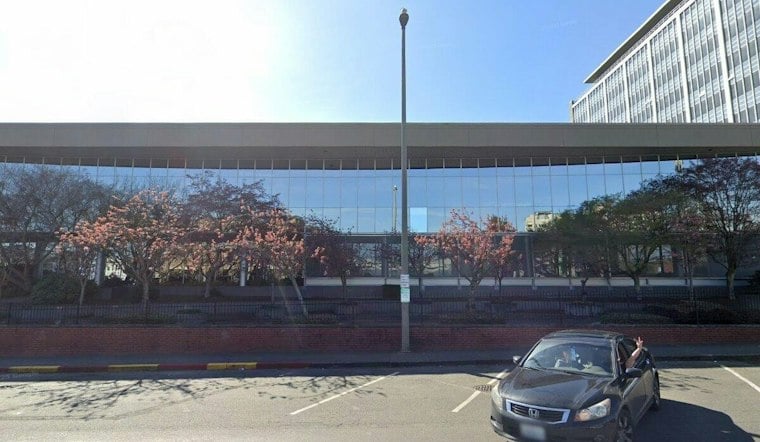
A man who was 17 years old when he opened fire outside a Tacoma nightclub in 2006, killing one person and wounding two others, is set to learn Friday whether he could walk free after nearly two decades behind bars. Verrick Vere Yarbrough, now 37, is scheduled for resentencing at 1:30 p.m. in Pierce County Superior Court, with his defense asking for a 20-year term and prosecutors pushing for 30.
The hearing centers on a sentence handed down in June 2007, when Yarbrough received 724 months — more than 60 years — for the shooting outside Club Friday on Pacific Avenue, according to KING5.com. A jury convicted him of first-degree murder, first-degree assault, and second-degree unlawful possession of a firearm, and the court at the time imposed a term beyond the standard sentencing range, adding extra prison time for the firearm offenses. A Pierce County judge ordered Yarbrough transferred from Stafford Creek Corrections Center to Tacoma for Friday's hearing.
Both sides now agree on one point: the original sentence did not adequately account for Yarbrough's age. Washington law requires courts to consider how a defendant's youth may have influenced his actions when sentencing crimes committed as a juvenile, the outlet reports. Where prosecutors and the defense diverge is on how much that original sentence should be cut.
What Happened Outside Club Friday
Prosecutors say tensions between rival groups escalated after an earlier confrontation near Tacoma's waterfront on July 4, 2006. Witnesses testified that Yarbrough and companions encountered Rhaczio Simms and others outside the nightclub days later, an encounter that was followed by an argument and then gunfire. Simms was shot in the back of the head and died; a woman was struck in the back and was initially paralyzed from the waist down, though she later regained the ability to walk. A third person was grazed by a bullet. Yarbrough was arrested the day after the July 8, 2006 shooting.
Yarbrough's attorneys have acknowledged he took part in the confrontation that preceded the shooting but maintain he did not fire the fatal shots. Prosecutors counter that trial evidence showed Yarbrough fired a gun during the incident. The dossier does not resolve that dispute, and the two sides have presented it as a point of continued disagreement heading into Friday's hearing.
Dueling Arguments Over Rehabilitation and Infractions
The defense argues that Yarbrough's original sentencing failed to meaningfully address his age, childhood trauma, or peer influence, and that he has shown personal growth through education and rehabilitation programs during nearly two decades in prison. The state has acknowledged that Yarbrough experienced a traumatic childhood and that peer pressure and gang influences contributed to his actions, according to the KING5 report.
Prosecutors, however, point to a state filing showing Yarbrough accumulated 27 serious infractions while incarcerated, with his most recent violation a positive drug test in January. They argue that disciplinary history warrants additional prison time, while his attorneys contend the violations should be weighed alongside his progress and upbringing. The Pierce County Prosecuting Attorney's Office cited both Yarbrough's age at the time of the crime and his rehabilitation efforts in recommending the 30-year term.
Why a 20-Year Term Could Mean Release
A 20-year sentence could allow Yarbrough to receive nearly full credit for time already served and potentially be released, per the same KING5 account. Yarbrough has remained incarcerated since his conviction, meaning a shorter sentence would move him close to the door almost immediately.
The case echoes a similar resentencing in Pierce County this past August, when James LaRon Ellis — who was 18 when he fatally shot Javon Holden in March 2008 and received a 25-year sentence — was ordered released after a hearing before Superior Court Judge Stanley Rumbaugh, who told him, “Mr. Ellis will be released forthwith,” The News Tribune reported. In that case, the prosecutor requested a new sentence of 20 years and five months, citing Ellis's rehabilitative work, after the Washington Supreme Court ordered a new sentence that properly weighed the mitigating qualities of his youth.
That ruling reflects a broader pattern in Washington, where recent state Supreme Court decisions have prompted new sentencing hearings requiring courts to consider how a defendant's youth might lessen culpability, the same paper notes. A University of Washington Center for Human Rights report found that the state's ISRB Juvenile Board deemed petitioners releasable in nearly two-thirds of hearings — 63.7 percent — among 124 cases reviewed from 2015 through August 2025. The same analysis found petitioners with legal counsel were deemed releasable in 75.4 percent of hearings, compared with 49.1 percent for those representing themselves. Among 73 people the board released over that span, just one was later convicted of a new felony offense.
Friday's hearing will determine whether the judge accepts either side's recommendation or imposes a different term altogether. The outcome will decide not just how much more time Yarbrough spends behind bars, but whether — like Ellis before him — he walks out of Pierce County Superior Court a free man.



