

























































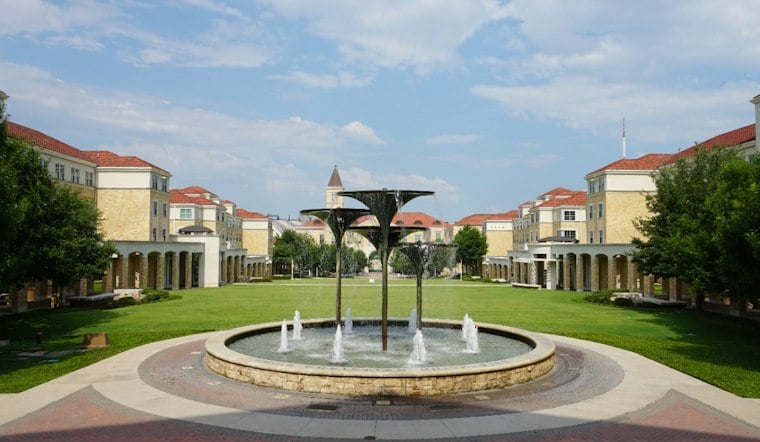
Air Force Capt. William Elmo Powell left Texas Christian University a fighter pilot and did not come home from North Vietnam all at once. His aircraft was shot down in 1968. The family marked a death, buried what could be identified beside his parents in Gatesville, and then waited again for DNA to return more of him.
NBC 5 Dallas-Fort Worth reported that Powell, a TCU graduate, disappeared when his plane was shot down over North Vietnam. His nephew, Mark Powell, was 6. He remembers a cool, younger uncle who flew. Hope and despair sat together through the long wait, he said, and some of that feeling has not aged. The pilot he knew as a child is still the uncle fixed in his memory.
A Memorial, Then a Grave Beside His Parents
Powell was a 1965 TCU graduate who joined Air Force ROTC on campus, Fort Worth Report reported. The family held a memorial after the Air Force declared him killed in action in 1973. His parents died before the first of his remains were returned in 1988.
NBC 5 reported that some remains were identified and sent home, a funeral was held, and he was buried next to his parents in Gatesville. Additional remains were later identified through DNA collected from Mark Powell's father. The family held a small service to place them with what was already in the ground. Twenty years from the shootdown to the first return, and his parents were already gone.
The Only Horned Frog Brought Back
Fort Worth Report says Powell is the only missing Horned Frog recovered to date. That same account places 22 TCU students and graduates among nearly 81,000 American service members still unaccounted for.
Matthew Kotowski, the university's inaugural Defense POW/MIA Accounting Agency Research Partner Fellow, told NBC 5 the campus count is 22 still missing in action: 19 from World War II, one from Korea and two from Vietnam. TCU's AddRan College of Liberal Arts puts it at 20 Horned Frogs among 80,000 American servicemembers still unaccounted for. The public figures do not match, and neither write-up explains the gap.
A Fellowship Built on Old Paper
AddRan says Kotowski started as the inaugural fellow in fall 2025, after the History Department was named a partner in the DPAA Hub and Spoke program. The work is archival, not a recovery team in the field. Fellows review wartime records and help connect the agency with libraries, museums and local communities that may hold a useful scrap.
NBC 5 described the campus research as a pass through old military records, photographs and other archival material, looking for clues in cases that are decades old. Kotowski said the aim is to research those cases, press the effort to recover the missing, and bring them home to their families. Powell's file is the local proof that an answer can arrive in installments, long after a memorial has already been held.
More Names Identified, Fewer Missions Planned
The agency has been identifying people. Stars and Stripes reported that DPAA identified 231 service members in fiscal year 2025, including eight from the Vietnam War, roughly twice the Vietnam identifications of recent years. Thirty of that year's identifications were possible because a newer DNA method, SNPs, was available. Powell's later remains came home the older way families already know: a relative's DNA, then a small service.
The Vietnam share has since thinned. By late July, WHRO reported, DPAA had identified more than 170 service members in 2026 and only one was from the Vietnam War. More than 1,500 service members from that war were still missing. On its family page, DPAA says hundreds of the more than 1,500 Americans still unaccounted for from Vietnam are in a non-recoverable category: investigators believe the person died, and they do not believe the remains can be recovered.
The money is moving the other direction from the laboratory gains. Stars and Stripes reported that the recently passed National Defense Authorization Act would cut DPAA operational funding by 8 percent and reduce planned recovery and investigative missions by roughly a third. WHRO described a separate, narrower cut: federal budget reductions expected to slash recovery missions in Vietnam, Laos and Cambodia by more than two-thirds across that year and the next. Those are different measures. Both point at fewer trips into the places where Vietnam-era cases are still open.
For the Powells, the accounting eventually produced a grave in Gatesville and a second, smaller goodbye. For the other Horned Frogs still carried as missing, the next clue may be a photograph in a Fort Worth archive, or a mission the new budget just made rarer.


