

























































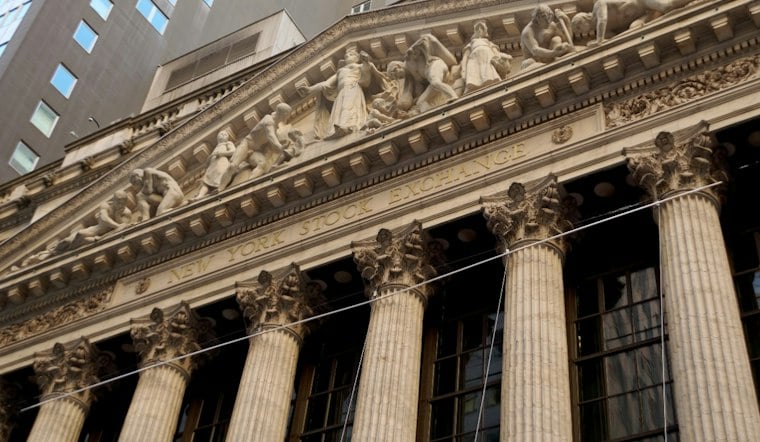
Wall Street just watched roughly $2.5 trillion in market value vanish in a single session, and nobody on the trading floor can say with confidence that the pain is over. The Nasdaq hit a record high in early October, but a few weeks of relentless selling have since dragged tech and AI-related stocks down about 10% from that peak. The question hanging over markets now isn't whether the sell-off happened — it clearly did — but whether it has finally run its course.
The scale of Thursday's rout was stark. According to CNN, the Nasdaq slumped 5.52% that day and closed in correction territory, trading more than 10% below its October 6 record high. As Reuters reports, the AI stock rally stumbled on worries about infrastructure spending and expected returns, with investors dumping shares and bonds of Nvidia-backed AI infrastructure company CoreWeave as hyperscaler third-quarter reports hinted at project delays and slower capital spending growth. The U.S. midterm elections also revived slowdown worries and added fresh pressure on AI names, though shares have steadied somewhat and partly reversed their post-election fall in recent sessions, per the same Reuters account.
Four Gauges, One Murky Verdict
To figure out whether markets are at an inflection point, the wire service's reporting points to four gauges: tech positioning, stock correlation, options demand and technical charts. Analysts quoted in the report said two of those four look encouraging, one is mixed, and the technical indicators counsel caution — hardly a clean signal either way.
Since late September, investors have trimmed their exposure to tech stocks while favoring other sectors, and last week's sell-off pushed tech positioning below its April 2025 “Liberation Day” lows, Deutsche Bank data cited in the Reuters report show. Deutsche Bank strategist Parag Thatte said the latest sell-off was driven by a forced positioning unwind, adding that positioning is just below the bottom of its long-run band and that tech's relative performance is also just below the bottom of its long-run trend channel — levels from which the sector has previously bounced back. Deutsche Bank remains overweight technology, according to the same report.
Correlation and Options Tell a Murkier Story
Three-month realized correlation among the S&P 500's 50 largest stocks fell to a record low in late September, per Reuters, and Barclays strategists said in late October that powerful stock-specific themes — especially AI — were operating alongside rates, inflation and oil as macro drivers. Last week's sharp sell-off lifted expectations that stocks would move together in coming months, but only modestly, and Rocky Fishman said the modest rise in implied correlation suggests a sector-specific sell-off rather than a broad economic downturn.
Options markets added another wrinkle. Retail traders bought individual-stock call options in record volumes this year, with market makers buying shares to hedge their exposure to those retail trades, Reuters reports. But retail call buying in AI stocks fell sharply last week, and John Marshall said that decline was the largest positioning change behind the election-week sell-off. That shift left the one-month normalized put-call skew near the middle of its 13-year range, while the short-term AI trade no longer appeared crowded.
Technical charts aren't offering much comfort either. The Invesco QQQ ETF's rebound has stalled just below its downtrend line from late October, and Fundstrat's Mark Newton said U.S. stocks are likely to stay volatile for a couple more weeks, citing bearish short-term trends and momentum along with the absence of a DeMark exhaustion signal. Newton said there is insufficient evidence that the market has been flushed out and that it's too early to be confident last week's decline has run its course — though he added the market could still present a buying opportunity even without having officially bottomed. A 5% down day that closes at its lows, he said, is not itself evidence that market lows are in.
Credit Stress Compounds the AI Jitters
The sell-off has rippled beyond equities and into credit markets. The yield on CoreWeave's 2032 bond, which carries a 9.625% coupon, has climbed above 16%, according to CNBC. That same report notes Goldman Sachs has warned that potential moratoriums could affect 45% of planned U.S. data-center capacity, while a separate estimate put roughly 30% of planned 2028 data-center capacity additions at risk.
Not everyone reads the pullback as a warning sign. Deutsche Bank remains overweight technology, according to Reuters. Recent trading has seen money rotate away from tech. Investors are also weighing whether the sell-off signals a structural downturn in the AI investment cycle.
Money Rotates Toward Defensive Sectors
Some investors aren't waiting around to find out who's right. HSBC strategist Alastair Pinder described recent stock-market moves as “vicious, and in our view, overdone,” according to CNBC, which also reports that healthcare and consumer staples stocks have been among the best global performers after energy as money rotates away from tech. The same outlet notes the S&P Global 1200 IT sector went from the best-performing sector in the first half of the year, up 28.4%, to the worst performer in the second half after tumbling more than 11%.
Looming over all of it is Anthropic's planned initial public offering, expected in the coming days, which Reuters' report frames as a test of Wall Street's confidence in the broader AI boom. Whether that offering lands well or stumbles could shape sentiment heading into the next stretch of trading — but for now, even the market's best gauges are giving investors a split verdict rather than an all-clear.