

























































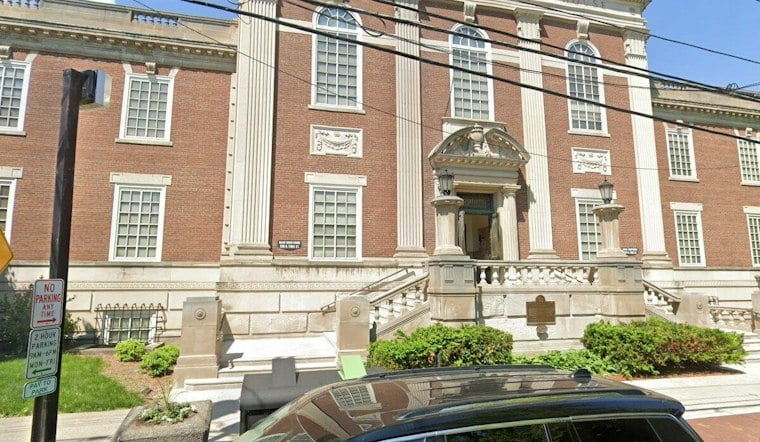
TeraWulf’s legal challenge to the Town of Lansing concerns how town business was conducted and whether public records were properly provided. The company’s Lake Hawkeye LLC subsidiary filed an Article 78 petition in Tompkins County Supreme Court on Tuesday, alleging that the town did not adequately respond to at least two Freedom of Information Law requests and that board members conducted town business through a private email ListServ, The Ithaca Voice reported.
An Article 78 petition is a way to challenge actions or decisions by government bodies and officials; the filing is not a ruling that the town violated the law. TeraWulf Chief Strategy Officer Kerri Langlais said the company pursued the records through the FOIL process and filed after its administrative efforts did not resolve the dispute. Town Supervisor Ruth Groff declined to comment on the petition, according to The Ithaca Voice.
The email allegation and the legal standard
Whether communications through the ListServ violated the Open Meetings Law is an allegation for the court to assess, not an established finding. A 2004 advisory opinion from the New York State Committee on Open Government describes a public body as an entity that conducts public business through a quorum while carrying out a governmental function collectively. That opinion addressed an advisory committee, not Lansing’s alleged email communications, so it does not resolve this case.
The records dispute comes amid a separate disagreement over whether Lansing should bar data centers. At an Oct. 21 meeting, the Town Board introduced a proposed local law that would redefine “general processing” to cover only the handling of tangible goods, a change that would effectively prevent TeraWulf’s proposed project from proceeding under that classification, The Ithaca Voice reported. The board had previously withdrawn a proposed moratorium after the company threatened legal action in November 2025; the new proposal is a distinct approach.
Local pauses are not all the same
Other New York towns are considering or extending pauses on data-center development, but the measures differ in status and scope. In Lysander, near Syracuse, the Town Board unanimously extended a moratorium for six months, through May 5, 2027, syracuse.com reported. Separately, Putnam Valley scheduled a Nov. 18, 2026 hearing on a proposed temporary moratorium; the town’s notice establishes that a hearing was scheduled, not that the measure was adopted. These examples show different local responses, not a single statewide policy.
Water limits do not settle the cooling dispute
Water use at the Lansing site is another contested issue. Assemblymember Anna Kelles has argued that the project could use a hybrid cooling system requiring millions of gallons of Cayuga Lake water daily, while Langlais has said the project would use a closed-loop system with no lake withdrawal or discharge, according to Tompkins Weekly. Those competing descriptions do not establish the project’s eventual water use.
A separate permit provides a specific limit but not an answer about cooling demand: The Cornell Daily Sun reported that Cayuga Operating Company is permitted to withdraw up to 1,008,000 gallons per day through April 30, 2031, for system maintenance, sump pumping and dust control. A permitted maximum does not show how much water is actually withdrawn or whether it would serve data-center cooling.
The records petition leaves key questions open, including whether the town’s responses met FOIL requirements and whether the alleged ListServ communications fell under the Open Meetings Law. The court’s resolution of those claims will be separate from the town’s zoning decision and from the outstanding disagreement over the project’s water needs.





