

























































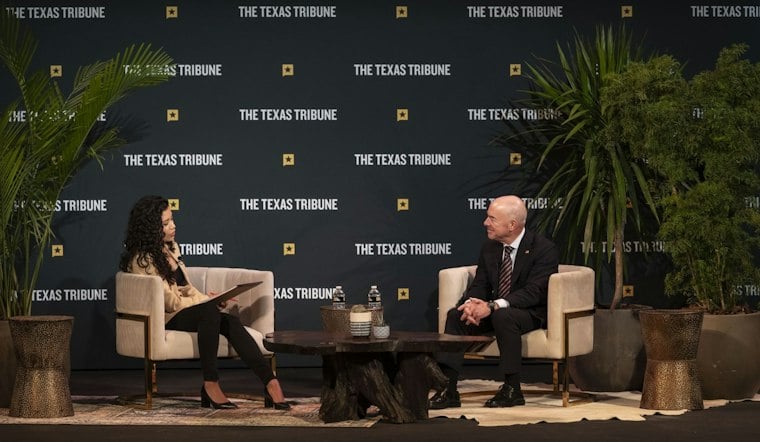
Texas lawmakers, Capitol insiders and newly elected officials will gather in Austin on Dec. 10 for a daylong symposium previewing the 2027 legislative session, with sessions dedicated to data centers and the power grid, public education, and the state budget. The event runs at the UT Thompson Center and will also be livestreamed for those who can't make it in person.
The symposium is organized by The Texas Tribune, a nonprofit, nonpartisan news organization that says it spent months traveling the state to hear lawmakers' district priorities ahead of the gathering. Once the new year arrives, the Tribune notes, state lawmakers will finally have their chance to draft legislation responding to the issues voters raised throughout 2026. The day's programming is built around that turning point, pairing veteran incumbents with the newly elected officials who'll be navigating their first session.
A Schedule Built Around the Grid, Schools and Money
The day kicks off at 9 a.m. with a session on new lawmakers, where fresh faces will lay out their priorities and the changes they intend to push for. That's followed at 10 a.m. by a session titled Data Centers, Grid and 765K, which will dig into regulation of data centers and the electric grid and their impact on the state economy — a nod to the fact that data centers and grid capacity were, according to the Tribune, dominant issues during the 2026 elections.
After a short break, an 11:15 a.m. education session turns to what the Tribune has flagged as dominant topics for 2027: school funding, screens in classrooms, teacher pay and Education Savings Accounts. Following a lunch break from 12:15 to 1 p.m., a reporter roundtable brings together some of the state's top statehouse journalists to discuss the personalities and politics expected to dominate the session. The day wraps with a 2 p.m. session on taxes, budget and spending, breaking down property taxes, how lawmakers plan to spend money, and what the Tribune describes as the one bill the Legislature must pass.
Why School Funding Is Already a Flashpoint
The education conversation arrives against a backdrop of shrinking enrollment and shuttered campuses. Statewide public school enrollment fell by more than 76,000 students during the 2025-26 school year, according to Texas Education Agency data cited by Community Impact. Raise Your Hand Texas has reported that roughly 170 public school campuses closed or were slated for closure over the prior three school years amid that enrollment decline and budget deficits, the outlet notes.
Funding mechanics are part of what's fueling the debate. Texas public schools receive about $10,500 per student on average, with local property taxes contributing toward each district's funding entitlement and the state covering the rest, per the same report. Yet nearly 40% of Texas homesteads paid no school property taxes at all in 2025 — a gap that helps explain why property tax relief keeps surfacing alongside school funding in pre-session discussions.
Gov. Greg Abbott created the Texas Classroom Commission in July 2026, assembling 21 current and former public school educators plus a chair to study classroom conditions ahead of the session. The commission has been evaluating student cellphone use and potential screen-time limits for elementary and middle schoolers, along with teacher workload, classroom management, and reading and math outcomes, Community Impact reports.
Affordability and Data Centers Dominate Earlier Previews
The Austin symposium isn't the Tribune's first crack at previewing 2027. At a Tribune-hosted discussion in Dallas in September, state legislators vowed to refocus on bread-and-butter issues like affordability and public education, expressing hope for bipartisanship in the coming session. At that event, Rep. Venton Jones and Rep. Jeff Leach both named lowering property taxes and regulating data centers as targets, agreeing on restricting students' cellphone use in classrooms and the need for clearer data-center rules and more transportation investment — even as they diverged on school vouchers and property taxes themselves.
A similar theme played out at Texas Christian University, where TCU hosted two conversations on Oct. 7 with the Tribune, Fort Worth Mayor Mattie Parker and a panel of current and former state lawmakers. That event, presented by the Episcopal Health Foundation and moderated by Tribune editor-in-chief Matthew Watkins, put property taxes and data centers at the top of the list, according to TCU. Panelists there said the state needs clear rules on how data centers use water and power — echoing the exact question the Dec. 10 symposium's grid session is built to tackle.
Interim Charges Already Shaping the Agenda
Beyond the public forums, the groundwork for 2027 has been laid through formal interim charges. The lieutenant governor released seven new charges for state senators to study before the Legislature reconvenes, including ways to inform Texans about their religious-liberty rights, according to the Tribune's ongoing coverage. The Republican speaker's interim charges, meanwhile, covered water resources, foreign threats and government accountability.
The Tribune has said it receives funding in part from member, foundation and corporate donations, and that financial supporters play no role in its journalism. For Austin-area residents and anyone tracking what the Legislature might tackle once it reconvenes, the Dec. 10 symposium offers one of the more comprehensive single-day looks at where the fights over schools, taxes and the power grid are headed next.



