

























































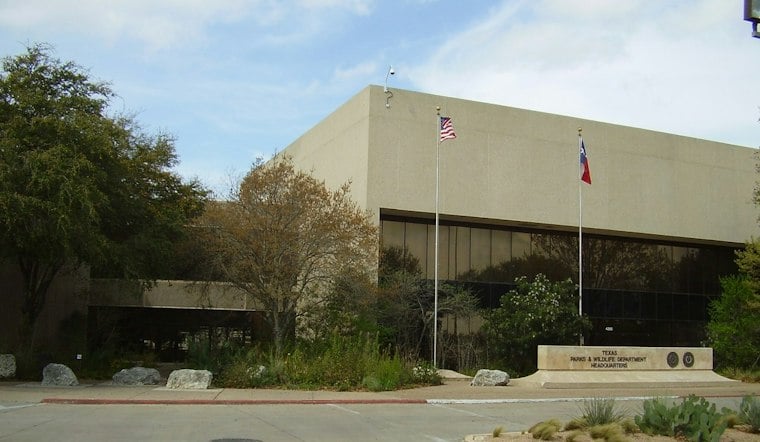
For hunters and landowners in Texas’s 22 core alligator counties, a proposed rule package would change the season calendar and permitted methods, and allow night hunting on private property. The Texas Parks and Wildlife Commission is considering the changes for counties spanning the Piney Woods and Gulf Coast, areas with some of the state’s highest alligator densities.
At a commission work session in Fort Worth, staff discussed changing the core-county season from 21 days, September 10 through September 30 in 2026, to 61 days, September 1 through October 31, according to a commission briefing cited by the Houston Chronicle. The proposal would also permit night hunting on private lands and waters in core counties, where it is currently prohibited. Night hunting on public waters would remain illegal, and the proposal separately addresses taking alligators on public waters.
The proposed equipment changes would permit snatch hooks—weighted treble hooks attached to a hand-thrown restraining line or a rod and reel—in both core and non-core counties. Bang sticks, poles equipped with a firearm chamber, would be allowed statewide to dispatch lawfully caught alligators.
Existing limits and conservation context
Current rules allow an alligator to be taken from public water only when both the hunter and the taking device are on private property, according to the Texas Parks and Wildlife Department’s 2026-2027 Outdoor Annual. Texas’s present rules follow an earlier period of protection: TPWD’s history of alligator management says the state provided complete protection for the species in 1969. That history is relevant context, but it does not by itself establish how the proposed changes would affect the state’s current alligator population, according to TPWD.
Why Regulators Say the Timing Makes Sense
Jonathan Warner pointed to aerial nest counts, spotlight surveys and more nuisance complaints as signs of strong alligator numbers in southeast Texas wetlands and aquatic ecosystems, according to the Chronicle’s reporting. He also noted that the American alligator was federally listed as endangered in 1967 and delisted in 1987.
Warner said TPWD regards the state’s wild alligator resource as robust and expects the proposed changes to pose little risk to population integrity. He also said landowners and hunters support the amendments. The agency’s stated goal includes encouraging recreational hunting as commercial markets, particularly for hides, have declined.
Warner said the longer season, added methods of take and private-land night hunting could give hunters more options for selecting animals and improve harvest efficiency. He also cited possible use by managers of large properties where alligator management accompanies wetland, crawfish or rice farming.
From Near-Collapse to a Managed Comeback
Texas restored alligator hunting opportunity in 1984 through a regulated monitoring and tagging program, and has held an annual season in its highest-population counties ever since, according to a 2013 Houston Chronicle report. That same reporting noted TPWD opened a separate spring season for non-core counties in 2007, running April 1 through June 30, which allowed a person holding a Texas hunting license and hunting on private property to take one alligator per license year — a season that averaged 150 to 200 harvested alligators in its early years.
TPWD defines core counties as prime historical American alligator habitat where commercial hunting is viable and where the department conducts significant biological monitoring, according to Texas Parks and Wildlife Department, managing harvest there through landowner tags. The 22 core counties are Angelina, Brazoria, Calhoun, Chambers, Galveston, Hardin, Jackson, Jasper, Jefferson, Liberty, Matagorda, Nacogdoches, Newton, Orange, Polk, Refugio, Sabine, San Augustine, San Jacinto, Trinity, Tyler and Victoria. Calhoun County is also home to the Powderhorn Wildlife Management Area, which was part of recent discussions tied to the proposal.
Safety Around Alligators
TPWD says attacks on people in Texas are rare but possible. The department's guidance does not give a count of documented attacks; it advises people not to swim with an alligator, according to the Texas Parks and Wildlife Department.
A Harvest Well Below Its Historic Peak
Texas's wild alligator harvest has decreased since the late 1980s and early 1990s peak of wild-hide market hunting, Warner said, when the statewide harvest exceeded 10,000 alligators annually. Today, Texas's alligator harvest sits between roughly 2,000 and 3,000 animals, per the same reporting. Alligator farms, meanwhile, continue to produce meat for commercial sale and hides for the luxury market, a separate commercial pipeline from the wild hunting season under discussion.
The proposed changes still require a public comment period and formal approval by the Texas Parks and Wildlife Commission before taking effect. Matt Wyatt wrote about the alligator-season proposal for the Houston Chronicle.



