

























































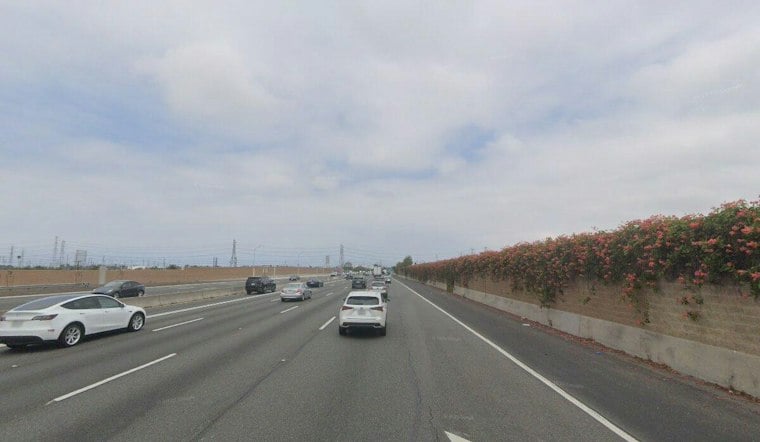
Torrance officials and EV Realty broke ground Tuesday on a nine-megawatt electric truck charging hub at 18715 S. Western Ave., a 50-port facility positioned to serve freight trucks shuttling between the ports, Los Angeles International Airport and inland warehouses. The site sits adjacent to the 405 Freeway with direct connectivity to the 110, putting it squarely along one of the region's busiest freight corridors.
The hub is scheduled to open for commercial fleet charging in mid-2027, according to the Daily Breeze, which reports construction on the nine-megawatt charging hub will be completed around the same timeframe. EV Realty, which develops and operates high-power fleet charging hubs, says the Torrance site will connect distribution from the ports of Los Angeles and Long Beach to LAX and inland distribution points. Per EV Realty's project specifications, the facility will include 50 pull-in charging stalls — 30 rated up to 350kW and 20 rated up to 1,200kW — capable of serving trucks that use both Megawatt Charging System and Combined Charging System technology.
Torrance Councilmember David Kartsonis framed the groundbreaking as part of the city's broader identity. Torrance has a history of innovation, technology and industry, and the groundbreaking exemplifies its future-focused business attraction, Kartsonis said, according to the same report. He added that commercial EV charging infrastructure supports cleaner, more efficient transportation and that Torrance is well positioned to advance goods movement.
Second Southern California Hub for EV Realty
The Western Avenue project marks EV Realty's second high-power fleet charging hub in Southern California, the station's report notes, following a nine-megawatt hub the company opened in San Bernardino in April. That Inland Empire site has 76 high-power ports and, according to EV Realty, enough capacity to serve more than 200 medium- and heavy-duty trucks per day. The company has also said it plans to begin future projects in Stockton and Ontario.
EV Realty Chief Commercial Officer Suncheth Bhat said the Torrance site will create new lanes and operational flexibility for regional fleets amid growing electrification interest. Bhat added that 2027 is shaping up to be a year of real growth for this sector as truck technology continues to improve, charging networks expand in key freight hubs, and fleet operators see the potential to save money by going electric, according to EV Realty's announcement via GlobeNewswire. The company says it is on track to have more than 100 MCS charging ports across Southern California by mid-2027.
Funding Tied to State and Utility Programs
The Torrance project draws support from the California Transportation Commission's Trade Corridor Enhancement Program, Southern California Edison's Shared Fleet Charging Rebate Program, and a conditional award from the California Energy Commission's EnergIIZE program, per the GlobeNewswire release. EV Realty's project page lists the Western Avenue site as roughly 10 miles from LAX, reinforcing its role as a connector between port operations and airport-area logistics.
The buildout comes as the ports of Los Angeles and Long Beach, described by the Daily Breeze as the busiest port complex in the nation, pursue a joint goal of transitioning to an entirely zero-emissions truck fleet by 2035. The ports also have a goal of making all terminal equipment zero-emissions by 2030. The complex handles millions of cargo containers annually, according to the same report.
A Steep Climb for Port Trucking's Electric Shift
The gap between current charging capacity and what the zero-emissions goal would require is substantial. A 2024 assessment cited by FreightWaves found that existing infrastructure could support only about 800 battery-electric trucks, while meeting the ports' clean-air goals would require more than 6,200 additional charging ports and 32 hydrogen refueling stations. The same assessment found battery-electric trucks carry total ownership costs 2 to 2.4 times those of diesel trucks, with fuel-cell electric trucks potentially costing up to five times more.
Other infrastructure efforts are underway elsewhere in the region. A Prologis Mobility and Performance Team depot in Southern California can charge up to 96 electric trucks simultaneously, according to WWD/Sourcing Journal, and the ports and regional air quality agencies have planned an eight-site project to install 207 charging units across Southern California at a reported cost of $135 million.





